David Letterman’s Most Controversial Netflix Guest Yet Is a Reminder of How Times Have Changed in 2025

Netflix’s sixth season of My Next Guest Needs No Introduction arrives with a booking that feels engineered to make both television traditionalists and chronically online viewers pause mid-scroll. David Letterman — the bearded elder statesman of late-night, the guy who once defined what celebrity conversations looked like — is now sitting across from one of the most polarizing product-of-the-internet mega-creators on the planet: MrBeast. And while the pairing is a clever way to generate headlines, it’s also something more blunt. It’s a reminder that in 2025, we’re as interested in the people designing our attention as we are in the people classically commanding it.
Letterman’s MrBeast Interview Shows How Algorithmic Creators Now Drive Culture
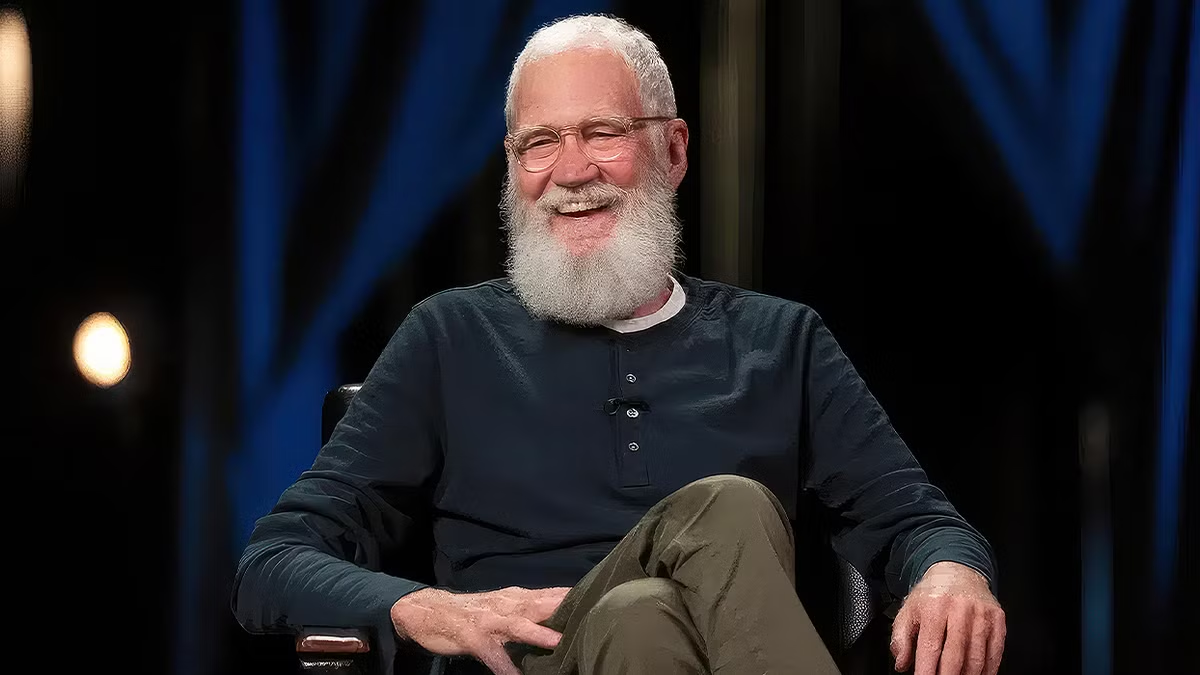
David LettermanImage via Marion Curtis/StarPix for Apple TV+
For most of its run, My Next Guest has treated cultural significance as a pretty stable equation. Presidents, Oscar winners, longtime comics, global pop stars — meaning was tied to institutions and legacies, not subscriber counts or viral endurance. A typical season felt like a curated museum tour through the familiar pantheon. But MrBeast isn’t a museum figure; he’s an algorithmic one. His entire empire is built on YouTube thumbnails, fine-tuned stunt escalation, sponsor negotiations, and the science of attention retention. When that kind of figure lands in Letterman’s chair, the show quietly acknowledges what’s already apparent to anyone under 40: The people with the most extensive global reach aren’t necessarily the ones headlining tentpole movies or filling arenas. They’re the ones who turned the internet into a laboratory and used it to reverse-engineer relevance.
There’s something almost symbolic about watching Letterman — a man who once presided over a desk that functioned as pop culture’s nightly checkpoint — sit across from someone who never needed television at all. The old path to fame required gatekeepers, networks, and a particular polish; the new path requires knowing when to cut a video at the 1:47 mark because the audience will dip at 1:48. Seen this way, the episode isn’t just an interview. It’s a tacit bridge between eras; one built on format, the other built on frictionless scale.
Related
Netflix Has Decided the Fate of David Letterman’s 81% RT Rated Talk Show ‘My Next Guest Needs No Introduction’
Will Dave finally ride off into the sunset?
But Netflix didn’t just pick a creator. They decided this creator — someone whose name triggers an entire internet’s worth of debate before you even hit play. MrBeast’s notoriety isn’t just tied to his massive following or Guinness-book World Record stunts; it’s tied to the swirl around them. Critics point to videos that feel like philanthropy-as-spectacle, content that blurs the line between generosity and self-promotion, and a style that sometimes drifts into poverty-tourism optics. Supporters counter that the impact is real, the money is real, and that large-scale giving shouldn’t be dismissed simply because it’s packaged as entertainment. That tension — the friction between good intentions, big budgets, and bigger attention — has made him one of the most dissected personalities online. And that’s exactly why he’s here.
Netflix’s My Next Guest Highlights the Rise of Internet-Made Celebrity
In 2025, our media diet is built around figures who occupy that uncomfortable middle: people we can’t fully root for or write off, people who spark both curiosity and fatigue. We claim to be tired of online messes and moral gray zones, but our clicks tell a clearer story. We’ve built an ecosystem where controversy is currency, where “problematic but irresistible” is a genre. By booking a guest who embodies that contradiction, Netflix isn’t ignoring the discourse; it’s openly leveraging it. The streaming giant understands how audiences behave now: we’re drawn to the question of why a figure commands so much attention, even if we aren’t sure how we feel about them.
Letterman’s strength has always been his ability to disarm, to gently prod, to find the human under whatever persona sits in front of him. What makes this pairing compelling is that it forces those instincts to collide with someone whose entire career has been built on controlled presentation. MrBeast’s videos operate with precision — perfect pacing, maximum payoff, everything engineered for retention. Conversation is looser, slower, messier. It asks for something different. And if the episode works, it’s because Letterman isn’t treating him as an avatar of the algorithm but as a person navigating the strange tension of being both praised for and accused of the same thing.
The real takeaway, though, has less to do with MrBeast’s answers and more to do with the industry reaction around him. Ten years ago, a YouTuber headlining a prestige Netflix interview series would’ve felt like a novelty. Today, it feels inevitable. The line between “influencer” and “celebrity” has dissolved so thoroughly that the old distinctions don’t quite hold. Cultural power now sits with whoever can capture global attention consistently and at scale — not necessarily whoever has the most awards on the shelf.
In that sense, the episode becomes a mirror held up not just to the guest, but to us. We’re watching not because Letterman might reveal some hidden truth about a viral juggernaut, but because his presence confirms that this is where attention lives now. Netflix isn’t just platforming a controversial creator; it’s acknowledging that the forces shaping our media habits — algorithms, virality, ever-scrolling curiosity — have become more central to our cultural lives than the old machinery of fame ever was. And that’s the real story of season six: My Next Guest isn’t just documenting famous people anymore. It’s documenting the shift in who gets to be famous in the first place.