Experts sound alarm about worrying phenomenon unfolding across US: ‘Just not something that really happens’

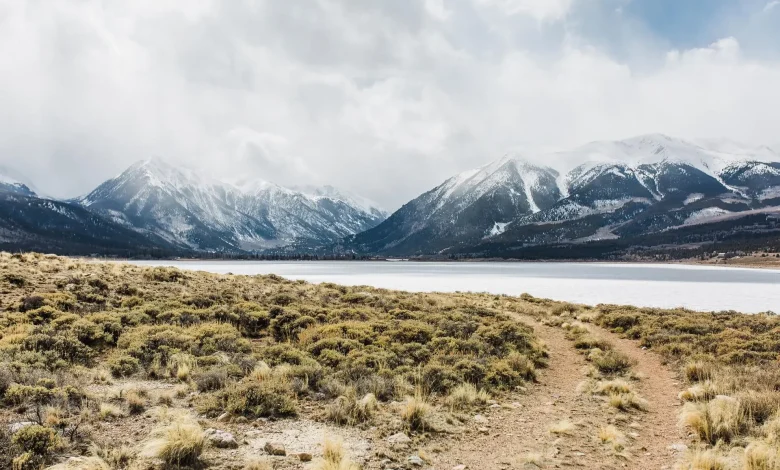
The way Colorado’s winters are changing can be a bit perplexing, according to a Colorado State University professor. Dr. Russ Schumacher knows Colorado’s climate. He’s Colorado State’s climatologist and the director of the Colorado Climate Center.
“Winter in Colorado is pretty complicated,” Schumacher told CBS News Colorado. “It’s by far the most variable season out of the year, naturally. In contrast, when we look at summer, it’s just a strong warming trend. The data shows winters may actually be becoming less variable, but it doesn’t always feel that way.”
Our warming world is having at least two clear impacts in the mountain state. Winter snowpack is melting earlier, and at lower elevations, rain is often falling rather than snow.
“In Fort Collins a couple of Februarys ago, we had this storm where we got over an inch of liquid and it was all rain,” added Schumacher. “That’s just not something that really happens. Typically, if you’re going to get precipitation in February, it’s going to be cold and it’s going to be snow.”
Schumacher acknowledged winter will still “throw curveballs” at the state. Weather whiplash episodes will bring dramatic drops or upward spikes in temperatures. That aside, he has noticed “the snow season’s getting compressed; falls are getting warmer, and the cold part of winter maybe isn’t as long.”
There is no mistaking Colorado’s overall long-term temperature trend; the state’s winters are warming as our planet overheats. Researchers at non-profit Climate Central found that since 1970, Colorado Springs’ winter has warmed by 2.6 degrees. Grand Junction’s winters have similarly warmed by 2.2 degrees.
Climate Central also found that winter is the fastest-warming season at 76% of 245 U.S. locations they analyzed earlier this year.
This has been a warm year both in Colorado and the country overall. Colorado had its 11th warmest October on record this year. The first 10 months of this year were the 12th warmest such period on record for the state.
A report issued this week from the National Centers for Environmental Information revealed that the contiguous U.S. had its fourth-warmest November in the 131-year record. Colorado contributed to that warmth, logging the state’s third-warmest last month of meteorological fall on record.
Denver’s warm fall helped drag out a record-breaking snow drought for the Mile High City. That drought finally ended on Nov. 29 after a snowless streak that stretched to 224 days. It was the fourth-longest streak without measurable snow for the state’s capital.
Warmer weather can contribute to the increasing trend of extreme weather events. A lack of snow can also have specific, critical consequences on Colorado when spring and summer roll around. The earlier melting of snowpack driven by warmer winters can raise the risk of wildfires year-round.
“Warming winters can reduce mountain snowpack — a critical source of spring meltwater that refills reservoirs, irrigates crops, and helps meet peak water demand across the western U.S. during summer,” noted researchers with Climate Central.
Get TCD’s free newsletters for easy tips to save more, waste less, and make smarter choices — and earn up to $5,000 toward clean upgrades in TCD’s exclusive Rewards Club.