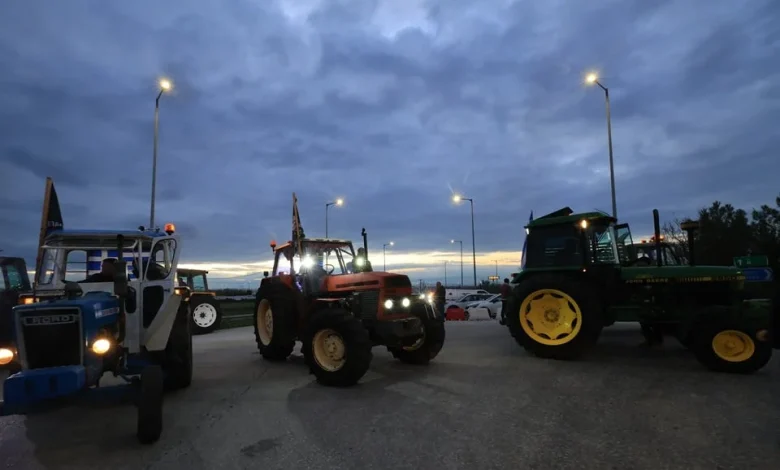
One way or another (I will not presume to say how), the ongoing farmers’ protest will come to some kind of end or hiatus or whatever you want to call the inevitable development that will lead to the reopening of the country’s highways and tractors returning to their fields. That said, the current round of mobilizations is different to similar protests in the past for one very important reason.
In previous revolts by the country’s farmers, the European Union’s Common Agricultural Policy (CAP) ranked somewhere near the bottom of their list of demands, allowing the agricultural community’s traditional anti-EU stance to be expressed without needing to specify whether the issues brought to the fore by the protests were the direct result of the CAP or the outcome of its faulty implementation. That the latter was to blame was obvious to anyone who monitored the CAP outside of Greece as it was common tractive for the agricultural community’s demands to relate to the previous (if not the one before that) CAP reform, just as the narrative about the next one had started. Greece was not alone in this.
Strengthening extensive livestock farming also means strengthening Greek agricultural exports, but it also implies a reduction in support for arable crops
The situation is different today and in a way that is hard to explain to anyone who does not know this country. After 45 years in the EU, during which the CAP has provided Greece with the highest support per acre among the member-states (more than double the average) and in terms of gross domestic product, the system has been untethered to such a degree that even direct subsidies became problematic. How did this happen?
The answers to this question tend to become so mired in partisan politics we overlook a very important, long-standing failing: The implementation of the Common Agricultural Policy was left to a ministry that has always ranked low for successive governments and to ministers who did not stick around long enough to allow structural problems to be addressed – both indicative of a certain snobbery toward the sector despite the rhetoric of its strategic importance. This went hand in hand with a dogmatically provincial mindset, which took EU funds for granted and believed them to be without obligations, commitments or even a modicum of respect for the rules governing their management.
The recent head-on collision with reality is not just the only way to wake up and ensure the continued inflow of these funds, which will be reduced in the future, on the basis of the European Commission’s budget proposal for 2028-2034. It is also an opportunity to re-evaluate three crucial parameters of the CAP’s implementation that successive governments have stubbornly refused to address: the need to redistribute the subsidies, to redefine the role of grazing land, and to overhaul the system of consultants who help farmers secure funding.
Greece’s agricultural sector obviously faces more problems than these three issues. But continuing to dismiss the issue as being the result of subsidies being organized on the basis of obsolete data when three successive CAP reforms gave member-states the opportunity to pursue convergence and redistribution of subsidies demonstrates that short-term political cost has dictated the lackluster adaptation of Greek agriculture not only to the evolving directives of the CAP but also to the essential need to improve the sector’s productivity. This is because there is a fundamental difference in how farmers react to a generalized increase in input costs, depending on how they receive support. When income support is decoupled from a specific product, it offers the flexibility to change crops when necessary. In contrast, when a farmer is dogmatically attached to the myth of coupled support, they continue producing the same thing in order to receive subsidies, even if it is loss-making.
A redistribution of resources without first re-evaluating the role of grazing land and how subsidies are distributed would be nothing more than a half-measure. But there is a politically sensitive and complex dilemma raised by such a prospect, which requires gradual adjustment and a clear long-term vision. Strengthening extensive livestock farming also means strengthening Greek agricultural exports, but it also implies a reduction in support for arable crops, given that the total pool of available resources is fixed. Therefore, what does the adaptation of arable farming look like under the conditions of climate change? And who will inform producers about the new opportunities, as well as the potential pitfalls?
This, precisely, is the role of the consultants – in theory at least. Their role is to rely on certain general rules of production and common and transparent statistical facts and analyses that allow them to give farmers the option to choose between different solutions, assuming whatever risk each one entails. Greece could choose between consultancy systems that rely chiefly on the public sector (as in Ireland), on the private sector (as in the Netherlands) or on the cooperation of the state, universities and cooperatives (as in Denmark).
Tassos Haniotis, a former official at the European Commission’s Directorate General C for Agriculture and Rural Development, is a senior guest research scholar at the International Institute for Applied Systems Analysis (IIASA) and a special adviser at ForumforAG.