The Night Manager series 2 cast promise “danger, espionage, betrayal, love, heartbreak, drama and suspense” as Tom Hiddleston’s Jonathan Pine returns

Published: 9 December 2025
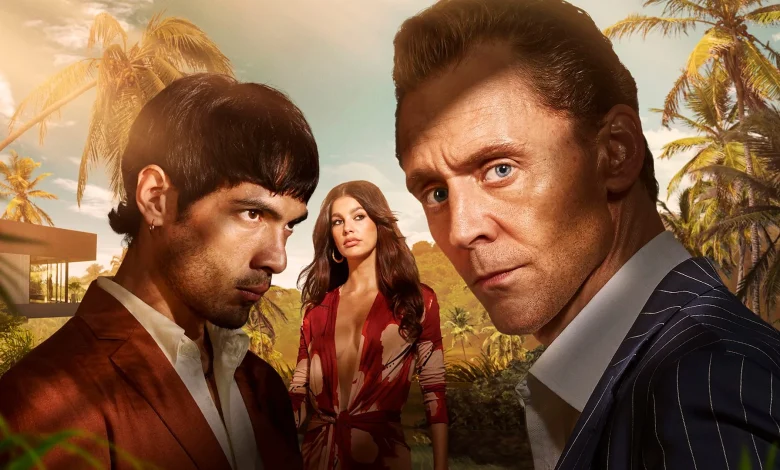
Jonathan Pine thought he’d buried his past. Now living as Alex Goodwin – a low-level MI6 officer running a quiet surveillance unit in London – his life is comfortingly uneventful. Then one night a chance sighting of an old Roper mercenary prompts a call to action and leads Pine to a violent encounter with a new player: Colombian businessman Teddy Dos Santos.
On this perilous new journey, Pine meets Roxana Bolaños, a businesswoman who reluctantly helps him infiltrate Teddy’s Colombian arms operation. Once in Colombia, Pine is plunged deep into a deadly plot involving arms and training of a guerrilla army.
To stop it, Pine must don a new identity as a reckless Hong Kong playboy bold enough to win the trust of Teddy Dos Santos and his team. But as Pine gets closer to Teddy, he uncovers another figure pulling the strings – Gilberto Hanson, a terrifying local arms dealer whose reach extends to the heart of London’s intelligence community.
Watch the trailer
Pine’s infiltration becomes a dangerous game of deception, seduction, and survival. Roxana may be Pine’s only ally – or his greatest risk. Teddy’s loyalties to both Pine and Hanson waver between devotion and suspicion. And Hanson, ever calculating, plays the most brutal game of all.
As allegiances splinter, and the scale of the MI6 corruption comes to light, Pine races to expose a conspiracy designed to destabilise a nation. And with betrayal at every turn, he must decide whose trust he needs to earn and how far he’s willing to go before it’s too late.
Watch the The Night Manager series 2 from Thursday 1 January on BBC iPlayer and BBC One in the UK and on on Prime Video from 11 January where available.
thenightmanager@premiercomms.com
Meet the cast and creatives
Tom Hiddleston (Jonathan Pine / Executive Producer)
(Images: The Ink Factory/BBC/Amazon Photographer: Des Willie)
Did you always think you’d one day return to the role of Jonathan Pine?
I think I felt I had unfinished business with this role. I found making the first series incredibly fulfilling, I found it really stimulating. It was about the world as we find it, but it was also about fascinating, mysterious characters with very deep, complex inner lives. John le Carré is the great specialist at combining those two things – political reality and personal complexity – within a great spy story, a sense of thrill and mystery.
Through the course of the first series Pine changes: he begins as a night manager at a luxury hotel, and he closes as a field agent for the Security and Intelligence Services. He’s been activated. Some fire has been lit in his heart and in his soul, which will not be extinguished until the end of his lifetime. What does he do with that fire? Where does he go now?
For those coming into this second series completely fresh, what is The Night Manager all about?
The Night Manager is an espionage thriller; it’s about secrets and betrayal; about trust and loss. It’s about a former soldier turned hotelier turned spy, Jonathan Pine, who is enlisted as a field agent for MI6 to infiltrate the operation of a British arms dealer, who is charming, sophisticated and appealing. But his enormous wealth is attained through illegal arms dealing with bad people, and Pine must take this man down. They are two sides of the same coin: Jonathan Pine and Richard Roper are such similar men; they’re English, and brought up in a similar world, but they exist on opposite sides of a very thin line of moral clarity.
Where do we pick up with Pine at the beginning of season two?
Eight years have passed, the world has changed. Roper is dead, and Pine has been living another life, under another name: ‘Alex Goodwin’. In that half-waking sleep of Alex Goodwin, a scent of familiar dragon smoke glides into Pine’s sphere and the old dragon-slayer in Pine is reactivated. There is a strain of something he recognises, and that impels him to Colombia, into another dance with danger.
Can you introduce the new personas that Pine takes on?
In the intervening years Jonathan Pine has been living under an alias of Alex Goodwin. Alex Goodwin runs a unit for MI6 called The Night Owls. They are a collection of lost souls who run a surveillance operation collecting information on luxury hotels in London and on anyone that MI6 might want to keep track of. It is quiet, passive work, but it keeps him busy. Goodwin is quiet and self-contained, his job is to look and listen. His job is not to act, it’s to pass information up the chain and move on. After the chaos and trauma of the first series, there is some peace in it, he’s found people he belongs to, a family of disparate individuals he can connect to, who he looks after and leads. Pine as Goodwin is still nocturnal – still not fully integrated into normal society because he’s still working for MI6 – but he’s as close to content as it’s possible for him to get. Then one night he sees a familiar face, and he can’t help but follow the scent.
Pine then sheds Alex Goodwin and becomes Matthew Ellis, who is a high-flying, reckless financier. He lives hard and plays hard. He has money to burn, money to lose, money to win, and money to waste. All great le Carré characters wear masks, the personae of other lives – as le Carré himself called it, ‘the imprint of personality’ – where there’s a tension between the exterior and the interior. The outward self is projecting one thing, whilst the inner self is experiencing another. But somehow through the mask, some inner truth is articulated that can’t be articulated as Pine.
That’s what I find interesting. Le Carré once wondered: “there is no centre to a human being”. Where is the centre of Jonathan Pine? There is one – I believe – but how are different aspects of him expressed through these different personae? Each persona expresses different dimensions of Pine’s inner life. Somewhere, underneath all the masks, is his true character.
Let’s discuss the new members of the ensemble cast, what do Diego Calva and Camila Morrone bring to this world?
I have been blown away by their work in this. They’ve taken what’s on the page and given it an extra dimension in every conceivable aspect. Diego Calva plays Teddy Dos Santos, who, on the face of it, is Pine’s antagonist, trading illegal weapons under the counter to create political and civic instability in Colombia. Opposite to Pine and me, Diego is majestic, thoughtful and sensitive. Roxana Bolaños is played by Camila Morrone, who comes into the series as a woman of mystery and intrigue.
Pine has a complex history of guilt and shame after two women he got close to were put at great peril because of their proximity to him, and he worries that Roxana is going to follow the same pattern. It turns out Roxana’s much more complicated than that. She’s got her own fire, pain, and her own mission. The dance that Pine and Roxana must do is one of trust and betrayal, which really is the theme between them. Camila has just thrown her whole soul at this character. Camila’s performance is so instinctive and has a magnetism; it’s very fiery and unpredictable.
Can you talk to the talents of David Farr and his scripts?
David Farr has achieved the impossible. The Night Manager was based on a novel by John le Carré, there was no second novel, no sequel. David has written it with all the sophistication and complexity that le Carré would approve of and admire. Teddy, Roxana, Colombia, Alex Goodwin and Matthew Ellis have all emerged from David’s imagination. This is where he chose to go, and we all followed him there. He’s forensic about detail, and brilliant at the plotting of a complex spy thriller. It feels like a roller-coaster. David’s scripts are exciting, dangerous, edgy, mythic and complex. It’s about shame, guilt, and redemption.
Has it been exciting to bring a new story to life on screen, knowing audiences and fans will not be familiar with all the various twists to come?
Over the last decade people have often asked me if there will ever be more from The Night Manager, and I’ve never been able to confirm or deny. So, it’s very exciting to have arrived at this juncture where we have made something new, which has the familiar flavours, spices and strains of what we did the first time. But this is something completely fresh and original. This second series has a depth, a resonance and a rawness of emotion. We’ve been very brave about that, and committed to pull the masks away from these characters, to let you see their innermost truths, in all their passion and complexity. I’m excited for audiences to see it.
What has it been like collaborating with director Georgi Banks-Davies?
Her passion, vision and connection to the project has been the most inspiring thing. It’s like there was a flame lit within her: she understood the story, she understood what David Farr had written, she connected to it very deeply and has elevated everything that all of us have done. Georgi has a particular taste, which I admire. She’s passionately interested in vulnerability, and in seeing the truth of these characters as human beings. She’s forensic about making sure we see that on screen. I think it’s made the entire season feel emotionally raw in a very different way.
The Night Manager is elegant and sophisticated, and Georgi has retained that. But she has been brave enough to pull the layers away so that you see the intensity of feeling that these characters are driven by. You see their passion, their pain, their regret, their suffering, their solitude, and their needs. I will always be immensely grateful to her for that, because she’s always trying to chase something more truthful.
Diego Calva (Teddy Dos Santos)
When you first read the script, what impressed you most about David Farr’s writing?
It was like a novel. Every character and scene builds a layered situation, and you never know what’s going to happen. Even on the page, it’s suspenseful.
How have you found joining the ensemble and developing relationships with the other actors, such as Tom Hiddleston and Camila Morrone?
First, there’s admiration. I feel lucky and proud to have worked with the cast. They have become like family. It’s been nine years since the first season, so some of the cast know each other very well, but they welcomed me like part of the family. Tom is one of the most disciplined, energetic, and charismatic actors I have ever worked with. Being surrounded by people who put 100 per cent into the job makes you want to be at their level.
What are Teddy’s initial impressions of Matthew Ellis, aka Jonathan Pine, and can you talk about their unique relationship?
The first impression is that Matthew is just a rich privileged guy, and Teddy needs to use him for his money. But then he realises Matthew is fearless and that he is another kid who comes from a broken home, having nothing to lose. Teddy relates to that, and their relationship builds on that level of trust, creating a brother-like bond.
What has it been like working with the director Georgi?
It has been an amazing experience. As an actor, to be free to explore and to be curious is an important part of my job. Georgi was always there for me and had respect for the character and for me as a person and an actor. I felt both protected and she allowed us the freedom to explore our characters on camera; there were no wrong ideas.
You have filmed in a variety of beautiful locations. How has this helped your performance?
We have a saying on set: “No time for unreal”. When you’re acting, you are always looking for the truth. When your surroundings and your environment are true and you’re not pretending it’s Colombia, we were actually there, the weather, the people, the way they talk, it’s hard to not be totally absorbed.
What do you think audiences will take away from watching The Night Manager season two?
This season has a lot of spirit and soul. It’s not just an espionage thriller with suspense; it’s a story about betrayal and family. In Teddy’s case, it’s also a story about faith and hope, which I think people will be able to relate to.
Camila Morrone (Roxana Bolaños)
Can you introduce the character of Roxana?
Roxana is interesting, because on paper, one would expect her to be a certain way, but she’s unpredictable, resilient and brave. She’s only focused on self-preservation and her family. It’s very easy to put her in a femme fatale category, but what’s interesting about Roxana, and what I love about David Farr’s writing, is that she’s not anybody’s toy. She’s the smartest person in the room.
Can you recount your first experience reading David Farr’s script?
David’s writing is so sophisticated. He has the ability to make every character interesting. David has written Roxana so perfectly, never sexualising or undermining her. There’s such suspense to David’s writing too; it’s always surprising. It’s hard to find this level of work, and it has spoiled me in a lot of ways because he really is a genius.
How has it been working with Tom Hiddleston on this project?
Tom is one of the most invested actors I’ve ever worked with. He’s always happy to be there, and he’s in more scenes than anybody. His energy is relentless, and he’s both so focused and prepared. It’s something you can’t fake. Tom is also very genuine and as a scene partner, that’s a beautiful quality to have. He wants to bring something special to the audience.
How do you think Roxana and Pine’s relationship develops across the course of the season?
Roxana and Pine are two very broken people who don’t know how to love but wish that they could. They’re both gamblers, incredibly smart hustlers, addicted to the thrill of the game. The relationship between them becomes more difficult and tangled because it’s a never-ending wheel of trust and betrayal. At the same time, Roxana doesn’t have anyone else to lean on.
Another great dynamic exists between Roxana and Teddy. Can you tell us about working with Diego Calva?
Working opposite Diego is heaven. There is something about him being Mexican and me being Argentinian, and us sharing a language and culture that instantly bonded us. In the same way that Diego and I share this culture, Roxy and Teddy share it too. They have this unspoken understanding of each other. Their relationship is incredibly dangerous, and even though there’s a lot of love, Roxana always knows her place with Teddy. She knows he’s a dangerous man, and that creates a very interesting dynamic.
What was it like to work with your director, Georgi Banks-Davies?
I trusted her so inherently, and I knew that she had such a creative and innovative vision for this, unlike what we’ve seen in this genre before and I still feel that way.
Can you talk about the production design and the wonderful locations? How helpful was that for you to establish the tone of the series?
It was my first time in Colombia and being there helped me to establish Roxana’s roots. Shooting in places such as the houses in Medellin and Cartagena was so beautiful. It was colourful, it felt dangerous, it was hot, and it was sexy. I enjoyed the Colombian portion because for my character, it meant so much to her and is so much of who she is.
Why should audiences see The Night Manager season two, and what do you hope they take away?
If you like shows about danger, espionage, sex, betrayal, love, heartbreak, drama and suspense: The Night Manager is for you. I can’t imagine a person who won’t find something to connect to in The Night Manager. Think of all the elements that season one had, and just blow it up, that’s what audiences can expect of season two.
Olivia Colman (Angela Burr)
What’s it been like stepping back into the character’s shoes after so many years?
It’s been lovely going back to Angela Burr after nine years. I know it’s nine years because I was very pregnant the last time round, and that baby bump is now nine years old. It’s been lovely to come back and to get to see the old team.
Can you describe the dynamic between Angela Burr and Jonathan Pine?
There’s such a great deal of respect between the two, and it’s a tender relationship in many ways. They look after each other. They’re friends who have each other’s backs. Angela is protective of him as she’s the one who got him into this, so to her, she feels responsible for the situation. Overall, their relationship is lovely.
Can you talk about working with Director Georgi Banks-Davies, and what she’s brought to this project?
I want to recommend her for everything. You should watch her working. I just quietly sit in the background and watch how she knows exactly what each person needs and requires, which is the mark, I think, of a fantastic director. I have loved every second of working with Georgi, and I hope we get to do more.
What do you think it is that makes The Night Manager such compelling television?
It’s exciting. There’s a threat around every corner, with people you’re rooting for and people you hate, all whilst looking amazing. You can properly invest your time in it because it’s an intelligent drama. This is a series that you can get excited about, watching it with family and friends, wondering where the story will go.
Alistair Petrie (Lord Sandy Langbourne)
Can you recall when you were first informed that The Night Manager was to return, and what your initial reaction was?
Originally, it was designed to be a limited series based on the original novel that John le Carré wrote. But it was such a huge hit there was the natural suggestion that it might return. Everybody was excited by the prospect, so when the final, ‘it’s definitely happening’ message came through, I was excited to hang out with my mates and continue the saga. Because we had the success of the show, we were all bonded by it.
Can you talk to the brilliance of David Farr’s scripts, and recall those first experiences reading them?
It was just seeing the front cover. It said, ‘The Night Manager Season Two written by David Farr’, and a little tingle went up the back of my neck. I saw that front page and I actually put it down and thought, I’m just going to breathe that in for about 10 minutes, and then I’ll turn to page one. I’m thrilled that he’s doing it because no one knows it better than David Farr.
There are going to be some viewers coming into the season completely fresh. For those newcomers, what do they need to know to get up to speed?
First and foremost, new viewers are entering the world of an original creation by the greatest espionage storyteller of all time. It’s a genre which attracts an audience unlike any other. When you say it’s an espionage thriller, that always gets people excited; it invites you in more than any other genre. It makes you complicit. You are in the comfort of your sofa at home watching the show, but it asks you what would you do? How morally compromised are you? There’s a danger to it, which is incredibly seductive. With this drama and genre you are going to be entering into a world that is glamorous, dangerous, exciting, and morally compromised. And we will excite and confuse you.
John le Carré was one of the greatest espionage storytellers of all time. How do you think season two stays true to his spirit?
We’re blessed to have a creative team that are steeped in the world of le Carre. His sons produced the show along with Stephen Garrett, who is a master at the genre. There’s a lot of people that have an innate understanding of le Carré’s sensibility. Having that launch pad meant that we were in very safe hands, which won’t let us stray too far at all from the path of le Carré.
Noah Jupe (Daniel)
In this second series, we meet Daniel back in the UK as a young man, can you speak to the changes he has gone through?
He’s gone through dramatic changes. He left his home in Spain and returned to London and never saw his dad again. He has this constant question looming over him and a shadow of grief that has taken its toll. He’s negative and cynical and he’s having a tough time growing up and trying to work out who he is, due to the absence of his father.
What has it been like for you to step back in the shoes of this character after so many years?
It’s a dream and has been so much fun. Season one was one of my earliest memories of being on a set, and I owe a lot of my career to The Night Manager, so to come back and step into the shoes of Danny again is an absolute gift. I was chuffed about it.
How has it been reuniting with Tom Hiddleston?
It’s weird because I was around 9 or 10 when I shot the first season, so my memories feel quite dreamlike. This season, it almost feels like my dreams have become a reality. Tom is such a special actor, and I really looked up to him, and still do, both mentally and physically (he’s a tall guy.) It has been a pleasure to work with Tom again.
While this does feel very much like it lives in the same world as the first season, what do you think makes this different to what came before?
It’s expanding on the first season and taking a lot of the same themes, but then stepping it up to a whole new level. What is nice is that the team are not trying to create the first season again; they’re not trying to just replicate what’s already been done, it’s individual, and it stands alone. They’re not scared to introduce new characters, new villains, and new exciting locations. Sometimes you get sequels that just try and do the same thing again, but this is completely original.
Why should audiences watch The Night Manager season two?
Because it’s written by David Farr, and he’s a genius. I think it has everything, it’s dark, intense, mysterious, and sexy with elements of humour. It’s also full of some of the best actors of our generation. My question is, why wouldn’t you watch it?
Key Creatives
David Farr (Creator, Writer and Executive Producer)
When did the idea first come around for a second season?
I remember it clearly. I was lying in bed in late 2020, and I hadn’t thought about The Night Manager for a long time. Suddenly, an image came into my head of a little boy in a monastery, waiting for his father. I realised suddenly who that boy and father were, and it all connected to the first season. Writing is a strange thing; sometimes you have images in your head that you don’t understand yet. I wanted to know what was behind that image.
Can you speak about the collaboration process with the executive producers at the development stage?
It worked differently this time. Last time there was a book that was adapted, which meant changing and shifting narratives to work well for screen. But this time, there was a blank page, but still with wonderful, iconic characters gifted to us by le Carré. My job was to take these characters into a new space that felt deeply faithful to le Carré. I had to create a story. The role of the producers is to ask all the questions that audiences will ask of that story, and Simon Cornwell, Stephen Garrett and Tessa Inkelaar are very good at that, pre-empting and second-guessing what the viewer will ask.
What sort of conversations have you had with Director Georgi Banks-Davies, and what has impressed you most seeing her work on set?
When we first met, Georgi said this show is about identity. This was music to my ears because that’s exactly what it’s about. It is about spies being representatives of us all. That we all create masks and facades for each other, we all present versions of ourselves, and at our worst, we lie to each other about who we are. We’re capable of betrayal. She understood that the piece, although it’s a glamorous thriller, is fundamentally about fracturing selves.
The first series was a direct adaptation, how different was this experience? Was there a freedom in being able to craft your own story from your own imagination, and does that bring a different responsibility?
When I adapted the book, I always felt there was this solid thing that was always there, but I felt I could depart from it. And le Carré, who was alive at the time, very much gave his blessing to a departure from the original text, but it was reassuring, as I always felt it was there. As for inventing something afresh, I still have a certain reassurance from the fact that I know the characters now. I know who Jonathan Pine is. He will surprise me as I write him, but I have a sense of him at the beginning, and that’s helpful. From a story point of view, you are completely on your own, and the hard work must be done.
Let’s move on to some of the great new characters, such as Teddy and Roxana. Can you introduce them both?
Teddy Dos Santos is the character I came up with first. He’s lost his family, and he’s a highly violent man, a gangster. He has become involved in a very dangerous operation, but with a very specific purpose, which is to effect a very severe regime change in his country. He’s haunted by the loss of his past. He has a beautiful soul and he’s got a child in him, as a lot of the characters do, but it’s a child that he can’t contact anymore. Then you have Roxana, a tough and rather wonderful hustler. She’s very good at pretending. I loved writing her because she’s ruthless, and she’s Machiavellian, but she has a heart, too. She also has a past that informs everything she does.
What do Diego Calva and Camila Morrone bring to the characters?
Diego was an unbelievable find because for Teddy Dos Santos to work, we needed someone with remarkable charisma, and a remarkable mixture of qualities. He had to be dangerous, but also vulnerable, and Diego has both things in him. He’s full of possibility, and that possibility can be violent, it can be deeply loving, which becomes captivating to watch. Camila is also a complete find. She has this authority and charisma and total control of her form, and I haven’t seen that before in someone so young. It’s very exciting to watch. She’s fiercely clever as a person.
How helpful has it been having such a dedicated and passionate actor bring the character of Jonathan Pine to life?
Tom Hiddleston has become a very close friend and a kind of brother. For him to inhabit the character of Jonathan Pine so completely, and then to come back to it after such a gap, it’s very emotional. The gap has been the most surprisingly emotional thing, for both of us, because it’s like returning to an old, deeply cherished friend. Pine is one of the most important roles that he’s ever played, and he inhabits it totally. Tom has read the book more times than I have; that’s how he works. His process is totally comprehensive and thorough.
What makes John le Carré such a special writer and creator of worlds?
I first came into contact with John le Carré when I was a kid, and I watched Smiley’s People with my dad, and then afterwards, went back and watched Tinker Tailor Soldier Spy. Something strange happened, I was 11 or 12, and I just went, “I want to do this.” I found it completely captivating. To then meet him with the possibility of adapting one of his stories was genuinely a dream come true. For it then to be a big success was enormously gratifying.
Georgi Banks-Davies (Director and Executive Producer)
Can you summarise the new season of The Night Manager?
This season shares the same DNA as the first and the original novel, with espionage, secrets, lies, organised crime, and our protagonist Jonathan Pine at the centre of it all.
How did you come to be involved in this project, and what was the initial appeal?
I was already a huge fan, so I was very flattered to be sent the scripts. As soon as it landed in my inbox, I only needed to see the title to know I would absolutely want to direct it! Then, when I read the scripts, I was instantly captivated by what David Farr had done with the advancement of the characters and story ten years later. I was hooked, and knew I had to make this show. Luckily when I then met with the producers, and Tom to share my visions for the show, they seemed to like it, and here we are.
Can you talk to the talents of David Farr and what he has brought to this story?
David effortlessly writes the suspense and atmosphere of a world that is so ingrained in le Carré’s work, but he does it with great characterisation. There are real humans in his stories who are complex, deeply interesting, troubled, and nuanced at the heart of it all.
Did you take much inspiration from the first series?
I have taken inspiration from the incredible acting. I always felt at the heart of the first series, Susanne Bier (series 1 director) was creating a sense of realism and a sense of character that I could relate to. But beyond that, you almost need to ignore what’s come before, because this isn’t a copycat show. It’s not about telling the same story again, in the same way, it’s a whole new world.
How has it been working with lead Tom Hiddleston?
I can’t quite believe that Jonathan Pine came before Tom Hiddleston in the world, because he feels so synonymous with the character, and that is because he is a truly brilliant actor. What Tom brings is all the depths of Pine, who is a man of many facets. He is an impersonator; he allows people to engage with him and trust him in a way that many of us can’t. Tom has the unique ability to put himself in any room and genuinely see a person and engage with them. That’s also Jonathan Pine’s superpower, and what makes him such a brilliant spy, because he really is compelled by what drives people.
Let’s talk about the newcomers, Diego Calva and Camilla Morrone. Can you introduce their characters and tell us about working with these two actors?
Diego plays Teddy Dos Santos, a man who doesn’t know where he belongs in the world. He’s grown up with this sense of broken identity, coming from a broken family. He feels like he doesn’t truly belong in Mexico or Colombia. Diego is such a committed actor when exploring the depths of Teddy, and this conflict inside him. Teddy is a character who on the surface, could appear as our bad guy, but I would argue there is no good and bad. Diego is an actor who approaches everything from an emotional core, which brings a vulnerable and distinctly deep performance, elevating Teddy off the page in such a beautiful, empathic way.
Camila Morrone who plays Roxana is a firework of an actor. She comes at everything with such an incredible amount of energy and commitment. She’s so thorough in her preparation and ready to always excavate every inch of the character. Roxana is a business associate of Teddy Dos Santos, and a linchpin to the story. She is like all great le Carré and David Farr characters, in that she is not as she may appear. A survivor who will do whatever it takes in the name of self preservation. Cami, like Diego, has lifted the character off the page and has found new depths. That’s the magic of working with actors like this, they give you want more than you could ever have imagined. My role is to make them feel safe to be free to explore that.
Stephen Garrett (Executive Producer)
Can you give us a brief overview of The Night Manager season two?
Season two of The Night Manager begins with Jonathan Pine, played by the brilliant Tom Hiddleston, reunited with his mentor Angela Burr, played by Olivia Colman, to identify the corpse of their nemesis, Richard Roper. We start this new season by discovering that Richard Roper, who we last saw in season one being carted off to a very uncertain end, is dead. That’s six years before our story starts.
We then find Jonathan Pine under a new guise, a new name, living and working in a semi-visible, low-rent, almost bureaucratic role in the Secret Services. Pine doesn’t look happy. Something then comes into his life that reminds him of his old foe and sets him and us off on a train of events that leads us to Columbia.
If you’re speaking to someone who hasn’t seen the first series, how would you introduce them to The Night Manager?
If they’re fans of thrillers and they love a good thriller, they should watch this because this is, if we’ve done it well, better than all good thrillers. It’s a very 21st century love story, and there’s a contemporary gender fluidity about some of the relationships. If you like watching television where, when an episode ends you’re going, “oh my God, I hope this is a boxset because I’ve got to watch the next episode now”, this is that kind of show. So, just sit back and enjoy the ride.
Could you speak to the process of finding your Director Georgi Banks-Davies, and what she has accomplished with this season?
Georgi was my passionately voiced choice for this project. I’d been a fan of hers since I saw the TV series, I Hate Suzie, for which she rightly won a Bafta. I’d heard very good things about her, and we needed her slightly maverick but utterly confident and quintessentially 21st century approach to storytelling. She’s a kind of an alchemist of people, and she just weaves a magic over each day’s work. Georgi really does have a vision of each scene. You can see her playing a sort of three-dimensional chess game putting the pieces together in her head.
Tom Hiddleston’s commitment to this project is unbelievable. Can you talk about not just his contribution to the characters and to the story but to the project as a whole?
Tom Hiddleston, I’ve now known for a decade, and he is remarkable. Both a remarkable human being, and actor. People can see what he does on screen, but that’s the tip of the iceberg. He works harder than any person I’ve ever met, and that intensity of effort is what manifests itself in these amazing performances. We have these scripts that are treated like sacred text, but we go through 10 to 15 drafts of each episode. Tom keeps every draft, and he’s wandering around with all these various copies of scripts all cross-referenced, and he has in his head this rich portrait of his character and the world. A bit like Georgi, he’s got the architecture of the story seamlessly remembered and captured.
As for the newcomers, let’s talk about Diego Calva and Camila Morrone, and their respective roles of Teddy and Roxana?
Teddy Dos Santos is a troubled young man, but not so young that he hasn’t lived. He is whip-smart, has been in prison, and is now running an operation that appears to be philanthropic. But it turns out that he’s someone that Pine needs to be very wary of, and they quickly enter one another’s spells. For this role, we needed to find an almost impossible creature a very charismatic, very brilliant actor whose very presence just beguiled you. Suddenly, Diego appeared, and we were all blown away. The other great new role in The Night Manager season two is that of Roxana. When Camila’s tape came in, it was exactly the same thing as with Diego, we were just blown away by how raw and animalistic she was, and I mean that as a compliment. She just seemed to channel the spirit of what David Farr had written.
Simon Cornwell (Executive Producer)
Can you recall the very first conversations you had about the second season?
When we were doing the first season, we were very much thinking of it as something that was complete. It was an adaptation of the book, and it came to a natural end, and that was that. The first season was magical and quite extraordinary, but inevitably, there began to be questions about doing more.
I remember a dinner we had with my dad, Stephen Garrett (Showrunner/Executive Producer) and others who were involved in the show, and somebody piped up at the table and said, “So, what are we going to do for season two?” My dad blanched at the question, and then he smiled, and we moved on. A couple of days later, he shared a note with the first ideas for a second season, which are ideas we’ve moved a long way on from and have nothing to do with the show we’ve ended up making, but that opened the door and gave us permission to start thinking about how we do a second season.
How do you think David Farr has managed to stay true to your father’s spirit?
David is an extraordinary figure and a very talented man. He may not want to admit it, but he is a tremendous le Carré buff. He’s read every one of my father’s books and thought deeply about them. He has exceeded in internalising, not just the language of le Carré, but the deep engagement with the characters, with morality, and with the big questions that we’re surrounded with in life, along with the ability to tell a really gripping story.
What specific challenges have you had to encounter bringing this second season to the screen?
The first thing is the enormous amount of work to do in fashioning the scripts. This is three years of David Farr’s life that we’re watching take shape on screen, after many iterations, and countless sessions with Stephen Garrett, our actors, and Hugh Laurie, who’s an executive producer on the show, and a huge aficionado of my dad’s writing. So, while David wrote the scripts, we had to find a director to take the helm, and Stephen Garrett made a passionate case for Georgi Banks-Davies.
We then started casting the new characters, who felt very grounded in my dad’s world, while at the same time were very contemporary. It’s been a very exciting but complicated process, physically making the show. We have travelled the world, shooting in the UK, Spain, Colombia, and Tenerife. It’s been a logistical challenge with an army of people from different cultures and continents coming together to make something quite extraordinary.
What does Tom Hiddleston bring to that iconic role that your father created, and how has the character of Pine evolved in this second season?
We’re incredibly lucky to have Tom playing the role of Jonathan Pine, the man at the heart of our story and The Night Manager himself. Tom is a brilliant actor; he invests to an extraordinary degree in the characters that he plays. There is a depth and a soul to Jonathan’s character which Tom has managed to find, a sense in Tom’s eyes of lived experience that is quite profound.
Pine, and this whole world, has been born out of words written by your father, one of the greatest espionage storytellers of all time. What makes your dad’s work so special?
My dad is a great writer, and I think with any great writer, it’s hard to put your finger on one thing that makes them unique and special. My dad was an extraordinary storyteller, but he was also a man of very deep emotions. Many of his stories, The Night Manager included, as you unpick them, you realise that while they’re great espionage thrillers, intricately plotted and wonderfully woven, at the heart, they’re complicated, messy love stories, and that’s what we all understand.
What do you think it is that makes The Night Manager such compelling television?
It offers pretty much everything you could ever want as an audience. It is a beautifully told story with an incredible cast, directed with great vision. You’re invited into a world that you know is evil and corrupt, but it’s incredibly seductive, and it’s a world you want to be part of.
Hugh Laurie (Executive Producer)
Please tells us a bit about your role on The Night Manager season two?
For season two I act as an executive producer, the senior prefect. In season one I played the character of Richard Roper, described as the ‘worst man in the world’. It’s the only time in my life I’ve ever wanted to become involved as a producer and be involved in its actual adaptation. I feel a sort of proprietorial responsibility to the original novel and to its future development. I can’t help it, it’s just very close to my heart, as are the people involved. But it’s mainly my love for the original novel that has kept me involved as an executive producer, which they were kind enough to grant me.
Can you recall reading David Farr’s script for the very first time, and going on that same ride the audience are set to embark on?
They had tried for a number of years to carry on this story, with le Carré’s blessing. This was the only time he was ever moved to suggest that something could continue. It’s the only time they’ve made something based on his characters, but not a novel. Which is a challenge in the first instance, and a number of writers had a crack at it, but it never seemed quite right. Then David Farr had this idea come into his head, nine years later, and he has concocted a story that is true to the original spirit of The Night Manager novel, yet it’s also a development.
Can you talk about your experiences working with Tom Hiddleston in the role of Pine?
It’s absolutely wonderful to work with Tom and to see his commitment to the role and his work ethic. Every department would be able to tell you a story about his obsession with detail and his desire to go back and redo things, until he’s got as close as he can to what’s in his head. It’s such a pleasure to see people work at that intensity and that level of commitment. It’s wonderful to watch from afar, and it’s also wonderful to engage with in a scene.
John le Carré’s influence on the espionage genre is so profound. Has working on this project deepened your appreciation of his work?
It certainly made me re-read le Carré’s novels, and I did so in a more attentive way, appreciating the detail, the structure, and the meticulous way he would lay out the landscape. His exquisite taste for never saying the obvious. Nothing is completely direct. The most direct moments are always just one or two degrees off the wind. There is an obliqueness about his writing, which is immensely satisfying and immensely true because human beings are not completely direct. They’re not completely one thing. We are a weird mixture of things, conflicting forces acting on us all the time, and he understood that well, certainly better than anyone else in his genre. He also wrote the most beautiful prose and dialogue.
What do you hope audiences take away from The Night Manager season two?
I hope that the audience will immediately be intrigued and enchanted by the characters and become desperate to know how the story is going to work out. How is Pine going to survive the awful predicament he puts himself in? That’s one of the most wonderful things about Pine, he risks and sacrifices big chunks of himself, and the audience will want to see that sacrifice rewarded.
They will be rooting for Pine. I hope that people will be charmed and romanced, and thrilled by the chase, the unravelling of the mystery. Georgi Banks-Davies is working on a very high level. I think Georgi is extremely bright, and people will respond to her vision of these characters and her way of telling the story. The choices she makes will capture an audience and encourage them to join the ride.
Follow for more