Sadly, I must say I am morbidly fascinated with this Candace Owens/Charlie Kirk/TPUSA thing and the damage it is doing, not only to a good man’s legacy, but to the great and necessary organization he left behind.
The feud between Candace Owens, Charlie Kirk’s legacy, and Turning Point USA is more than an internecine media brawl; it is a case study in what happens when a society’s trust reserves run dry. In a high-trust culture, institutions at least attempt to behave in ways that earn public confidence. But in a low-trust culture—our current culture—citizens don’t merely question official narratives based on thin (or no) evidence; they assume hidden motives, concealed villains, and elaborate plots operating just out of view.
Owens’s shifting theories about Kirk’s assassination illustrate this perfectly. What began as a claim that Kirk foresaw a conspiracy to kill him metastasized into allegations of multiple assassins, secret tunnels beneath the stage, foreign intelligence services, compromised TPUSA leaders, and finally the U.S. military itself. The progression is almost predictable: once doubt replaces trust, the imagination rushes to fill the vacuum.
Skepticism is not the problem. A functioning republic depends on skeptical citizens—people who resist being swayed by late-night infomercials, who interrogate claims, who want proof rather than platitudes. But skepticism’s virtue curdles quickly when the social environment corrodes. In a low-trust society, skepticism slides into cynicism. Cynicism, unlike skepticism, is impervious to evidence. It does not weigh claims; it rejects them. It does not interrogate; it dismisses. It builds walls so high that even facts equipped with ladders cannot scale them.
I learned this firsthand many years ago, leading a team of engineers that developed a technology so simple yet unconventional it bordered on the implausible. When we presented it—along with months of irrefutable field-test data—to our Board of Directors, several members refused even to entertain the possibility that it worked. Their disbelief wasn’t analytical; it was emotional, rooted in a cynicism that no demonstration, no chart, no scientific explanation could penetrate. The wall had gone up long before the meeting. We simply crashed into it.
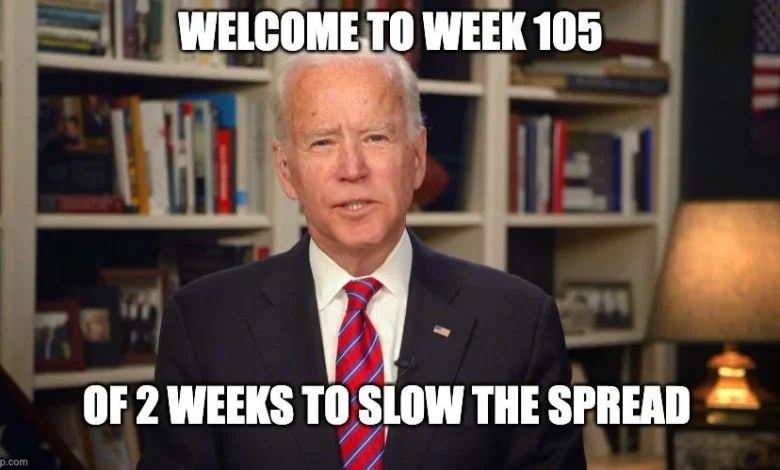
That wall now surrounds much of American public life. The COVID era supercharged our collective distrust by transforming national institutions into blunt political instruments. “Two weeks to slow the spread” evolved into a two-year catechism enforced with the zeal of a new civic religion. Agencies and experts contradicted themselves, massaged data, denied what everyone saw happening in real time, and—when challenged—responded with the dismissiveness (and violence) of an aristocracy affronted by its subjects. Once the public caught these contradictions, many concluded that everything was a lie—even when some of it wasn’t.
America’s political, medical, scientific, and academic classes did not merely lose trust; they incinerated it.
The result is today’s metastasized cynicism. It does not distinguish between serious and unserious claims, plausible explanations and lurid fantasies. It treats everything as suspect, everyone as compromised. I certainly understand that because so much institutional dishonesty, scientific malpractice, and academic ridiculousness truly has occurred, that cynicism feels justified—even righteous. The “Orange Man Bad” narratives of the past decade hardened this impulse further. If one side could convince itself that Donald Trump told Americans to inject bleach—a claim that never happened—nothing was too absurd to believe or too implausible to propagate.
But cynicism is not a shield; it is a solvent. It dissolves the capacity to discern truth, leaving citizens susceptible to any narrative that confirms their despair. Healthy skepticism protects a society; unhealthy cynicism corrodes it. Left unchecked, it slides toward nihilism, misanthropy, and the kind of kamikaze fatalism that seeks not merely personal destruction but communal collapse.
America once possessed the cultural antibodies to resist this impulse—the confidence, cohesion, and institutional seriousness necessary to hold cynicism at bay. Today, those antibodies are depleted. Owens’s baroque theories about Kirk’s death are not aberrations; they are symptoms. They reveal a public sphere where distrust has become default, where competing paranoias crowd out shared reality, and where every tragedy becomes a canvas for the darkest possible interpretation.
Look, no one has a duty to trust or believe anyone, but in a functioning, civil society, people (and organizations, especially governments) have a duty and responsibility to live, act and speak in such a way they earn that trust. If Americans want to escape the gravitational pull of cynicism, institutions must become credible again—and citizens must relearn the distinction between skepticism and despair.
Without that recalibration, low trust will become no trust, and no trust will become no society at all.