Fremantle’s Dancing Ledge Productions and Storytell-Her Studios’ new documentary Saving Mum: Our Family Secret, which airs on Channel 4 today, is directed by British South Asian creative Maleena Pone.
Launching on Channel 4 on 10th December as part of the First Cut strand, the film marks Pone’s directorial debut in documentary and is a personal exploration of generational trauma, grief, and healing.
The film follows Pone’s journey to repair her complex relationship with her mother, Jasbir, as they confront a shared legacy of silence, loss, and alcoholism. Filmed across the UK and Costa Rica it is a portrait of love, control, and emotional rebirth within a British Punjabi family.
The film is executive produced by Fatima Salaria, Dancing Ledge Productions, is commissioned by Rita Daniels at Channel 4, edited by Zeb Achonu, and produced in collaboration with Storytell-Her Studios—a production team composed entirely of women of colour.
How I moved into directing and why I chose to turn the camera on my own family, by Maleena Pone
I didn’t arrive at directing in a straight line. It was more like a slow gathering of instincts, forming into a craft that would emerge later. I started out as a video journalist, the kind of job where you have to do everything yourself: pick up a camera, shape a narrative on the ground, interview, shoot, cut, build a sense of the world in minutes. No one ever told me I was “directing” back then, but that’s exactly what I was doing – following curiosity, feeling out a frame, letting people open up in their own time.
My packages were always a bit more cinematic than they probably needed to be. I couldn’t help it. I loved the blend of story, texture, and the energy of a moment. And when I moved away from news into campaign content and branded storytelling, something clicked. I found myself drawn to that space where personal testimony meets visual language, where someone’s truth and the way you choose to hold them on camera become a single conversation.
I spent years producing bigger pieces where I didn’t always get to direct, but I was constantly watching other filmmakers. Properly watching. How they spoke to contributors, how they held a shot, how they shaped silence. I absorbed everything. At the same time, I was self-shooting – on my phone, on a small DSLR, eventually on a broadcast kit – building the instincts needed for intimacy when you can sense the emotional temperature of a frame and allowing the lens to become an extension of my own presence,
So when the moment came to direct my first long-form factual programme for Channel 4’s First Cut strand, it didn’t feel like a grand reinvention. It felt like the next step in a journey I’d already been on and the story I wanted to tell was one I knew intimately and had to tell from the inside.
Turning the camera on my own family wasn’t about making myself the subject. It was about finally naming the things we’d all carried quietly for years – the drinking, the grief, the patterns no one knew how to interrupt. No external filmmaker, however brilliant, could have walked into that emotional landscape and understood the micro-truths of how my family move, speak, avoid, collapse, or come back to each other. That’s why so much of the filming inside the home was just me and my mum. It allowed the atmosphere to stay soft, familiar, and unperformed.
When the conversations became bigger, the moments where I knew I needed to be both daughter and filmmaker, I brought in the one person I trusted to hold that space with us, my DOP, Daniel Trapp.
Daniel and I had spent almost a year building a friendship before a single frame was shot. His interest in the story grew slowly, almost tenderly, and I loved the way he sees the world. His eye is like a living photograph – patient, observational, quietly poetic, which aligns so naturally with the archive that sits at the heart of Saving Mum. But more than that, it was the inner work we did together that made it possible for him to be in the room during the most sacred conversations of my life. I needed someone who understood not just the craft, but the emotional and spiritual weight of what was unfolding. He was the only other filmmaker I allowed into that space, and that decision was entirely rooted in instinct and discernment. The trust between us meant we could honour the essence of those scenes without disturbing the fragility of what my mother and I were uncovering.
Working with decades of personal archive added another layer of intimacy to the process. I didn’t always know what was on the tapes until I sat and watched them, often alone, pausing on moments that suddenly carried a different meaning from the vantage point of adulthood. Some were accidental treasures – fragments I’d filmed without understanding their significance at the time. Others were intentional: small attempts to show my mum a reflection of herself she might recognise privately, away from judgement. The challenge was weaving these memories into the film in a way that felt honest without feeling exploitative. And truthfully, some of the most profound parts of our journey never made it onto camera at all. There were moments we consciously resisted filming because living them fully mattered more than documenting them, especially the plant medicine journey we went through. That’s the real tension of observing your own life: knowing when the frame is a container for truth, and when the truth needs to stay unframed.
Allowing ourselves as subjects, as a family to breathe inside the process was essential. Honouring the story in its entirety meant respecting the parts that wanted to be seen and protecting the ones that needed to remain ours. That balance shaped Saving Mum, and it taught me something about my own voice as a filmmaker: I’m committed to stories that require sensitivity, courage, and an unusual degree of trust.
This film is the result of craft, intuition, and a willingness to sit in the emotional weather of real life – not just observe it. It reaffirmed what I care about most in my work: building relationships with contributors that go far beyond the frame, creating a language between director and cinematographer that can hold the truth without harming it, and shaping narratives that speak to something human, not just headline-worthy.
I know now the kind of spaces I want to make on future projects – spaces where people feel safe enough to tell the truth, and where the filmmaking itself becomes part of the healing. Saving Mum was a homecoming for me as a director, and a reminder that when a story is held with integrity, it can transform everyone involved.
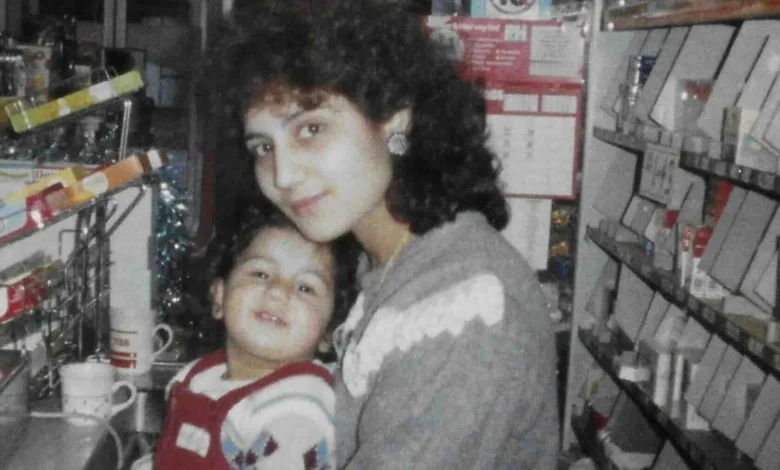
Pictured: Maleena and Jasbir Pone