Removed from Filming After Michael J. Fox’s Arrival, This Actress from Back to the Future Finally Reveals What Really Happened

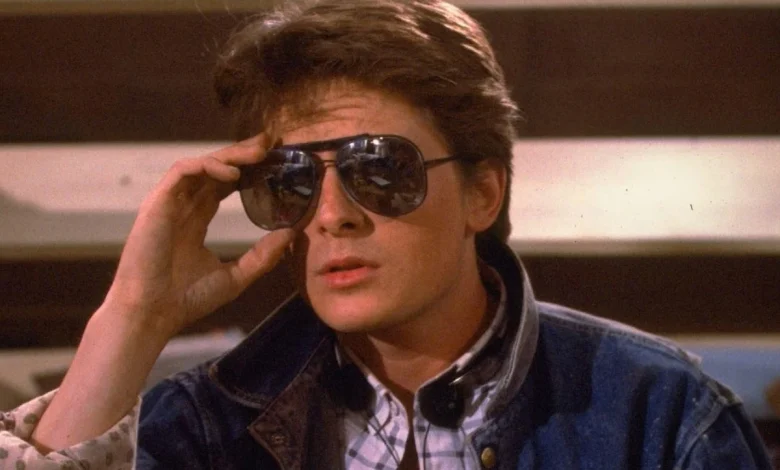
She had the role locked. Then Michael J. Fox walked in, and her future changed in a heartbeat. Was it creative vision, backstage politics, or something embarrassingly simple that erased her from the film?
The saga behind Back to the Future’s Jennifer Parker turns on a sudden switch at the top. When Michael J. Fox took over from Eric Stoltz, director Robert Zemeckis recalibrated the couple on screen and Melora Hardin gave way to Claudia Wells, a choice chalked up to height dynamics. Fox revisits that moment in his memoir Future Boy, tying it to a career shaped by inches and childhood experiences. The role would shift again to Elisabeth Shue in the sequels, a reminder that even beloved classics are built on last-minute pivots.
A surprising shake-up in Back to the Future casting
Few films have left a mark on pop culture the way Back to the Future has. But did you know the beloved 1985 classic could have looked very different? Originally, Melora Hardin was cast as Jennifer Parker, Marty McFly’s girlfriend. However, her stint on the set was cut short when the production decided to replace Eric Stoltz, the original Marty, with Michael J. Fox. What happened next is a story both unexpected and oddly fascinating.
Height over chemistry: the decision to replace
Melora Hardin had already begun working on her role, expecting to portray Jennifer opposite Eric Stoltz. But Stoltz’s dramatic approach to Marty McFly did not mesh with the lighthearted vision that director Robert Zemeckis and his team envisioned. Enter Michael J. Fox, the choice they had wanted from the start. Fox brought energy, wit, and comic timing that were perfect for the film, but there was a catch. Physically, he and Hardin did not seem to match visually.
Zemeckis reportedly felt the height difference between the two created an imbalance on screen. Hardin, taller than Fox, was replaced by Claudia Wells, a decision dictated less by talent than by optics. The modest difference in stature had a major effect on how casting shifted, highlighting Hollywood’s frequent, unspoken prioritization of appearances. It is a detail that surprises many fans even today.
Michael J. Fox’s reflections and career hurdles
This was not the first or last time height factored into Michael J. Fox’s career. In his memoirs, he candidly shares how being about 5 ft 4 in occasionally proved a challenge in landing roles. His casting opposite taller actresses often required creative solutions. He did not let it dim his shine, though. Fox found humor in these moments, saying he was used to adapting from childhood, where he was frequently the smallest kid in class. His relatability and self-deprecating wit made Marty McFly a phenomenon.
What came after: Jennifer Parker’s on-screen evolution
The role of Jennifer Parker continued evolving even after Claudia Wells stepped in. Almost paradoxically, Wells herself did not return for the sequels released in 1989 and 1990 due to personal reasons, including her mother’s illness. She was replaced by Elisabeth Shue, making the character one of the few to have two separate on-screen portrayals in the trilogy. Despite the changes, Jennifer helped ground Marty’s adventures, earning her place as a beloved piece of the franchise’s puzzle.
A casting story that still resonates
For many fans of Back to the Future, the casting twists are the kind of behind-the-scenes drama that enhances their love for the series. The balance of Marty McFly and Jennifer Parker, chemistry, and visual harmony was carefully managed. Melora Hardin’s journey is a telling example of how Hollywood decisions are not always about skill. Yet the domino effect it set into motion delivered one of cinema’s best-loved duos. Sometimes, the stories beyond the screen can be just as intriguing as those on it.