Speaking at the International Sea Power Conference in London on 8 December, the First Sea Lord, General Sir Gwyn Jenkins, has given his most direct account yet of how the RN intends to transform for a more dangerous era. He set out an approach that is unapologetically urgent, technologically ambitious and rooted in alliances.
Hard talking
Previous 1SL conferences have been held amid the traditional splendour of Lancaster House, but this year the event was hosted in a modern conference centre at BT headquarters in the City of London. Less choreographed and with some more plain speaking by panellists, this reflected the directness of the new 1SL and the urgency of the darkening international situation.
Although attended by Ministers, most of the RN’s senior officers, heads of allied navies and industrial leaders, the tone was different. From the outset, Jenkins underlined that this was not an event for diplomatic niceties. It was, instead, a forum to “step up because we have to”, shaped by what he described as an increasingly unstable world and a maritime environment where the advantage once enjoyed by Western nations in the Atlantic “is at risk… we are holding on, but only just”.
His remarks were structured around what has not changed, what has changed and how the RN intends to respond. The constants remain geography, the oceans and alliances. As he noted, the UK sits at “the cornerstone of access to the Atlantic”, and its prosperity, data flows and energy supplies depend on secure sea lines. Geography, however, is also what makes NATO’s collective defence essential. 1SL emphasised that the strength of the alliance is not uniformity, but the ability to debate and disagree while remaining united in purpose. He reminded the audience that the UK’s continuous at-sea deterrent protects not only Britain, but “the 1 billion souls across the NATO alliance”.
Atlantic threat
Despite the dismal performance of Russia’s army in Ukraine, its navy is still a potent threat, backed by a $100Bn investment plan announced this year. The Northern Fleet base houses the largest concentration of nuclear weapons in the world, and its submarines are of great concern to the UK and Europe. Jenkins highlighted the 30% increase in incursions by Russian vessels in UK waters over the last two years.
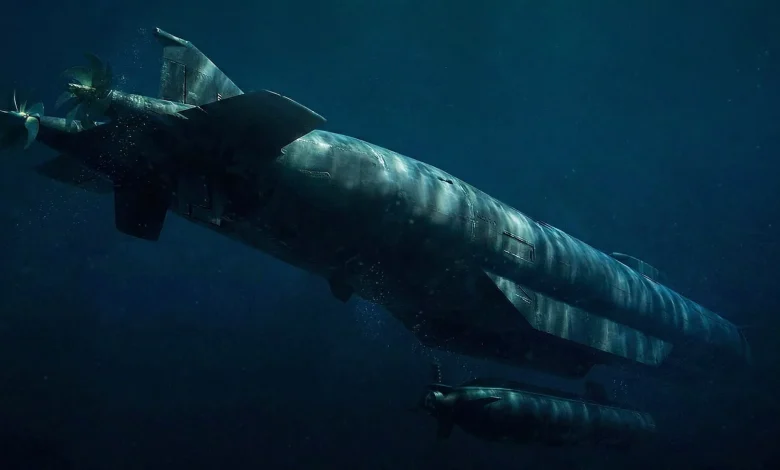
As we have noted before, the Russian undersea spy ship Yantar is only the visible part of the problem, something of a show pony, calculated to spread alarm and despondency wherever she deploys in European waters. What lies under the waves, Jenkins argued, is a more significant concern. Activity by the fleet of submarine motherships and submersibles capable of interfering with subsea infrastructure is much harder to detect than Yantar, which is continually monitored.
He also underlined that the pace of technological change has become an independent driver of risk. “The pace will never be as slow again as it is today”, he warned, insisting the RN must transform so it can move at speed rather than attempt to predict the future. The combination of great-power competition and rapid innovation demands a force that can move “at the pace of relevance”. While the RN is moving forward, adversaries are innovating faster, increasing their quantitative advantage while reducing our qualitative advantage.
Bastion, Shield and Strike
The RNs deterrence response to the Russian threat is built around three overlapping concepts for the Atlantic region. Atlantic Bastion covers the protection of sensitive UK and NATO sea space and the reinforcement routes through which North America supports Europe.
Recognising there is a shortage of conventional platforms, although these will form the core of the navy, the only way to achieve mass is through the use of uncrewed platforms. 1SL described Bastion as a major step forward from the experimental projects of recent years, combining autonomous sensors, uncrewed systems and traditional forces into a distributed network across the ocean. Importantly, he stressed the innovative procurement model where no long list of requirements for Bastion was issued to industry, just a problem set.
Atlantic Shield is the RN’s contribution to defending the northern approaches from missile and air threats, leveraging both existing platforms and the Future Air Dominance System concept. This IAMD strand aligns with the need for a hardened air defence posture both at sea and for the UK itself, particularly as peer competitors field longer-range weapons and clutter the electromagnetic environment.
Atlantic Strike provides the offensive element: sustained carrier operations, long-range strike and amphibious action that creates what Jenkins called the “advantage that if an aggressor is foolish enough to strike us, they will know we can strike back”. Although not explicitly highlighted, it is clear that the aircraft carriers have a major role in deterring Russian activity and should not only be seen in the vague context of power projection or defence diplomacy. The effort to find alternative options for equipping the F-35 with stand-off weapons is key to that role. 1SL confirmed that a demonstrator for uncrewed fast-jet operations from the carrier will fly next year, and says the RN and RAF are genuinely in lock-step developing their approach together.
The 6th domain
In the context of the Atlantic Bastion concept, Jenkins said industry has stepped up in spades “For every pound we have invested, industry has invested four”, amounting to some £500 million of research and development for the demonstrators. He linked this directly to the commercial potential of maritime autonomy, projecting a global market of £350 billion and presenting Bastion as an engine of national growth.
Speakers at the conference suggested the industry should be formally recognised at the 6th domain for defence (In addition to Land, Sea, Air, Cyber and Space). Without an industry that is equipped and agile enough to respond to the demands of conflict and the rapid iterative developments seen in Ukraine, winning is impossible.
Across the board, it is absolutely critical that the Treasury now provides the funds and backing to the many SMEs and start-up companies that answered the call for innovation and have self-funded investments in UK defence. There is a serious risk that momentum and expertise will be lost if this money is not rapidly forthcoming. Unconfirmed reports suggest the Defence Investment Plan (DIP) will be published just before Christmas but there is little optimism that it will be adequate and funding increases will be more than offset by the effects of inflation.
In November 2025, Helsing opened an 18,000 sq ft factory in Plymouth to mass produce its SG-1 Fathom autonomous underwater gliders. Clearly, the company believes it will play a significant part in the Atlantic Bastion sensing programme, which will initially be run as a contractor-owned and operated service provided to the RN (Photo: Helsing).
More tongue-in-cheek, a panellist suggested that defence media and communications should be taken more seriously at the ‘7th domain’. The information war is another dimension in which the UK must fight and win, but MoD communications efforts do not reflect this. Far better use could be made of the informed journalists, commentators and academics who are keen to help tell the story of defence and help prepare the wider public for the realities of the conflict we are already in. There is an inconsistency in defence media engagement, a lack of imagination in offering access, an unwillingness to empower service personnel to speak freely and a top-down, heavy hand of institutional and political obstruction.
Allies at the centre of the plan
Jenkins was clear that the UK cannot succeed alone. He highlighted Norway’s decision to join Atlantic Bastion, linking this to the future combined anti-submarine flotilla of Type 26 frigates operating in the High North. This reflects a major evolution in UK-Norwegian naval cooperation and places Bastion within the wider tapestry of NATO undersea surveillance initiatives. He invited further partners to join, arguing that a shared sensor network is essential to maintaining control of the Atlantic.
More broadly, he justified global deployments such as the recent Carrier Strike Group mission to the Pacific as part of a worldwide alliance effort, noting pointedly that the Chief of the Royal Australian Navy had flown to London for the conference. In his view, the RN must draw strength from coalitions that “stretch far and wide”. Heads of the Canadian, Italian, Norwegian and Danish navies were all in attendance and provided useful alternative perspectives on many of the issues facing other maritime forces. All were enthusiastic about deepening cooperation efforts. The challenge is whether friendly nations used to operating together can move to become a more unified force, seamlessly operating units and equipment interchangeably.
The US National Security Strategy document was released this week. Based on MAGA tropes of isolationism, abandoning international frameworks, undermining long-term allies while pandering to Russian imperialist ambition, a stark reminder of how Europe has no choice but to step up for its own defence. Although considerable US forces remain in Europe, the American admiral attending the conference was in a delicate position. Many senior US officers have dedicated much of their careers to preparing to face down the Russians, but are now constrained by chaotic political leadership. The cornerstone US contribution to the defence of Europe that has underpinned UK defence planning since the late 1940s, can no longer be counted on.
Anglo-Norwegian naval cooperation is set to become even closer with the joint Type 26 frigate force and participation of Atlantic Bastion.
Change within
If the maritime transformation was the centrepiece of the speech, the 1SL also addressed internal reform. He announced the launch of the Warfighting Ready Plan 2029, built on extensive wargaming and designed to reshape the fleet, training system and leadership model. The RN has already stripped back unnecessary internal processes which should save about 200,000 man-hours a year, time that can be reinvested in readiness and preparation. This forms part of a wider cultural shift aimed at empowering the operator and accelerating decision-making.
He linked this to a redesign of officer training in both the RN and Royal Marines, emphasising the need for leaders who can inspire as well as deliver results. The transformation of the Commando Force was highlighted as an early exemplar of this mindset: small, technologically enabled teams configured for the High North and integrated closely with Norwegian and Dutch forces.
The RN’s mission statement has been changed from the rather nebulous “Global, Modern, Ready” to the more focused “Lead, Fight, Win”. This reflects Jenkins’ aim for simplicity and clarity of purpose. Strong leadership and direction are needed to shape the RN and a national endeavour, to be able to fight effectively and win if needed. Only truly credible deterrence will prevent conflict. There will be plenty of cynicism about such lofty objectives, given the dire state of the RN today. Caught in a perfect storm that is mostly not of its own making, at least there are signs of strenuous attempts at transformation being made, even if inadequately resourced by government and the benefits may take time to be felt on the front line.
Jenkins closed with a direct appeal to industry and allies. He said that lack of money should not be an excuse and that we must be ready to fight with what we have, not what we hope to have in the future. The RN has to change now, he said, because “the alternative is not worth thinking about”. The journey will involve headwinds, but he conveyed a grounded optimism that the combination of national purpose, allied commitment and technological momentum can ensure conflict can be deterred.
Main image: The Russian Northern fleet submarine, RFS Belgorod, is an adapted Oscar-class SSGN special-purpose boat designed to be ‘mother’ to the Losharik, a deep-diving midget submarine for covert seabed warfare missions.