The early and intensifying wave of influenza sweeping across Ireland presents a challenge to the resilience of the health system. Latest figures from the Health Protection Surveillance Centre show hospitalisations rising by almost 60 per cent in just a fortnight and respiratory illness notifications climbing sharply. Children aged 0-14 accounted for the highest number of cases last week, underscoring the virus’s reach into schools.
Influenza has arrived weeks ahead of its usual seasonal peak, prompting modelling that projects up to 1,500 beds could be required at the height of the outbreak around Christmas, when hospitals are not at full staffing levels. The strain in circulation appears both more infectious and more severe than those of recent years.
Such an early onslaught emphasises long-standing structural vulnerabilities in the Irish health service. The HSE’s winter planning has repeatedly acknowledged that bed occupancy routinely exceeds sustainable thresholds outside of crisis. This early surge exacerbates the challenge. Even robust preventative measures, including vaccination campaigns, struggle for traction. Coexistence with other respiratory pathogens compounds operational complexity.
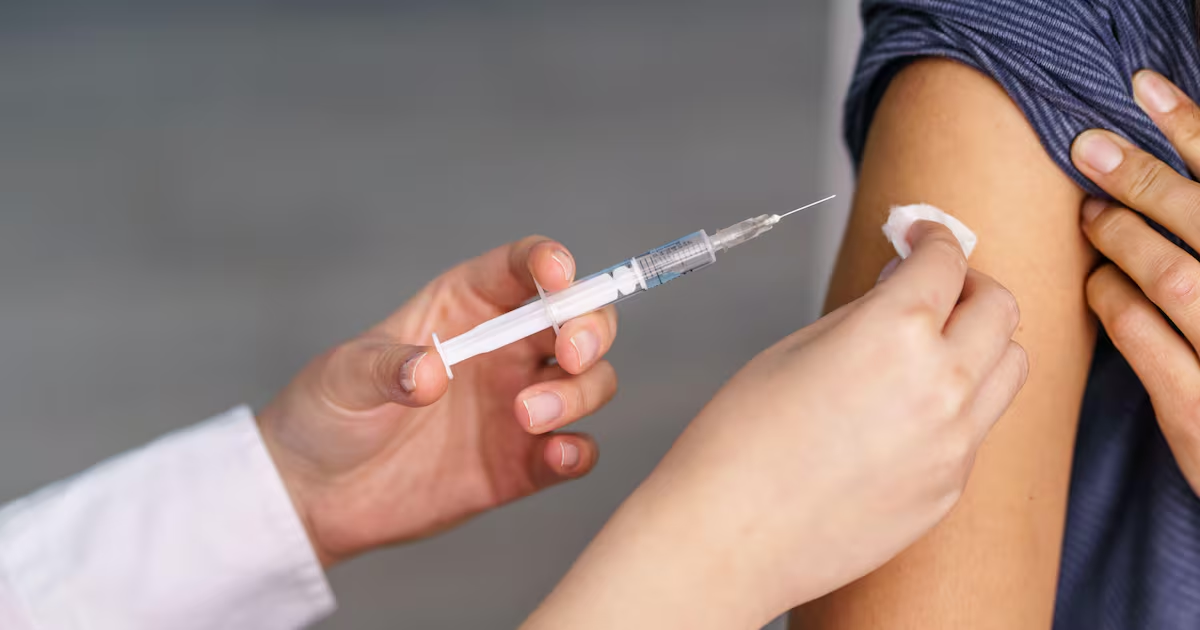
Public health officials are right to advocate vaccination. But only 18 per cent of children aged two to 17 have received the nasal flu vaccine, against a target of 50 per cent. Among adults over 60, uptake sits at 56 per cent versus a 75 per cent target. Even HSE healthcare workers have achieved only 26 per cent coverage.
The HSE’s decision earlier this year to cancel a tender for enhanced flu vaccines on cost grounds has been criticised, but it remains unclear how significant it may prove.
This early flu surge exposes the fault lines in a health service operating at the limits of capacity. As winter deepens and seasonal pressures intensify, the response to the challenge will test collective readiness and once again present a stark reminder of the urgent need to strengthen the systems upon which public health depends.