Former Mid-Eastern Athletic Conference commissioner Dr. Dennis Thomas had brought his football vision for a historically Black college and university postseason bowl game to member schools for 10 years.
There had been a season-opening game pitting a MEAC team against a Southwestern Athletic Conference team, the MEAC/SWAC Challenge, since 2005. But Thomas wanted to take that to another level with a bowl game between the best of the two conferences. It wasn’t an easy sell, as the MEAC year after year refused to give up its automatic bid to the FCS playoffs — even if that meant travel for the team and band led to a financial loss.
“I just couldn’t understand it,” Thomas said. “Every year, I would bring it up, and they would say no. Five years in (to the pitch), the athletic directors said, ‘Dennis, we’re not interested, so don’t bring it up anymore.’
“And guess what? The next year, I’d bring it up again.”
The idea remained a routine agenda item until a MEAC meeting in 2015 — the result being a one-vote margin to send its football champion to the new HBCU postseason bowl game.
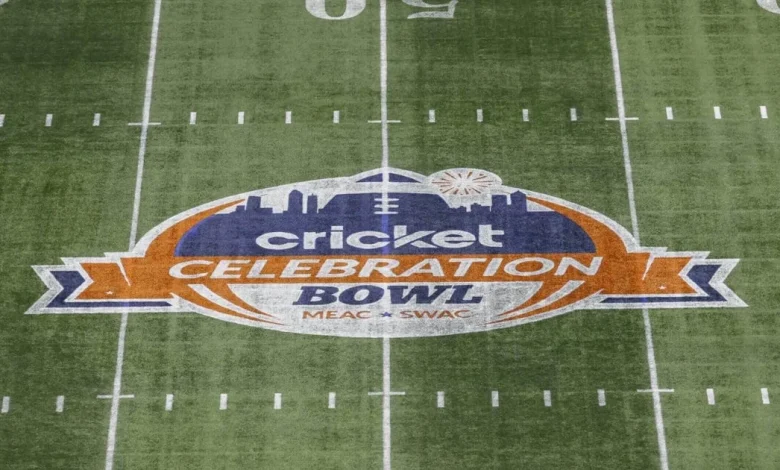
That game, the Celebration Bowl, will feature MEAC champion South Carolina State (9-3) and SWAC champion Prairie View A&M (10-3) on Saturday at Mercedes-Benz Stadium in Atlanta and officially kicks off college football bowl season each December. Saturday’s clash will mark the 10th edition of the bowl game, making it the longest-running HBCU postseason bowl game ever. (No game was played in 2020 because of COVID-19.)
Reaching 10 Celebration Bowls is significant. It’s a sign of stability some might not have believed was once possible. The game has drawn fewer than 30,000 fans only once and peaked at 49,670 in 2022 when North Carolina Central defeated Jackson State in overtime.
It took Thomas’ persistence, an agreement from the SWAC and the support of ESPN to get the Celebration Bowl off the ground. It’s become one of the preeminent HBCU sporting events annually and is considered the de facto HBCU national championship game.
“We’re giving the country an HBCU Super Bowl,” said John T. Grant, the executive director of the Celebration Bowl.
Before starring at the University of Colorado and becoming the starting quarterback for the Cleveland Browns, Shedeur Sanders led Jackson State to Celebration Bowl appearances in 2021 and 2022. (Kevin C. Cox / Getty Images)
Thomas invited then-ESPN president John Skipper to meet school presidents during the MEAC basketball tournament back in the early 2010s. It took a few runs through a voting agenda, but after a 2015 spring meeting, by the narrowest of margins, the bowl game was approved.
ESPN matters because of ESPN Events, the division of the company that owns and operates several college sporting events, including the Celebration Bowl and the MEAC/SWAC Challenge. Skipper’s support of the Celebration Bowl was important. Many involved with the start of the game point to Skipper’s role in making sure ESPN provided the financial support needed to make it a success.
Pete Derzis was senior vice president for college sports programming and ESPN Events when the Celebration Bowl was first announced. He was part of the pitch to the MEAC before the vote of approval. Derzis had been involved with the start of the MEAC/SWAC Challenge, working with Thomas and then-SWAC commissioner Robert Vowels and then-assistant commissioner Jay Roberson.
Derzis said Thomas was persistent in his beliefs of an HBCU postseason bowl game. He wanted to make the game happen, but he also knew finances could be an issue.
“I met with Skipper literally five minutes before we went into the room (to vote),” Derzis said. “I said, ‘John, if we’re here to get this deal and get it done, then I need for you to just approve more money, because I’m going to have to go in at a higher level.’”
Mark Wright, a graduate of HBCU Howard University in Washington, D.C., joined ESPN Events as director of digital and content in 2007, partly because of the possibility of the game happening back then. But it still took eight more years for the game to become reality.
Skipper said his belief that ESPN needed to serve its sizable Black audience (about 25 percent) was proof the game would have an audience. Skipper added that Wright, Derzis, Grant and Thomas deserve all the credit for the event’s success.
They say Skipper undersells his role.
“This game doesn’t happen without John Skipper just saying at some point, ‘OK, Dennis, what’s it gonna take for us to get this done? What’s your number?’” Wright said.
The payout of $1 million per conference got the job done.
From Skipper’s perspective, the game was always in play. A North Carolina native, Skipper had been a spectator of the Aggie-Eagle Classic, one of the biggest rivalry games in HBCU football featuring North Carolina A&T and North Carolina Central. He enjoyed the pageantry, the band performances during halftime and everything else that came with the experience.
Skipper had the authority to push the Celebration Bowl once the MEAC and SWAC both were in favor. Derzis and Wright were among those at ESPN assisting in leading the charge. Wright offered insight on how to make the game work, from making sure halftime was longer to accommodate the bands — always a big draw to HBCU football fans — to the overall schedule throughout the weekend.
Wright recalled discussing what to name the game a decade ago. They discussed the history of HBCUs and their family atmospheres. The inaugural game would be a celebration of all things HBCU — simple and fitting for what would become the name. The first two Celebration Bowls were played at the Georgia Dome in Atlanta, a city selected because of its recognition as a booming population for Black culture and also one centrally located for schools in both conferences.
The game has been likened to a December version of homecoming for all HBCU alums and fans.
“It’s become kind of a family celebration of the best of the HBCUs and high-level football,” Derzis said. “The name really has worked and has stuck really well.”
Grant is an influential businessman in Atlanta, as well as an HBCU graduate of North Carolina A&T. He was hired by ESPN Events in August 2015 and continues to be the executive director of both the Celebration Bowl and the MEAC/SWAC Challenge.
The focus of the Celebration Bowl weekend isn’t just the game; it’s about providing an experience for the players and fans. Grant said his efforts wouldn’t matter if not for the vision of Thomas and the support of Skipper.
Beyond the game and its festivities, the weekend starts with a battle of the bands, selected by a committee similar to the format of the College Football Playoff with weekly rankings. The battle of the bands was something Skipper initially wanted to do, but the cost of licensing as many as 19 songs on television was expensive.
The weekend has grown to include it.
“A lot of people still don’t know that they want it,” Grant said, “but the more they tune in, the more they like it.”
South Carolina State will play Prairie View A&M in this year’s Celebration Bowl in Atlanta. In 2021, Shaquan Davis (1) and the Bulldogs won their first Celebration Bowl. (Kevin C. Cox / Getty Images)
Thomas always believed in the game because he played for HBCU Alcorn State. He was an All-American and was named SWAC Offensive Player of the Year in 1973 — as a center. Thomas beat out Jackson State running back and future Pro Football Hall of Famer Walter Payton for the honor and remains the only offensive lineman to win the award. He also coached at Alcorn State and South Carolina State.
Thomas always recognized HBCU games drawing big crowds in NFL stadiums during the regular season. He sees the Celebration Bowl as a continuation of that tradition. Corporate sponsors continuing to support the event is also encouraging.
“I’m just happy to see it keeps growing,” Thomas said. “I’m happy to see that both conference champions look forward to it. I’m happy to see that ESPN still sees value in their investment, and they’ve gotten an excellent return on their investment. I think it’s been a win-win for all partners involved.”
Derzis retired in 2021, as did Thomas. Wright left ESPN in 2019. Skipper resigned from ESPN in 2017. Some of the key players to start the Celebration Bowl have moved on, but the growth of the event and the attention it receives are proof to Wright that those who might have once been skeptical of success were wrong.
Wright is happy the bowl game will celebrate 10 years this weekend. But he still believes it shouldn’t have taken until 2015 for such a postseason game to exist.
“I think at the end of the day, everybody was in agreement that doing this was the right thing to do,” Wright said. “It’s almost like we needed to obviously launch the game.”
Skipper said he did nothing special aside from supporting Thomas’ vision and values the work Derzis, Wright and Grant did to make the game successful.
But the others will say it was Skipper who had the authority to fund the game and held the final say.
“Nobody wanted to spend the money to make it happen,” Skipper said, “and I and Pete Derzis and Mark Wright and Dennis said, ‘Well, we’re gonna do it.’ It is a great benefit of being in charge.”
Consider it a decision that needed more than a decade to push — one that needed the marathon push.
“I couldn’t let it go,” Thomas said of the multiple meetings prior to the Celebration Bowl becoming a reality. “I just couldn’t let it go.”