In Barcelona’s season of comebacks, going behind is almost part of the plan – The Athletic

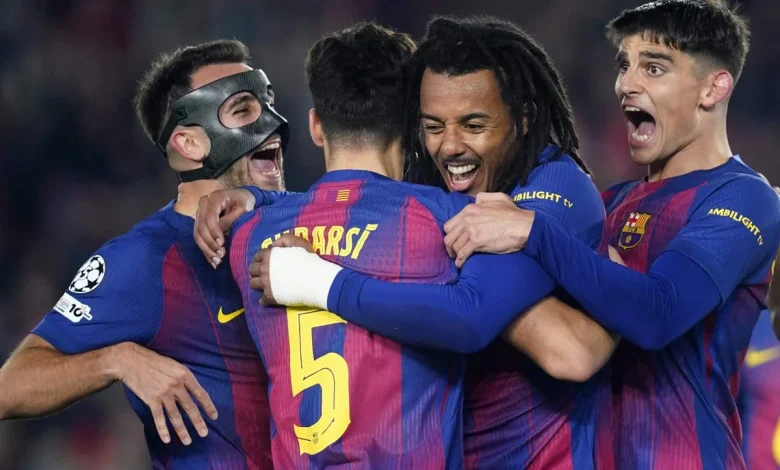
Jules Kounde emphatically celebrated his first goal, peeling off towards the corner flag with Barcelona team-mates in pursuit after his thumping header from Marcus Rashford’s in-swinging cross. His second, just a few moments later, was another far-post header, this time from a Lamine Yamal ball into the box.
But this goal was met with suspicious disbelief.
Team-mate Pedri thought Kounde didn’t mean it, and it turned out he was right. The defender said afterwards he was actually trying to cut the ball back for somebody else to try to score. “Sometimes you need a bit of luck,” he told Spanish broadcasters Movistar.
Those goals came in three second-half minutes on Tuesday to put Barcelona in front at home to Eintracht Frankfurt, having gone behind to their Champions League opponents in the 21st minute, en route to a 2-1 victory at the Camp Nou. It was yet another comeback — Barca’s seventh of the season, and their fourth in a row. Maybe that explains Kounde’s nonchalant reaction to what turned out to be the winner.
The 27-year-old France international was named player of the match, and his performance was a telling reflection of where manager Hansi Flick’s side are right now.
Barca were again not very convincing in defence, but their attacking play was good enough to seal a really important victory. After a 3-0 defeat at Chelsea and a 3-3 draw away to Club Brugge in their previous two European matches, this result means that with two winnable-looking league-phase games to go (away to Slavia Prague, at home against FC Copenhagen, both in late January) they are two points off the top eight spots which bring automatic qualification for the round of 16 in March.
There are two ways of looking at this.
One is positive; that Barca have the required resilience to push back against adversity and emerge triumphant. The other is less romantic; conceding first is a worrying and persistent weakness they’ve been unable to fix.
Hansi Flick is committed to Barcelona’s high-risk playing style (David Ramirez/Soccrates/Getty Images)
“On the one hand, I’m happy to come back in this kind of game. It shows that we have a good mentality and attitude and how competitive we are,” Flick said in his post-match press conference.
“We never give up, and this is really good, but it would be nice to start the game and be directly there. Maybe score the first one or two goals. Although that’s the way it is. I appreciate what I’ve seen. It wasn’t easy to beat Eintracht, who were very good in defence. They gave us no space. It wasn’t easy to create chances, but we had some.”
The fact is, the way Barcelona set up to play, with an aggressive defensive line and intense front-foot press, carries many risks. We have seen it on many occasions this season — and some opponents have learnt to expose it. But Flick is not willing to give it up. This is the style he wants for his Barca side, and it is closer to a joyful game than a conservative one.
Johan Cruyff, famed as a player and then manager of the Catalan club, once said that he preferred to win a match 5-4 rather than 1-0. That attitude remains fresh in the minds of the many fans who, decades later, see the late Dutchman as the author of Barca’s footballing philosophy. Flick understood that from the outset when appointed 18 months ago.
This is probably why last season’s title-winning Barcelona team captivated their supporters so much more than the Xavi-managed one who finished top of La Liga two years earlier. That 2022-23 campaign was nicknamed ‘The 1-0 league’, the scoreline being so often repeated. Barca scored 70 times and conceded just 20 in their 38 league games. Last season under Flick, they let in almost twice as many La Liga goals (39), but plundered 102.
Jules Kounde heads in Barcelona’s second goal – by accident (Pedro Salado/Getty Images)
Flick’s team have left a good impression in their recent league matches.
After losing 2-1 to Real Madrid on October 26, they were five points behind their Clasico rivals. They are now four points clear of them, having taken full advantage of their arch-rivals’ own poor run.
In the Champions League, they are still only 14th in the 36-strong league-phase table, with further matchday six fixtures to be played on Wednesday. At the moment, it’s hard to make a case for them being favourites to win the competition — which remains the ultimate dream for many Barca supporters, more so than defending last season’s domestic treble.
The fans have become accustomed to seeing Barcelona in a losing position, which would be a more challenging situation in knockout-stage ties against truly elite European teams. Yet there is no sign of nervousness. Barca rarely lose control of games, which builds confidence in the system. Flick’s analysis after matches is very recognisable from what one can see on the pitch, and that also generates trust among the players and fans.
The players clearly believe in the process, and they have faith in Flick’s project. In other seasons, we have seen a hesitant, unconfident team who could be winning in the 80th minute of a game but still make you think they can easily end up being defeated. That is no longer the case.
“We can do better, and we will,” Flick said at a press conference in late November.
Barcelona continue to deliver on that promise.