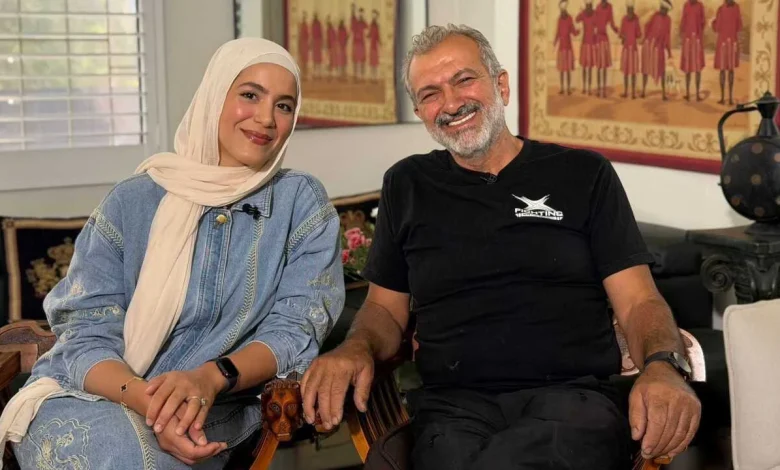
After the Cronulla Riots, Issam Mansour built a pool in the backyard of his Punchbowl home in Sydney’s south-west.He says he did it so children wouldn’t have to go to Cronulla in order to swim on hot days. “I did it to protect them,” he says. Mansour was born in Lebanon, and migrated to Australia where he started his family in the 1980s. His eldest daughter, Sara, is now 32. Before the riots, she remembers visiting Cronulla routinely.
“We have very fond memories in our childhood of going to Cronulla every week and jumping into the high waves.”
Issam Mansour (62) and his eldest daughter Sara (32) haven’t returned to Cronulla since 2005. Source: Supplied
Thursday marked twenty years since the one of the ugliest scenes in racial violence in Australia’s modern history took place on 11 December, 2025. The day saw around 5,000 people descend on North Cronulla beach, spurred by a text message calling on “Aussies” to “support Leb and wog bashing day”.
For families like the Mansours, the legacy of the riots is wrapped up in questions about what it means to belong in Australia. They sat down with SBS News to reflect on how that day changed them, and why they haven’t returned to Cronulla since.
Two conflicts marked
Issam, now 62, remembers the feeling of comfort and safety when he first arrived in Australia in 1988. It was safety he didn’t have as a teenager in Lebanon during the brutal civil war. “I had my opportunity to leave that country because I don’t belong to the war,” says Issam.“This is why value of a human to me is very important. I see children and women and older and young people die.”
A young Issam Mansour, who was 12 when the Lebanese Civil War started in 1975. Source: Supplied
This year marked not only the 20th anniversary of the Cronulla Riots, but the 50th anniversary of the start of the Lebanese Civil War in April 1975. Just as the Lebanese Civil War was a pivotal moment for Issam, the Cronulla riots would leave a lasting impact on Sara, who was aged 12 at the time.It was the same age her father was when the Lebanese Civil War began. Her family watched the riots unfold on television as images of angry mobs attacking anybody who looked Middle Eastern were broadcast across the country.
“[It] really dawned on me that was a place that was not for us anymore, there was a sense of anger and frustration,” Sara recalls.
‘They’re never welcome back’
Cronulla’s beaches were a popular swim spot for people living in Sydney’s south west, and territorial tensions had been simmering for some time. But the riot’s catalyst was when three off-duty lifesavers were injured in a fight with a group of Lebanese youth.
After that, a mass text message was sent to around 270,000 recipients, calling on “every f***ing Aussie in the Shire to get down to North Cronulla”.
A police officer helps a man after he was set upon by a crowd at Cronulla on 11 December, 2005. Source: AAP / Paul Miller
“Let’s show them that this is our beach and they’re never welcome back,” it read. The message of the riots, of a firm line around who was welcome at the beach and who wasn’t, was received by the Mansour family. At the time, they lived opposite Punchbowl Park. They said later that night, distressed members of the community met in the park to talk about their safety. They said they stayed in their area afterwards, because that’s the only place they knew they were safe.
“It made us go out less and it made us more insular,” Sara says.
Why Sara marked her arm with ‘wog for life’
Just before the riots happened, the Mansour family had returned from a trip to visit family in Lebanon. There, they were viewed as Australians.
But after the riots, Sara began to reflect on her identity.
At school, she used a permanent marker to write “wog for life” on her arm at school. Not long after, she started wearing the hijab.
“I think for me it was almost like a defiance and it was a sense of reclaiming my agency and controlling my identity and my body,” she says.
‘Not the image we want’
Sutherland Shire Council mayor Jack Boyd says the council is committed to ensuring the beach is safe for everyone.“It’s obviously not the image we want people to remember when they think of Cronulla, but the reality is the riots did occur,” Boyd says.
“We can’t walk away from the fact and instead we have to drive down that commitment to ensuring something like that never happens again.”
The council has supported initiatives like Surf Brothers — teaching surf lifesaving skills to young people from migrant backgrounds.But despite these initiatives, neither Issam nor Sara have returned to Cronulla since.
“I just can’t go,” Sara says.
Could the Cronulla riots happen again?
Race Discrimination Commissioner Giridharan Sivaraman believes something similar to the Cronulla riots could easily happen again.
“All of the ingredients that were there at the time of the Cronulla Riots twenty years ago are here now today,” he told SBS News.
Sara also feels the harmful narratives that fuelled the riots are still unresolved. “It’s about acknowledging there was a big injustice that was done on that day in Cronulla, and it didn’t just come down to the people,” she says.
“It came down to the machine that was feeding that narrative. And that machine has not stopped.”
Issam Mansour and his family in front of the Sydney Opera House. Source: Supplied
Issam says his family just want to live peacefully. “I’m Australian. My family is Australian,” he says.“We don’t war, because we’ve been through war. We don’t want to hate, because we’ve been through that.”