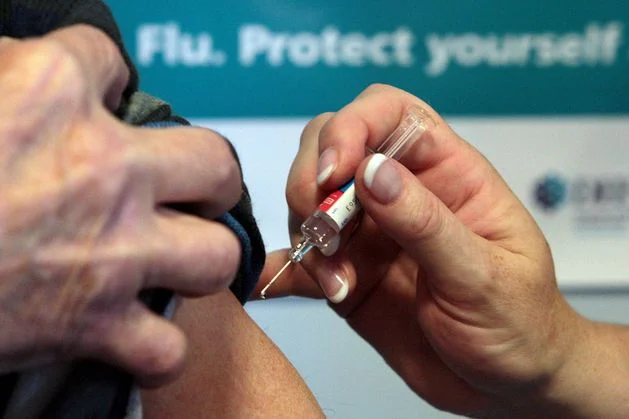
It is an oddly cheery name for something so potentially deadly. In response, Labour has called on the Government to urgently roll out the flu vaccine for free, a plea the party makes every year.
As things stand, the vaccine is offered at no cost to the over-60s and children between the ages of two and 17, as well as people with specified jobs or health conditions. Everyone else is required to pay through a GP or pharmacy.
Should those who can afford to pay be given the jab for free to protect their own health and that of those around them? There are a number of good reasons why they should.
This particular strain of flu has been likened to being hit by a train, so the cost of a takeaway is a small price to pay to step out of its way. Yet any cost inevitably acts as a deterrence, especially in the middle of a cost-of-living crisis. All the more so when the average cost of a private flu vaccine remains higher in Ireland than many comparable EU countries.
Not every service can or should be offered for free, but compensating pharmacists and GPs to give it away would arguably be an equally small price to pay when set against the cost to the health service of treating thousands of extra patients in hospitals into the new year and beyond.
Such an offer might not work. Vaccinations are already free for healthcare workers, but so far this year less than a third have had the jab, well below the target of 75pc. Even if the Government were to take up Labour’s suggestion, it may only be a well-meaning gesture at this belated stage.
A far more pertinent question for the future is whether what we are facing over Christmas is a flu crisis or a beds crisis.
If there is one thing on which most authorities agree, it is that more hospital beds are needed — not just during flu outbreaks, but throughout the year. The Government has been repeatedly urged to address the shortfall.
In May, the Economic and Social Research Institute published a report highlighting the urgent need for more beds to stem chronic overcrowding in hospitals even before this particularly vicious strain of flu struck.
Ministers will doubtless point to the Acute Inpatient Hospital Bed Expansion Plan, published in May last year, which aims to open 3,378 new beds by 2031. Even that, unfortunately, will not plug the deficit in a country with a rapidly rising population and one of the lowest rates of hospital beds per capita in Europe.
The Government’s strategy, reflecting Sláintecare, is to shift care away from hospitals and into helping patients “stay healthy in their own homes and communities for longer”.
That is a commendable aim, and probably wise in the long term, given the high cost of every additional bed. But it means that the system can quickly become overwhelmed whenever there is a large-scale infectious outbreak.
That is what is happening now. We must be grateful that the skill and dedication of medical staff from here and overseas is such that, for all its endemic crises, the health system still produces such positive outcomes for patients.