‘It: Welcome to Derry’ Bosses on the Shocking Finale, the Future of Pennywise and That Post-Credits Scene That Ties It All Together

SPOILER ALERT: This story contains spoilers from the Season 1 finale of “It: Welcome to Derry,” now streaming on HBO Max.
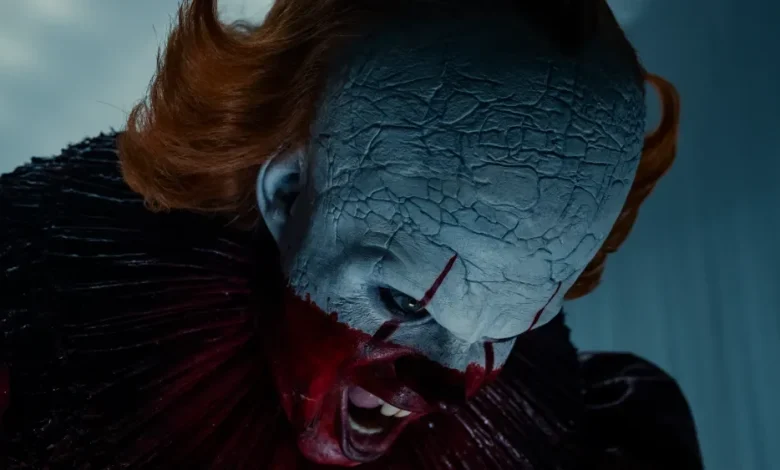
The first season of “It: Welcome to Derry” concluded in a way that was truly thrilling and chilling, with the show’s full ensemble taking on Pennywise the Clown (Bill Skarsgård) as he covered the titular town in an icy, supernatural fog. While series creators Barbara and Andy Muschietti insist that the climax’s liminal environment was not an intentional nod to Stephen King’s “The Mist,” they acknowledge the overlap in the universe, which is full of references to other King works such as “The Shining” and “The Shawshank Redemption.”
In the spirit of the author’s expansive source material, the brother-sister director-producer duo also note that Pennywise’s story is not over. Even though “Welcome to Derry” is a prequel to their 2017 and 2019 films, it’s already been established that the evil spirit possessing Pennywise arrived in Derry several generations ago, and the finale alludes to the antagonistic clown’s atemporal reality. Though they couldn’t give much away, the Muschiettis confirmed that they intend for a Season 2 to take place in 1935, chronicling the previous cycle of Pennywise’s awakening in the town. (HBO has not yet officially renewed “Welcome to Derry.”)
The overlapping timelines were made evident in the finale’s post-credit scene, which flash-forwards to 1988, showing Beverly Marsh (Sophia Lillis) briefly before the events of the first “It” film, previewing the tragedy that would set her own battle with Pennywise in motion. The scene features an elderly version of Madeleine Stowe’s character, Ingrid Kersh, revealing her to actually be the same old woman that It manifests as in “It: Chapter 2” to haunt the grown-up Marsh (Jessica Chastain). 91 year-old-actress Joan Gregson reprised her role as the elderly Mrs. Kersh for the scene.
Variety spoke with Andy and Barbara Muschietti — and emailed with co-showrunner, executive producer and co-creator Jason Fuchs — to talk about the season’s climactic finale, the series’ future and the post-credit scene that tied it all together.
Going into the finale, what questions did you know you wanted to answer to conclude Season 1?
Jason Fuchs: There were certain mysteries that had to be answered. Why does It remain in Derry? Well, now we know: he is trapped there within the cage assembled by the Children of Maturin centuries ago. Why does It choose the form of Pennywise? We know that now, too: it’s a real-life clown that the entity encountered in 1908. He saw the way children reacted to Bob Gray’s on-stage persona, almost like a hypnotic Pied Piper effect and decided, “Wait, this is a manifestation I can use to lure kids in.” And I also think it was important to understand the story of Ingrid Kersh. We have a fairly complete understanding of how Bob Gray’s daughter, after losing her father as a child, encounters this manifestation of him in 1935 and has been, in essence, operating as It’s “familiar” ever since to keep seeing what she thinks is a form of her father.
Was it always the plan to have the season end with this climactic battle in the fog?
Andy Muschietti: No. I think we were in production already and we decided that the Dagger would be a more prominent element in the story. This ending was molded and shaped along the way, but once we decided the episode’s big story would be about returning the Dagger to the dead pine, we had an idea. We really wanted a photo-finish moment, though, because there is so much anxiety in the sequence. That’s when I thought of bringing back Richie [Arian S. Cartaya]. Because we are in a world where people can see dead people, we thought it would be perfect for him to come back and help the other kids put the dagger back into the ground.
Was the idea of the fog over Derry taken from the novel?
Andy Muschietti: No, not at all. There’s a lot of stuff that we invented for the show, but from our first conversations with Stephen King, he was on board with us creating a lot.
I thought it might be an allusion to his novella, “The Mist”?
Andy Muschietti: It’s not, but of course, in “The Mist,” they say that the mist comes from the Todash Field, the same interdimensional plane that It is from. So it’s unrelated, but it’s also related. I wanted to use the fog to visually illustrate the expansion of the clouds that surround the Dead Lights. When we see the meteor crash into Derry in Episode 4, we see the three Dead Lights dancing around this cloud of fog. The physical element is established there, and for this story, I wanted to show that it is an expansive force.
How did you create that environment from a physical production standpoint?
Barbara Muschietti: Part of why we had to transition to this frozen world was because of the strikes. Filming went from Fall to Winter, so the setting had to match that. We thought of going to a real location in Ontario, but that thought lasted about a second and a half. We did a lot of November nights in Ontario on our first film, “Mama,” and that is not something we wanted to repeat or put our actors through again. So we made a conscious decision to go on a stage. Andy then gave it a real magical feel, working with our production designer Paul Austerberry and our DP Danny Vilar and our special effects crew to mist the whole stage for days and days.
How many days did it take to shoot?
Barbara Muschietti: We went back and forth. We were trying to keep some days as weather cover, but it was weeks.
Andy Muschietti: It was a mess, but it was brought into shape by our first AD, Joanna Moore, who is an absolute genius. The challenge was shooting on a stage and making it look like an outdoor space of undetermined size. We were doing all kinds of cheating, expanding distances, shooting on one corner of the set to get more distance from the other corner. VFX did a great job to make cohesion of all those different fragments.
Did you have just one unit, or did you use a second unit?
Andy Muschietti: We had a second unit for specific shots that didn’t require cast performances and some fights that required stunts. There were times where we were splitting the shoot with other scenes. It was a mess, but it was a lot of fun.
Barbara Muschietti: It was the end of Andy’s block, which meant he wouldn’t be shooting anymore afterwards. When Andy knows the end is coming, his brain goes into overdrive and he starts thinking of new stuff and the pressure is on. That’s the way Andy and I work. Sometimes we have four cameras on set shooting completely different set-ups. It’s chaotic, but we have a great team who welcomes this and everything ends up getting done.
Andy Muschietti: Yeah, in spite of having been there for months, the crew was really engaged with the story. That’s not a given. These guys were phenomenal.
The climax was also the first scene with the entire cast together, including Bill Skarsgård’s Pennywise. What was it like directing everyone together?
Andy Muschietti: It was challenging because of the geography. There are three or four different groups of people in the scene. The challenge was establishing the geography at every turn of the story so people would understand what’s going on, and where people are in relation to things and each other, all in an environment where the characters can’t see each other. There was a lot of preparation. We drew a lot of little maps.
Photo: Brooke Palmer
The finale also makes some allusions to things to come. Pennywise talks about the future and the past and Margy suggests that he may be able to travel through time. You’ve mentioned that you’re going to make two more seasons that go in the reverse chronology of Pennywise’s 27-year cycles. Is this still the plan?
Andy Muschietti: Yeah, that was always the plan from the beginning. Our first pitch to Stephen King was to tell the story backwards. I can’t say too much about the logic behind it, because I don’t want to spoil it, but it has to do with how Pennywise experiences time in a non-linear way. We sort of hinted at it at the end of the season.
Have you already started writing it?
Barbara Muschietti: We can’t talk about it.
Andy Muschietti: We can only say the stuff that’s already known, like it’s in 1935, 27 years before Season 1 and it involves the massacre of the Bradley Gang from the books. It takes place during the Depression in Derry, and there are some new characters and some characters from this season as well, but younger versions of them.
Viewers know that Pennywise lives into the future, though, since we’ve seen him in the “It” movies. Did that present a unique challenge, since we know that Pennywise doesn’t die in this finale?
Jaon Fuchs: Prequels always present a unique challenge in terms of stakes, in that the audience already knows the fate of key characters. In this case, we know It survives our show because It is still around eating kids in 1989 and beyond. So, it was an early conversation with Andy about, okay, well how do we create real stakes? Yes, we are going to create stakes in the context of “We care about these characters and what happens to them,” but how do we elevate the stakes of this beyond your traditional prequel? And the answer to that is not fully explained within the season, but there is certainly a hint of it in our finale. When It reveals the missing poster of Richie Tozier, from “Chapter 1,” and has this admission that the past, present and future are all a bit jumbled, that moment is establishing a new mystery and that mystery is directly linked to raising the stakes of the series. Because if It has this, let’s say, unique relationship with or to the perception of time, that suggests that the restrictions on what can happen in a prequel may or may not apply in the context of our particular story. Maybe It, in this show, is more dangerous we understood.
Speaking of overlapping timelines, Season 1 ends with a post-credits flash-forward where we see Sophia Lillis reprising her role as Beverly Marsh from the films and encountering an elderly Mrs. Kersh, who is the old lady from “Chapter 2.” Did you always expect to have this scene at the end of Season 1?
Andy Muschietti: No, we didn’t think of it until we were doing reshoots and pick-ups before the edit.
Barbara Muschietti: This was April of this year, so not long ago at all.
Andy Muschietti: I had a notion of what the show was going to look like, but I still wanted a visual connection to the characters from the movies. I had an idea for a four-scene epilogue, but it was a little too ambitious, so we condensed it to one scene with just one of the Losers. We always joke that Sophia Lillis always looks the same. She looked 14 when she was 14 and now that she’s 24, she still looks 14, so we could bring her back without having to de-age her. We also brought back the actress who plays the elderly Ingrid Kersh, Joan Gregson, in “It: Chapter 2.” We wanted to show that those characters had met before, so in the flash-forward, we have Kersh still committed at Juniper Hill, the same place where Beverly’s mom was committed. It seemed like the perfect connection.
Jason Fuchs: What I love about that scene is that it does change your understanding of Beverly’s encounter with It’s manifestation of Mrs. Kersh in “It: Chapter 2.” I was lucky enough to work on that scene and, at the time, I imagined that It was taking the guise of Pennywise’s daughter in order to prey on Beverly’s traumatic relationship with her own father. It did not, then, occur to me that Beverly Marsh had ever met the real Mrs. Kersh. But now, you go back and rewatch that scene and you realize It was up to something else. It knows that Beverly actually met Mrs. Kersh at least once and it was on the worst day of her life, the day her mother committed suicide. So, when It takes that form, it’s also a way of tapping into a long buried memory that’s intertwined with the most horrific moment, to that point, of Beverly’s young life. And that’s the day, the moment, we get to see at the end of our season.
Barbara Muschietti: What sparked it was our cameraman mentioning that he recently worked with Joan. When Joan played Mrs. Kersh in 2018, she was 85 years old, so now she was 91.
Andy Muschietti: And she did everything at 85. She did nudity, full frontal, and was phenomenal, but we didn’t know if she was still acting or anything.
Barbara Muschietti: But when we heard that she was, the idea for the scene came to Andy. We didn’t have any money left, but it was so important to Andy that we sat down with the budget and cut some VFX from the show so we could shoot the scene. Then we called Sophia, who is an absolute queen. She got on a plane right away, and we got to shoot this incredible scene that connects the show and the movies.
Andy Muschietti: I really want to thank Barbara publicly now, because I remember that moment when I wanted to shoot the scene and Barbara bent the iron bar in a way that normally would have been impossible to do with the budget and time we had. Thank you.
Barbara Muschietti: You’re welcome! I enjoyed it very much and we had to shoot very fast. Joan was having so much fun, just laughing, smiling, crying in all the different takes. She left us two months later.
Andy Muschietti: Yeah, this was her last role.
Barbara Muschietti: She was a revered Canadian actress who did theater all her life, so we feel very blessed. It gave everything a bit of closure.
This interview has been edited and condensed.