Rollercoaster stock Droneshield surged 17 per cent after the defence technology provider said it received a contract worth $49.6 million to provide handheld counter-drone systems, accessories and software updates to a European reseller supplying a military customer in the region.
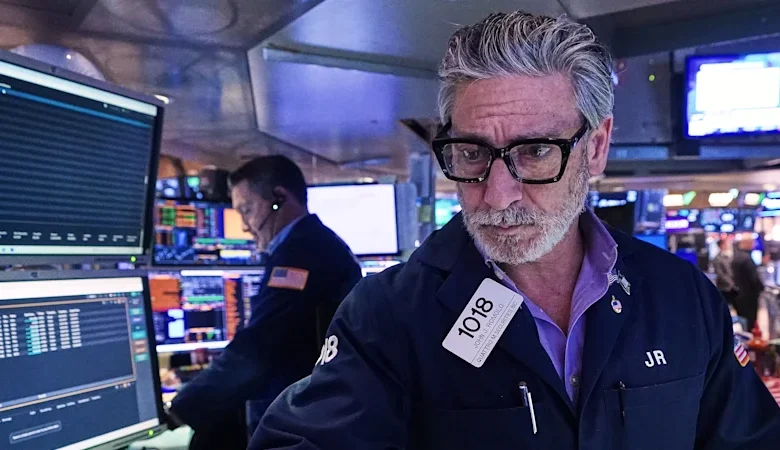
On Wall Street overnight, the S&P 500 slipped 0.2 per cent, even though more stocks rose than fell within the index. The Dow Jones edged down 0.1 per cent, and the Nasdaq composite fell 0.6 per cent.
Helping to keep the US market in check were stocks in the artificial-intelligence industry, which were mixed following their dramatic price swings last week.
Nvidia, the chip company that’s become the face of the AI boom, rose 0.7 per cent. It was one of the strongest forces pushing upward on the S&P 500 Monday after dropping 4.1 per cent last week.
But Oracle sank another 2.7 per cent following its 12.7 per cent tumble last week, which was its worst in more than seven years. Broadcom fell 4.5 per cent.
AI stocks have been shaky on worries that all the billions of dollars flowing into chips and data centres may not produce a big-enough payoff of profits and productivity to make it worth it. The doubts are causing cracks for the industry, whose earlier surges was the main driver for the US market’s rally to records.
Besides AI, the main focus on Wall Street this week will be what several big updates on the US economy’s health say.
On Tuesday [early Wednesday AEDT] will come the jobs report for November, and economists expect it to show employers added 40,000 more jobs than they cut during the month. Thursday [early Friday AEDT] will bring an update on the inflation that US consumers are feeling, and economists expect it to show inflation was at 3.1 per cent last month, still higher than households and policymakers would like.
Loading
Such data is under the microscope because the Federal Reserve is trying to figure out if a slowing job market or high inflation is the bigger problem for the economy. The Fed is in a potentially tough spot because fixing one of those problems by moving interest rates would likely worsen the other in the short term.
The hope on Wall Street is that the job market weakens, but only by a little: enough to get the Fed to lower interest rates but not so much that a recession swamps the economy. Wall Street loves lower rates because they can give the economy and prices for investments a boost, even if they also may worsen inflation.
“With the Fed still appearing to be more focused on labor-market weakness than inflation, we’re likely facing a ‘bad news is good’ scenario for the jobs report,” according to Chris Larkin, managing director, trading and investing, at E-Trade from Morgan Stanley.
“As long as the numbers don’t suggest employment is falling off a cliff,” that would mean the market would likely welcome soft numbers, he said.
The spotlight will be brightest on the unemployment rate, not the overall job growth numbers because the latter is under pressure from a drop-off in immigrant workers. Economists expect the report to show the unemployment rate at 4.4 per cent, which would keep it near its highest and worst level since 2021.
with AP, Bloomberg