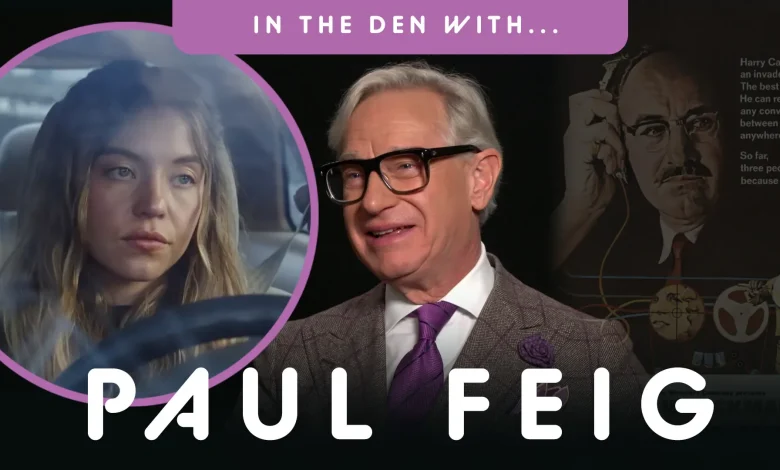
The eavesdropper he is referring to is a Hackman character named Harry Caul. Harry considers himself to be a surveillance expert in the Coppola movie and detests the term “bug man.” Nonetheless, Harry does earn his living by placing wiretap bugs inside phones and other ingenious locations. The way Harry sees it though, he’s not responsible for what his clients do with the conversations he records. That bit of rationalization is only possible because of how repressed Harry seems to be, a character trait that Hackman famously struggled with, although it eventually earned him rave reviews and a BAFTA nomination.
“I wasn’t that familiar with Gene Hackman when I saw it, because I hadn’t seen The French Connection or anything at that age,” Feig recalls. “I almost thought he was like a real guy. He wasn’t an actor, you know? I really was like, ‘Did they just hire a real man off the street and have him do it?’ Because it was so understated, and then I just loved the choices. Like he’s always wearing that raincoat, which shows how disconnected he is and how he needs a kind of safety net around him.”
It might seem odd to call The Conversation, a film nominated for Best Picture at the Academy Awards, underrated, but when it lost to another film Coppola directed in the same year, The Godfather, Part II, it’s had a legacy of being overshadowed since the jump. And as Feig points out, “I love that [Coppola] shot this between the two Godfathers, and I actually read he handed off a lot of the editing to Walter Murch because he was so busy putting that other one in, and it is so expertly edited that it’s crazy.”
Murch would indeed write one of the foundational books on modern film editing via In the Blink of an Eye, and in The Conversation, he creates a sense of mounting dread and disorientation as the film increasingly takes on Harry’s frazzled point-of-view as he realizes that he is himself being watched. Worse, the titular conversation he records at the beginning of the movie might incite a murder.
That sense of perception versus reality is a theme that has stayed with Feig all the way into making films like A Simple Favor and The Housemaid.
“I like people who are just trying to figure out their place in the world,” Feig explains. “With the thrillers, I’m drawn to facades and what people present versus who they are. I think right now we are in the age of the conman. All the stuff you watch on these crime documentaries, it’s all people pulling one over on someone else, and sometimes it can go to the nth degree and be terrible, but I find that fascinating. I never want to be a cynical person who never believes someone is on the level, but at the same time, you do have to dig deeper these days, especially because of social media. Everyone is trying to present this other side of themselves that may or may not be true.”