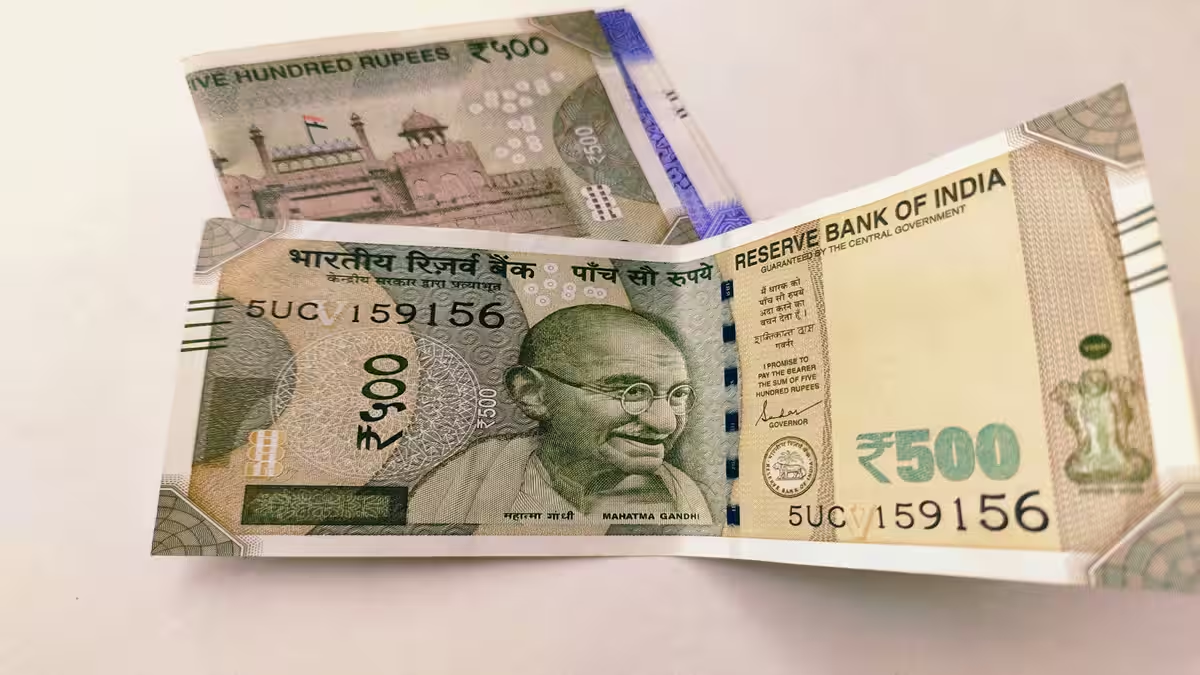
Good news for travellers, patients and businesses moving between India and Nepal. After nearly ten years of restrictions, the Nepal government has lifted the ban on carrying Indian Rs 200 and Rs 500 currency notes across the border, easing a long-standing pain point for cross-border movement.
The decision brings major relief to thousands of people who regularly travel between the two countries for medical treatment, tourism, education, trade and family visits. With the restriction now removed, carrying Indian currency for everyday expenses in Nepal is set to become far more convenient.
Cabinet clears use of Rs 200 and Rs 500 notes
Add Zee Business as a Preferred Source
The move was approved during a recent meeting of Nepal’s cabinet. Government spokesperson and Minister for Communication and Information Technology Jagdish Kharel confirmed that both Indian and Nepali citizens are now permitted to carry Rs 200 and Rs 500 Indian notes while travelling between the two countries.
The rule applies equally to travellers entering Nepal from India and those returning from Nepal, putting an end to years of uncertainty at border checkpoints.
RBI notification aligns rules for cross-border travel
Nepal’s decision follows a recent notification issued by the Reserve Bank of India on November 28. Under the RBI guidelines, individuals – excluding citizens of Pakistan and Bangladesh are allowed to carry Indian currency notes of denominations above Rs 100, up to a total value of Rs 25,000, while travelling to or from Nepal and Bhutan.
Nepal’s updated stance brings its rules in line with India’s regulatory framework, ensuring smoother compliance on both sides of the border.
Big relief for patients, tourists and border communities
Officials at Nepal Rastra Bank said the decision will significantly benefit Nepali citizens who frequently travel to India for medical treatment, education and work. Earlier, travellers often faced scrutiny and inconvenience due to restrictions on commonly used Indian notes.
For people living in border areas – where Indian currency is widely used for daily transactions – the move is expected to simplify trade, shopping and small business operations.
Why the ban was imposed in the first place?
The restriction dates back to November 2016, when India withdrew Rs 500 and Rs 1,000 notes as part of demonetisation. In the aftermath, Nepal imposed limits on the use of Indian currency after large volumes of demonetised notes became stuck within its banking system.
Since then, border residents, traders and travellers had repeatedly called for the ban to be lifted, citing practical difficulties in everyday transactions.
Boost for travel, tourism and economic activity
With the restriction now removed, travel between India and Nepal is expected to become smoother and more visitor-friendly.