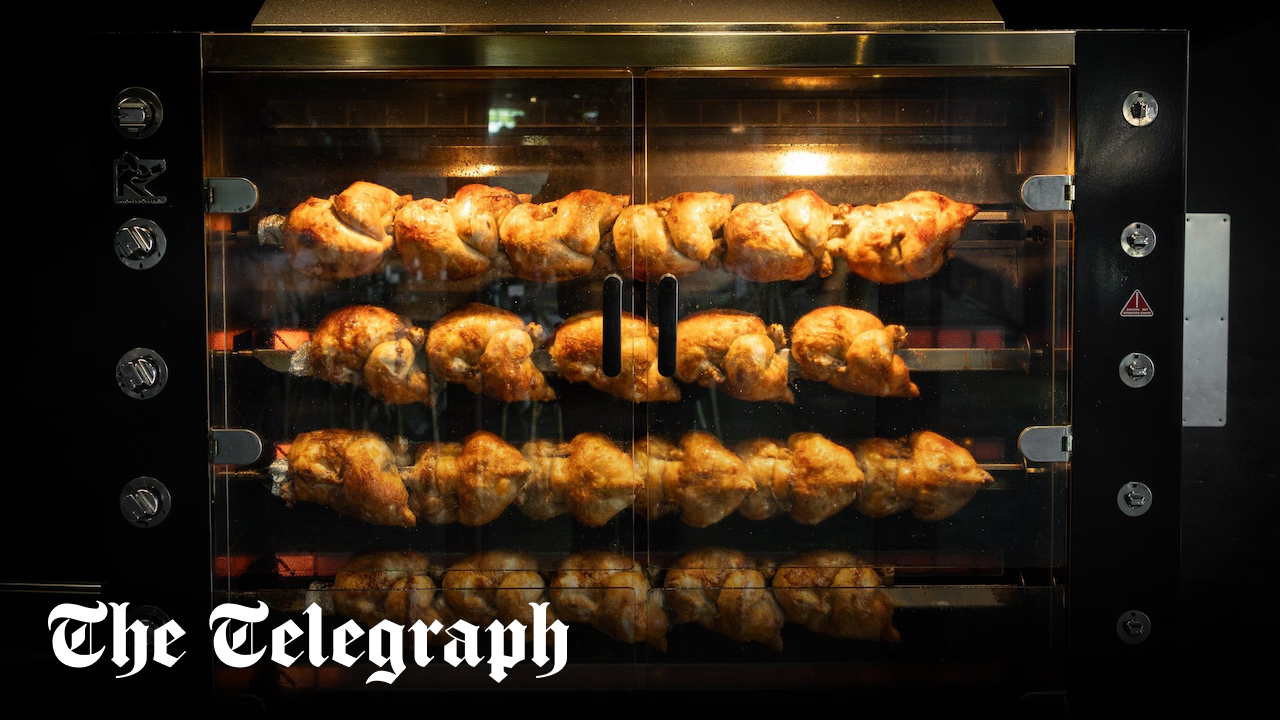
Morrisons is facing a £17m tax bill after losing a High Court battle over whether its rotisserie chickens should be classed as hot food.
The British supermarket has failed in an effort to convince the courts that its rotisserie chickens should not be subject to a 20pc VAT rate because they were “often taken home and eaten cold”.
In a High Court ruling, the judge said that the chickens would stay “well above the ambient temperature” two hours after they were removed from Morrisons’ hot cabinets.
The judge said they were “not on a cooling trajectory that meant that they would only be ‘incidentally hot’ when sold”.
The judge found that the rotisserie chickens should therefore be subject to the standard 20pc rate of VAT.
It follows years of court wrangling over the tax bill, which followed a decision by the former chancellor George Osborne in 2012 to apply VAT to all hot takeaway food, a levy which was dubbed the “pasty tax”.
The Treasury later watered down the measure, saying that only products sold above “ambient temperature” should be subject to VAT. This would mean that items such as Greggs’ pasties would not be subject to the extra tax charge.
HMRC clarified that rotisserie chickens would, however, be classed as hot food.
Morrisons has sought to appeal the decision, launching legal action against HMRC. It claimed the authority had previously classed the chickens as zero-rated for VAT purposes.
Supply chain ‘repercussions’
In court, Morrisons argued that shoppers would be loath to pay more for rotisserie chickens.
In evidence given by Morrisons’ directors in 2021, the supermarket pointed to market research which found that “67pc of our customers felt that £4.50 was the maximum they would pay for a cooked chicken (the existing price of rotisserie chickens was £4.40)”.
In a letter sent to HMRC in 2021, seen by the court, Morrisons’s senior finance manager Andy Marshall said: “Where the supply was subject to the standard rate of VAT, the price would have risen to £5.28 and could have resulted in hundreds of thousands fewer chickens being bought every month, which would have repercussions for the whole supply chain and for balanced diets of families across the UK.”
It had argued that more than 80pc of customers took rotisserie chickens home to eat them cold or to reheat them in ovens or microwaves.
The judge noted that the bags, which Morrisons stored the chickens in, were foil-lined, saying these “paper bags, although not designed to retain heat, are heat retentive and, much more importantly, are designed to prevent the leakage of hot fluids and grease”.
Morrisons declined to comment on the ruling.