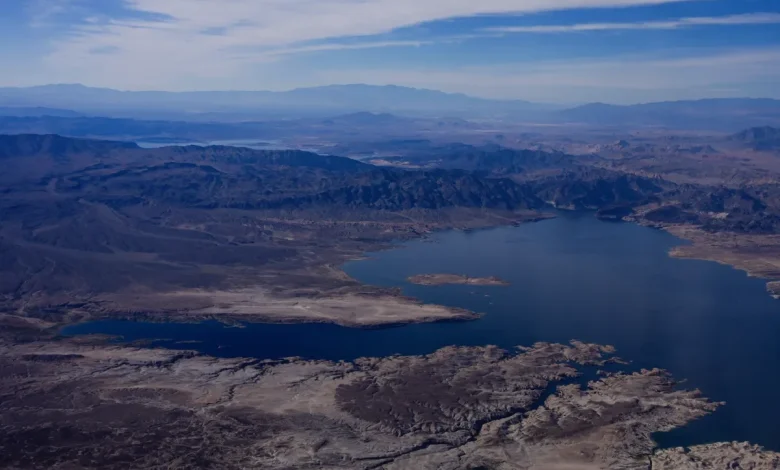
A number of experts have warned that Lake Mead is going to continue drying up unless something is done “now,” in a series of essays released in a report by the Colorado River Research Group.
“Our results should serve as a call to action. We need to adopt additional and immediate measures across the [San Juan River] Basin to reduce water consumption even further during the next year, well before any new guidelines are in place,” some of the experts wrote in a featured essay.
The water levels in Lake Mead have been sparking concern in recent years, and a forecast earlier this year by the U.S. Bureau of Reclamation predicted it would hit its lowest level in recorded history by 2027.
Why It Matters
As rising temperatures, periods of drought and growing demand for drinking water have been draining the Colorado River, which feeds into the lake, there have been increasing calls for action to slow down the declining water levels.
Lake Mead provides drinking water to around 25 million people, meaning its falling levels pose a significant problem to tens of millions of Americans in the area.
The current rules for managing the water levels are set to expire in October next year, prompting states and experts to call for action now so that new rules can be drawn up before regulation returns to that of the 1970s, which experts say was insufficient.
What To Know
In the report released by Colorado River Research Group at the University of Colorado, Boulder, titled “Colorado River Insights, 2025: Dancing with Deadpool,” 11 experts, plus eight guest contributors, wrote about the issues facing the Colorado River in the report, and called for urgent action to protect the river before the water levels dry up.
Seven experts specifically mentioned concern around the future of Lake Mead.
In the first of the eight essays, experts Jack Schmidt, Anne Castle, John Fleck, Eric Kuhn, Kathryn Sorensen, and Katherine Tara discussed how the momentum to craft new long-term measures to protect the Colorado River and its lakes before the expiration of rules in late 2026 is “a needed but dangerous distraction from the short-term crisis.”
They warned that during the nine months between late summer 2026 and the onset of snowmelt runoff in 2027, it is “likely” that less than 4 million acre-feet in Lake Powell and Lake Mead would be realistically available for use—even though Lake Mead alone is capable of storing about 29 million acre-feet of water.
“The present reservoir operating rules that remain in place through 2026 are insufficient to avert this potential water supply crisis,” they wrote. “Action to further reduce consumptive water use across the basin is needed now.”
In the sixth featured essay, experts Kathryn Sorensen and Sarah Porter said that the declines in water levels in both Lake Powell and Lake Mead had been “alarming,” and that they were at “near-critical levels.”
They proposed new methods for federal implementation to protect the water levels, which would involve retiring “water
intensive land-uses by purchasing or exchanging lands, or by compensating landowners who agree to permanent restrictions on water use.”
In order to combat the reducing water levels in Lake Mead, water cuts have been implemented to limit the consumption of the water. However, these cuts have prompted significant debate between states on which should cut their use the most and by how much.
Recycling the water has been suggested as another measure to try to halt the continual decrease in water levels. A 2025 study found that if states within the Colorado Basin increased their water reuse rates to 40 percent, they could collectively conserve close to 900,000 acre-feet of water each year—an amount sufficient to meet the needs of almost 2 million households.
While the UCLA/Natural Resources Defense Council report found Nevada reused 85 percent of its municipal wastewater, and Arizona 52 percent, other states had much lower recycling rates—New Mexico reused 18 percent, Colorado 3.6 percent, Wyoming 3.3 percent, and Utah less than one percent.
What Happens Next
The calls for action by the experts suggest that multiple measures will be required in order to protect Lake Mead from facing critically low water levels—cutting back on consumption or recycling alone won’t be enough.
Their research comes as states are looking to establish new rules before the current ones expire in October 2026, but some of the experts said action needs to be brought forward as the measures used today are not sufficient in tackling the issue.