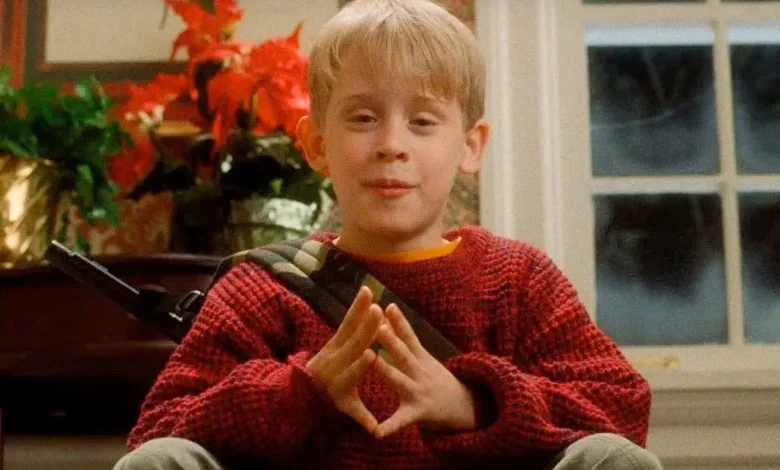
For a lot of people, the holidays don’t officially start until Home Alone and Home Alone 2: Lost in New York are on the TV. It’s comfort viewing at its purest—warm lights, John Williams’ score, and a mischievous kid outsmarting two burglars with paint cans and micro machines. You laugh, you quote it, you accept it as festive nonsense.
But over the years, fans have done what fans always do. They’ve stared a little too hard at the details. And once you start pulling at those threads, Home Alone stops looking like a harmless Christmas movie and starts feeling… unsettling.
Here are some of the darkest fan theories that completely reframe Kevin McCallister’s holiday adventure.
Peter McCallister Is a Mob Boss
Let’s start with the elephant-sized mansion in suburban Chicago.
Peter McCallister somehow supports a non-working spouse, five kids, a rotating door of extended family, and international vacations for more than a dozen people. His job? Vaguely described as “business.” That’s it. No office. No explanation. Just money. A lot of it.
Then there’s his interaction with “Officer” Harry. When Harry casually asks if he owns the house, Peter snaps back defensively: “Am I in some kind of trouble?” That’s not a normal response to a routine question—unless you’re used to trouble.
The Wet Bandits don’t just randomly target the neighborhood either. Harry explicitly calls the McCallister home “the big score.” From the outside, it looks no different from the others, which implies they knew something valuable was inside.
And then there’s the family itself. Kate is emotionally distant. Buzz is a menace. Uncle Frank is openly cruel. Kevin, meanwhile, shows zero hesitation when it comes to inflicting what are essentially lethal traps on two grown men.
If Peter McCallister is a gangster, suddenly everything clicks. The money. The fear. The violence. The silence.
Uncle Frank Left Kevin Behind on Purpose
If there’s one universally hated character in Home Alone, it’s Uncle Frank. But what if he wasn’t just rude—what if he was actively malicious?
The theory goes like this: Frank engineered Kevin being left behind. He rushes the morning departure. He ensures Kevin doesn’t get his cheese pizza, provoking the argument that sends Kevin upstairs. He casually dismisses Kate’s panic later, comparing her forgotten child to his reading glasses.
In early script drafts, Frank was even tied to Harry and Marv directly, allegedly arranging the robbery. Some versions of the theory go further, suggesting Frank put a hit out on Kevin.
It sounds extreme—until you rewatch his scenes. Frank never once shows genuine concern for Kevin. Not before. Not after.
Kevin Grows Up to Become Jigsaw
Kevin McCallister is frighteningly good at traps.
Not pranks—traps. Carefully designed, victim-triggered devices that inflict maximum pain while keeping him at a safe distance. That alone is unsettling. But then you add everything else.
Kevin shows violent tendencies beyond slapstick. He loses control when his pizza is eaten. He spies on neighbors with recorded video. He’s fascinated by the idea of Old Man Marley being a serial killer. He’s disturbingly calm during sustained violence.
Now connect that to John Kramer—Jigsaw from the Saw franchise. Another brilliant trap designer. Another man obsessed with “teaching lessons.” Different name, same skill set.
The explanation? Witness protection. Kevin McCallister became John Kramer.
Is it ridiculous? Yes. Is it horrifying? Absolutely.
Old Man Marley’s Wound Is a Metaphor for Emotional Trauma
Old Man Marley is introduced as a monster—a rumored serial killer with a bloody hand. But as the movie unfolds, the wound heals. Slowly. Deliberately.
When Kevin speaks with Marley in the church about his estranged son, the wound is smaller. By the time Marley reconciles with his family, it’s gone.
The theory suggests the injury is symbolic. A physical manifestation of emotional pain. Old wounds heal—sometimes literally—when relationships are repaired.
It’s actually kind of beautiful. And also a little unsettling once you notice how intentionally it’s framed.
Gus Polinski Is the Devil
Kate McCallister says she’ll do anything to get home. “Even sell my soul to the devil himself.”
Right on cue, Gus Polinski appears.
There’s a crossroads at the Scranton Airport—important in demonic folklore. Kate accepts Gus’s offer, and sure enough, she gets home… but not in a way that benefits her. If she’d stayed put, she would’ve arrived around the same time anyway.
Deals with the devil don’t work the way you hope. They work the way they’re allowed to.
Some fans flip this theory and argue Gus is actually an angel. But let’s be honest—dark is more fun.
Harry and Marv Are Christmas Spirits
Kevin wishes his family away. The next morning, they’re gone.
Then Harry and Marv show up.
This theory frames the Wet Bandits not as criminals, but as supernatural enforcers—Christmas spirits sent to teach Kevin gratitude, humility, and empathy. They force him to defend his home. They introduce him to poverty, loneliness, and compassion.
It also explains how they survive injuries that should absolutely kill them. Electrocution. Skull fractures. Blunt-force trauma. They just keep coming.
Because spirits don’t die that easily.
Peter McCallister Was Training Secret Agents
Another Peter theory—but darker.
Peter isn’t absent. He’s observing.
Buzz is antisocial, aggressive, weapon-owning, and emotionally detached. A blunt instrument. Kevin is adaptable, creative, and tactical. The perfect operative.
Peter allegedly knew Harry and Marv were coming. Kevin wasn’t forgotten—he was tested. And in Home Alone 2, Peter deliberately separates from Kevin again to confirm it wasn’t a fluke.
Kevin passes. Twice.
The McCallisters Are a Cult
No friends. No neighbors. No outreach.
Kate calls the police before calling anyone she knows. The kids are raised on fear, convinced their neighbor is a killer. The family travels together exclusively. Always together. Always isolated.
Even the name “McCallister” raises eyebrows. “MC” can mean Master of Ceremonies. “Alistair” can translate to “induct.”
An induction ceremony.
Coincidence? Maybe. Or maybe not.
Old Man Marley Is Kevin From the Future
This one is wild—and tragic.
In an alternate timeline, Marley never appears. Kevin opens the door to the cop. Harry and Marv rob the house. Flood it. Destroy everything.
Kevin grows up broken. Estranged from his own son. Haunted by Christmas.
So he goes back.
Old Man Marley isn’t just a neighbor. He’s Kevin—returned to change the past, save himself, and heal what was lost.
It’s convoluted. Full of plot holes. And strangely emotional.
Mr. Duncan and the Pigeon Lady Were Former Lovers
In Home Alone 2, Kevin bonds with two lonely adults: Mr. Duncan and the Pigeon Lady.
This theory suggests they were once together—and separated because she couldn’t have children. The Pigeon Lady hints at abandonment. Mr. Duncan adores kids. She knows Carnegie Hall intimately.
And the gift of turtle doves? A symbol of enduring love.
It’s quiet. Sad. And painfully human.