Unexpected food price change behind surprise inflation figure – here’s what it means | Money blog

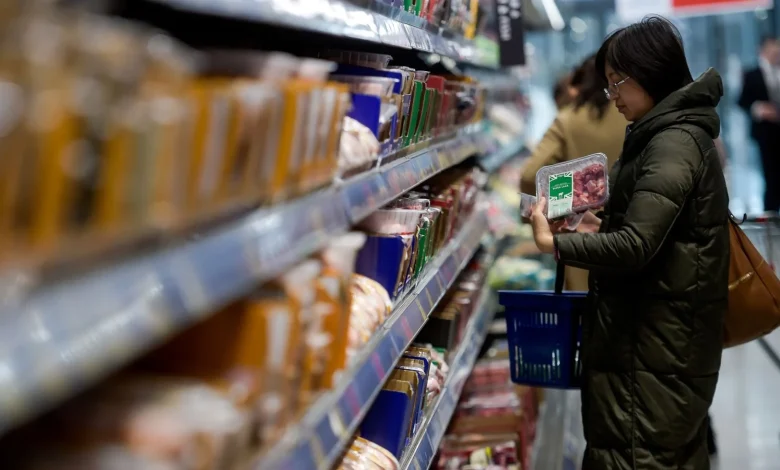
At 7am, the latest inflation data will be released by the Office for National Statistics.
Economists’ predictions are mixed – some think it will ease slightly to 3.5%, down from 3.6%, while the Bank of England is expecting it to fall further to 3.4%.
Slow rises in food prices and service costs are expected to be behind a drop.
But Capital Economics has warned that inflation could rise to 3.7%, thanks to upward pressure from airfares, food and drink prices and dampened footfall over Black Friday.
What is inflation?
Remember, inflation is the rate at which prices are rising.
Falling inflation doesn’t mean prices are coming down – just that they’re rising less quickly.
You’d need a minus figure to see prices fall overall.
Why it matters for interest rates
Inflation is watched closely by the Bank of England’s Monetary Policy Committee, which is responsible for setting the base rate.
The group of nine is tasked with bringing inflation down to 2%, a goal it aims to hit by altering interest rates.
It will meet tomorrow to make its latest interest rate decision, which most analysts expect to be a cut from 4% to 3.75%.
Cut on a knife-edge
“Inflation is a key concern for the Bank of England, so any signs that inflation is not heading back to 2% could put the brakes on a Christmas rate cut,” warned financial adviser Riz Malik.
“Given that the next base rate announcement would not be until February, we could have a prolonged winter of discontent.”
Tony Redondo, a fractional currency consultant at Cosmos Currency Exchange, said the interest rate decision was on a knife-edge.
“A November inflation print at or below 3.4% would likely tip the scales toward a cut, while 3.6% or above could lead to another split vote and a hold,” he said.