MARY LOUISE KELLY, HOST:
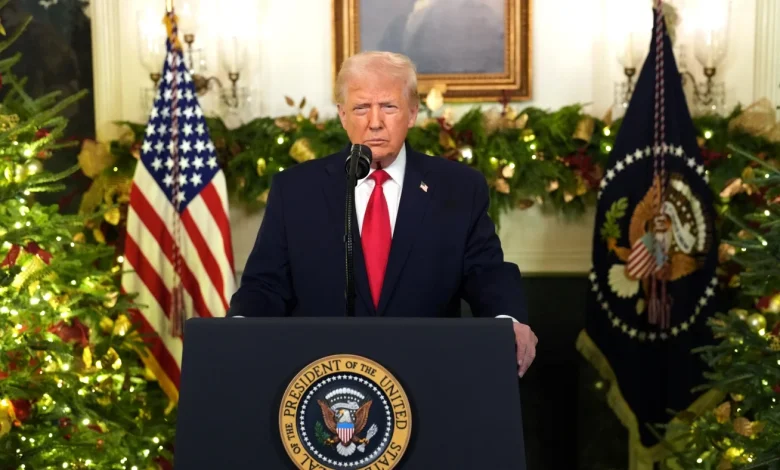
President Trump will look back at his 11 months and counting in office when he addresses the nation tonight, 9 p.m. Eastern, live from the White House. The speech is supposed to be a wrap-up of what he has accomplished in this first year of his second term and also preview what’s to come. NPR White House correspondent Deepa Shivaram is here to discuss. Hey, Deepa.
DEEPA SHIVARAM, BYLINE: Hey there.
KELLY: All right. So preview the preview. What are we expecting Trump to talk about tonight?
SHIVARAM: Yeah. I mean, they haven’t really put out too much detail about this, but White House press secretary Karoline Leavitt said yesterday to reporters that the president is going to kind of wrap up the last 11 months – what he’s gotten done, his accomplishments, what he plans to get done in the next three years. And as we know, just from our own coverage, it’s been a really packed first year of Trump’s second term – a lot to talk about. But the White House has said you will specifically hear the president tonight talk about border security and parts of his economic agenda, and that’s likely going to be things like promising bigger tax returns next year and promoting what he’s calling the Trump accounts. And that’s a new thing. It’s a $1,000 one-time deposit for children born between 2025 and 2028. And he’s also likely to talk about the lower price of gas. And all of those parts of his economic policies will be particularly interesting to listen to because right now, as we know, the president’s poll numbers on how he’s handling the economy are really low.
KELLY: Yeah. Well, speaking of those polls, there’s a new one out from us, a new NPR/PBS NewsHour/Marist poll which finds that just 36% of Americans approve of Trump’s handling of the economy. How is the president trying to turn that around?
SHIVARAM: Yeah, 36 is a low number. It’s the lowest it’s been in the six years that this poll question has been asked. And, you know, keep in mind, the economy has historically been a strong issue for Trump, right? It was in his first term as president. It was when he was running for office against former President Biden. So this drop in the polls is really stark for Trump and for Republicans. A lot of Trump’s key voter groups, people who largely support him, are the ones who are really feeling this economic pain, like the high prices of goods. In that same poll, 45% of Americans said their top economic concern is high prices.
And so far, Trump has tried to handle that concern by digging his heels in, saying that his economy is doing great. He’s called the issue of affordability a hoax from Democrats, and he says that he inherited an economic mess from the previous administration. And that’s a similar message that his vice president, JD Vance, honed in on yesterday with voters in a speech in Pennsylvania.
(SOUNDBITE OF ARCHIVED RECORDING)
JD VANCE: I’m a little surprised by when the Democrats talk all the time about affordability. Democrats say, you know, things aren’t affordable. This isn’t affordable. This has gotten more expensive. Drugs have gotten more expensive. Housing has gotten more expensive. And you know what? They’re right. And it was because of them.
KELLY: So besides blaming Democrats, though, is there anything that Trump or Vance plan to do to address voters’ concerns?
SHIVARAM: Yeah. You know, this is kind of something to watch. I mean, something else that Vance said yesterday that stood out was telling the crowd to have patience. He said Rome wasn’t built in a day, that fixing high costs will take time. So that’s a bit different there than, you know, what Trump has been saying. But he has been taking this message – the president – straight to voters on the road. He was recently in Pennsylvania, and besides this speech tonight from the White House, he’ll be talking later this week to voters in North Carolina.
KELLY: In North Carolina. NPR White House correspondent Deepa Shivaram, thank you.
SHIVARAM: Thank you.
Copyright © 2025 NPR. All rights reserved. Visit our website terms of use and permissions pages at www.npr.org for further information.
Accuracy and availability of NPR transcripts may vary. Transcript text may be revised to correct errors or match updates to audio. Audio on npr.org may be edited after its original broadcast or publication. The authoritative record of NPR’s programming is the audio record.