Starlink News on Dec. 18, 2025: DirecTV Warns FCC of Satellite TV Disruption, Starlink Mini Roam Pricing Expands in Australia, and China Pushes Back on “Near-Collision” Claims

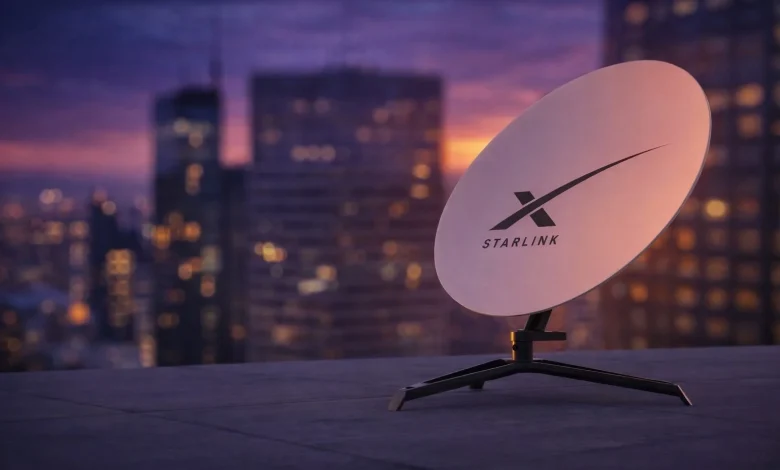
Starlink is closing out 2025 at full throttle—rolling out more portable consumer hardware, pushing regulators to revisit long-standing satellite spectrum rules, and getting pulled into a fresh geopolitical argument over space safety and “who coordinates with whom” in an increasingly crowded low Earth orbit (LEO).
Below is what’s driving the conversation as of December 18, 2025, based on the latest reporting and primary-source-linked coverage from Australia, China, and global telecom markets.
DirecTV vs Starlink: a new FCC flashpoint over interference and “boosting speeds”
A U.S. regulatory dispute is bubbling again around a familiar theme: higher Starlink capacity vs. protection for existing satellite services.
According to a PCMag report referenced in a public post, DirecTV warned the U.S. Federal Communications Commission (FCC) that proposals tied to improving Starlink performance could risk disrupting DirecTV’s satellite TV service, pointing to SpaceX-related testing in support of its argument. [1]
Why this matters: Starlink’s ability to deliver faster service at scale is tightly linked to how intensely it can use spectrum—and how much interference risk regulators allow in bands shared (directly or indirectly) with legacy operators.
The bigger regulatory backdrop: the FCC’s spectrum-sharing review
The FCC has already been examining whether to modernize decades-old spectrum-sharing rules between non-geostationary (NGSO) systems like Starlink and geostationary (GSO) systems used by traditional satellite operators. The FCC’s “Modernizing Spectrum Sharing for Satellite Broadband” framework explicitly focuses on spectrum-sharing approaches and limits (including EPFD-related regimes) in multiple bands where these systems overlap. [2]
In plain terms:
- NGSO operators argue older rules constrain modern broadband constellations.
- GSO operators and satellite TV providers warn that loosening limits could degrade reception or service quality for users who rely on stable downlinks.
SES adds fuel: interference claim involving a U.S. government customer
Interference concerns aren’t limited to DirecTV. In an objection document attributed to SES, the operator describes an interference issue it says it traced to Starlink satellites, affecting a U.S. government customer and requiring mitigation steps (including moving service) after it became aware of the problem. [3]
Taken together, the filings and public claims signal an industry fight over a high-stakes question: How do regulators unlock more LEO broadband capacity without breaking—or even slightly degrading—services that are already operating in adjacent or shared satellite bands?
Starlink Mini + Starlink Roam in Australia: pricing, performance expectations, and the fine print
While the regulatory battle plays out, Starlink’s consumer strategy is also evolving—especially in markets like Australia where satellite broadband competes directly with legacy regional options.
A detailed Australian guide explains that Starlink Mini is a smaller, travel-friendly Starlink kit meant to be paired with Starlink Roam, enabling portable connectivity rather than a fixed-address setup. [4]
What Starlink Mini is (and what you get)
In Australia, the guide lists Starlink Mini at $599 RRP and says the kit includes:
- Mini antenna (with integrated Wi‑Fi)
- Kickstand
- Mini pipe adapter and flat mount
- 15‑metre DC power cable
- Power supply
- Starlink plug [5]
It also cites Starlink’s own positioning of Mini as a compact, low-power option, with notable specs:
- Weight: 1.1 kg
- Size: 298.5 × 259 × 38.5 mm
- Average power: 25W–40W
- IP67 rating (dust/water resistance)
- Wind resistance: 96 km/h
- Snow melt: up to 25 mm per hour
- Temperature rating: up to 50°C [6]
Connectivity-wise, the guide notes the built-in router is dual-band Wi‑Fi 5, plus a single Ethernet port for those who want to attach another router or mesh system (less common for a travel setup). [7]
Starlink Roam plans in Australia: what it costs on Dec. 18
The WhistleOut guide and Starlink’s own Roam page both point to two main Roam tiers in Australia:
- Roam 50GB:$80/month
- Roam Unlimited:$195/month [8]
The WhistleOut plan listing also highlights a promotion: Starlink Mini Kit for $449 (down from $599) with a Roam subscription, with an end date noted in the listing (check current availability on Starlink’s site because promotional windows can vary by market and timing). [9]
Expected speeds and latency: “best case” vs. disclosure ranges
One useful detail in the guide: it separates headline estimates from disclosure-style expectations.
It reports SpaceX estimates for Roam that are higher (in a broad range), while also noting the Critical Information Summary (CIS) shows more conservative expected performance ranges. [10]
For consumers, the takeaway is practical:
- Roam can deliver strong speeds, but real-world performance depends heavily on sky view, weather, local network load, and installation quality. [11]
Coverage claims: “everywhere in Australia,” plus international roaming limits
The guide states Starlink internet is available across Australia based on Starlink’s availability map, and that Roam is designed for travel—including inland waterways, marinas, and in-motion scenarios (with important caveats in the fine print). [12]
Internationally, it says Roam can work in 150+ supported countries for up to two months, after which Starlink may request the account be moved to a different region if you remain abroad. For Roam Unlimited users, it also notes optional Ocean Mode for coverage beyond 12 nautical miles. [13]
The fine print people miss: data caps, trial timing, and “in-motion” contradictions
A few clauses called out in the guide are especially relevant for SEO-driven consumer searches like “Starlink Roam data cap” and “Starlink Mini trial refund”:
- If you hit the cap on the limited plan, internet access stops until the next cycle (except account access for plan changes). [14]
- The 30-day trial is described as “pay-to-play” with timing tied to activation or shipping milestones. [15]
- There’s a notable tension between marketing that highlights “in-motion” use and disclosure language cautioning against use while moving—while users report varied real-world experiences. [16]
If Starlink Mini is built for travel, these details shape whether it’s a seamless “internet anywhere” solution—or something closer to “internet in many places, when conditions cooperate.”
Space safety controversy: SpaceX’s “200-meter close approach” claim meets China’s rebuttal
While Starlink’s consumer reach expands, its space operations are under more scrutiny—especially after a widely discussed alleged near-miss involving a Chinese launch.
What SpaceX says happened
A Global Times report summarizes a SpaceX claim that a spacecraft launched on China’s Kinetica‑1 (Lijian‑1) rocket came dangerously close to STARLINK‑6079—with SpaceX’s Starlink engineering leadership alleging a lack of coordination and citing a 200‑meter close approach at around 560 km altitude. [17]
Independent coverage in Western outlets also reported the same key detail—a near pass of roughly 200 meters—and emphasized the need for improved space traffic coordination as the LEO environment becomes increasingly crowded. [18]
CAS Space response: “mission concluded” and timing dispute
Global Times reports that CAS Space responded that, if the incident is confirmed, it occurred nearly 48 hours after payload separation, when the launch mission had long concluded, and said it would coordinate with satellite operators to clarify details. [19]
The deeper issue: maneuver transparency in an era of mega-constellations
The Global Times report also highlights Chinese expert commentary arguing that with Starlink’s dense deployment and frequent orbit changes, “responsible” operators should publish maneuver details or notify relevant parties. [20]
Western coverage points to a parallel concern: Starlink performs large numbers of automated collision-avoidance maneuvers—useful for safety, but also a sign of how tight the margins are becoming in LEO. [21]
Put simply, this isn’t just a one-off incident story—it’s a headline example of a bigger question: Who shares what orbital data, with whom, and how quickly, when thousands more satellites are joining the same orbital neighborhoods?
The global market shift: China’s SpaceSail enters Brazil as Starlink pushes direct-to-cell in Africa
Finally, the competitive landscape around Starlink is changing in ways that connect directly back to regulation, coordination, and geopolitics.
Brazil: satellite internet from China’s SpaceSail starting in 2026
Reuters reports Brazil expects satellite internet service for remote regions starting in the first half of 2026 from SpaceSail, described as a Chinese low Earth orbit operator positioned as a rival to Starlink. The plan links back to a memorandum of understanding with Brazil’s state-owned telecom Telebras, aimed at connecting schools, hospitals, and other essential services. [22]
Africa: Airtel Africa and Starlink partner on direct-to-cell
Reuters also reports that Airtel Africa has partnered with Starlink on direct-to-cell satellite technology across its markets, targeting connectivity where terrestrial coverage is weak or nonexistent and pointing to a rollout timeline in 2026. [23]
This matters for two reasons:
- It underscores Starlink’s push beyond “dish broadband” into cellular-integrated satellite coverage.
- It intensifies the incentive for governments and regulators worldwide to shape rules around spectrum rights, interference protection, and market access—because satellite broadband is increasingly national infrastructure, not just a consumer product.
Bottom line for Dec. 18, 2025
Starlink’s story today is not one story—it’s three that are colliding:
- Regulatory pressure: DirecTV and other operators are pushing back against changes they fear could disrupt satellite TV and other services, while the FCC continues grappling with how to modernize satellite spectrum sharing. [24]
- Consumer expansion: Starlink Mini and Roam are making portable satellite internet more mainstream (and more competitive), especially in Australia where pricing, promotions, and terms are now central to purchase decisions. [25]
- Space traffic risk: The reported near-collision dispute between SpaceX and a China-linked launch has become a proxy fight over transparency and coordination in an increasingly saturated orbital environment. [26]
As 2026 approaches—with direct-to-cell rollouts, international expansion, and new entrants like SpaceSail moving into major markets—expect the next major “Starlink news” cycles to be driven as much by policy decisions and coordination norms as by new dishes and download speeds. [27]
References
1. www.facebook.com, 2. docs.fcc.gov, 3. www.scribd.com, 4. www.whistleout.com.au, 5. www.whistleout.com.au, 6. www.whistleout.com.au, 7. www.whistleout.com.au, 8. www.whistleout.com.au, 9. www.whistleout.com.au, 10. www.whistleout.com.au, 11. www.whistleout.com.au, 12. www.whistleout.com.au, 13. www.whistleout.com.au, 14. www.whistleout.com.au, 15. www.whistleout.com.au, 16. www.whistleout.com.au, 17. www.globaltimes.cn, 18. www.space.com, 19. www.globaltimes.cn, 20. www.globaltimes.cn, 21. www.space.com, 22. www.reuters.com, 23. www.reuters.com, 24. www.facebook.com, 25. www.whistleout.com.au, 26. www.globaltimes.cn, 27. www.reuters.com



!['실험 만족+결과 모두 챙긴' 홍명보 감독 "전반전 수비에 고전한 SON, 그래도 역할 잘 해줬다"[대전톡톡]](https://cdn1.emegypt.net/wp-content/uploads/2025/11/실험-만족결과-모두-챙긴-홍명보-감독-전반전-수비에-고전한-SON-390x220.webp)