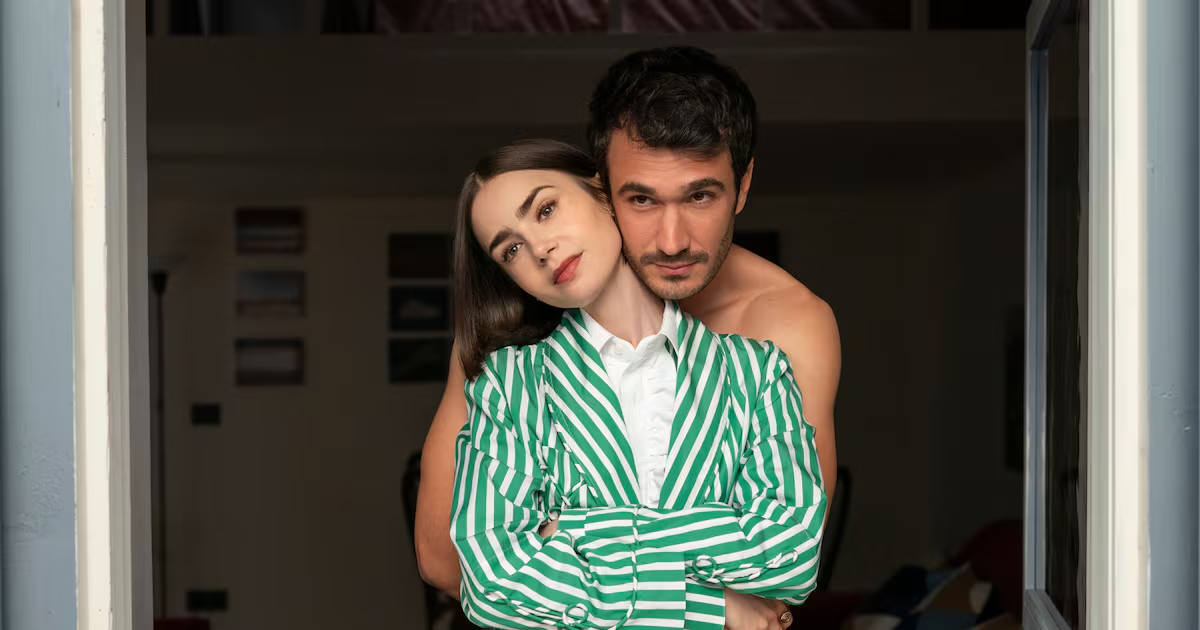
We’ll always have Emily in Paris – only now it’s Emily in Rome. Or is it? While Lily Collins’ fashion-on-the-brain lifestyle publicist is now in the Eternal City (Rome, not Cork), the blockbusting dramedy continues going out under its old name – and half the action is still taking place in France.
With most shows, this ambiguity would be highly confusing – but Emily in Wherever has always been a bonbon in a soufflé atop a chocolate fountain anyway, so none of this actually matters. It’s all about what’s in front of you on the screen at any given moment. So, for instance, when Emily takes “a bus” – presented as an exotic concept seemingly unfamiliar to American viewers – and her scarf flies out the window, it feels like we’re watching the essence of the series. It’s experiential, it’s ephemeral, it’s as fleeting as a dash of perfume on your wrists.
Why is Emily in Rome? Her boss, Sylvie (Philippine Leroy-Beaulieu), wants to establish an Italian beachhead – and luckily, Emily’s new boyfriend (Eugenio Franceschini) is the son of a knitwear magnate and potentially lucrative new client. Back in Paris, meanwhile, Agence Grateau’s plans to launch a range of fragrances for babies have gone all whiffy. Never mind – Emily and her friends are now flogging the same scent to her boyfriend’s sweater company – while passing it off as specifically designed for their brand.
[ If Emily in Paris had a HR department, the ‘HR’ would definitely stand for ‘happy riding’Opens in new window ]
Isn’t that unethical? Ah, but that would be to fall into the trap of taking Emily in Paris seriously when the series itself never does. It also doesn’t tell you anything about the real Rome. There are lots of shots of the Trevi Fountain and St Peter’s looming over the skyline, but you’re not going to find Emily on the Curva Nord at Lazio. We do, however, see her trading banter with Minnie Driver, playing a British expact who has married a minor Italian aristocrat yet who is royally skint (“I’m palazzo poor”) and who steals every scene she is in.
Since its debut in 2020, Emily in Paris has been variously celebrated as a guilty pleasure and lamented as a sure sign of civilisation’s downfall. This is obviously untrue, given that the clearest evidence that humanity is doomed is the ubiquity of Killeagh by Kingfishr.
In any event, the show’s creator Darren Starr is unapologetic – as well he might be. In an increasingly grim and war-torn world, Emily in Paris is as inconsequential as anything and as ridiculous as a beret worn in a downpour. But it has the courage of its conviction – it is never less than effervescently silly – and for that you have to give it a grudging respect.