How to anonymously submit a tip to Crime Stoppers of Michigan
Here are the three ways to submit a tip to Crime Stoppers of Michigan safely and anonymously: by phone, online, and through the P3 Tips mobile app.
- A pregnant woman’s disappearance sparked a massive online response from citizen sleuths and true crime influencers — especially after her body was found, her unborn baby cut from her womb.
- Experts say the case highlights a growing trend where real-life tragedies become online content, complicating investigations and family grief.
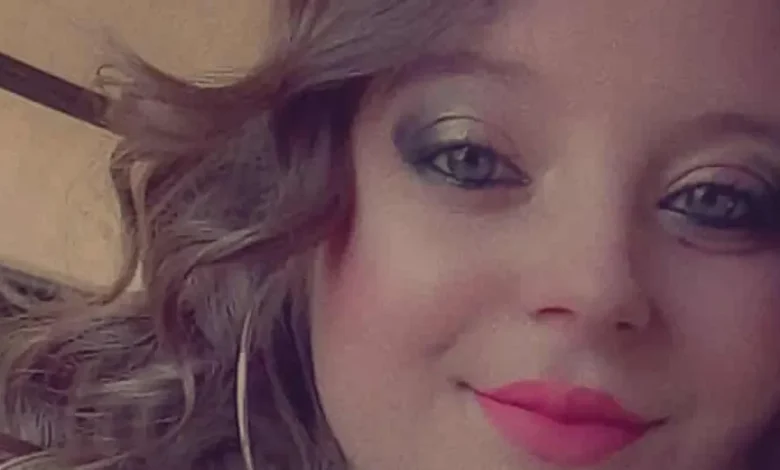
The first thing many saw online about Rebecca Park’s disappearance was a short, to-the-point press release from the Wexford County Sheriff’s Office posted on its Facebook page.
A young woman reported missing on Nov. 4. Twenty-two years old. And, at 38 weeks pregnant, soon to give birth.
In a small, northern Michigan town — where everybody knows everybody, where a missing young woman isn’t just a headline but a gut punch — that release didn’t land quietly online. And while Park’s adoptive mother maintains authorities have worked diligently around the clock, many observers interpreted its briefness as a lack of urgency to find the young woman.
So community members organized online and took matters into their own hands. They made flyers, advocated for Park’s case on social media and formed search parties. Within days, Park’s disappearance was hurled into the internet’s true crime universe.
Influencers who didn’t know Park, let alone live in the state, went live on TikTok, Facebook, YouTube and Instagram. The influencers, along with citizen sleuths from the area who never had a huge online presence, began dissecting timelines, evidence and even livestreamed in courtrooms.
Soon Park’s biological mother, Cortney Bartholomew appeared to join those livestreams too, taking the online attention to new levels fielding questions from TikTok users who were suspicious of her before the young mother’s body was found. Investigators even questioned Bartholomew about TikTok live interviews while they looked for Park, according to court documents.
Authorities would find her body on Nov. 25 in the Huron-Manistee National Forest, saying her unborn baby was cut from her womb and died. They would charge Cortney Bartholomew, her biological mother, and her husband, Bradly Bartholomew with eight crimes in the killing, including first-degree murder, torture and assault of a pregnant woman with the intention to cause miscarriage or stillbirth.
A person close to the investigation who wasn’t authorized to speak publicly confirmed to the Free Press that the baby’s remains haven’t been found as of Dec. 18., despite rumors circulating online that they had been found.
Tracie Dinehart, Cortney Bartholomew’s attorney, declined comment. An attorney for Bradly Bartholomew hasn’t responded to requests for comment. The Wexford County sheriff’s and prosecutor’s offices referred comment to the Michigan Attorney General’s Office, where a spokesperson declined comment.
Park’s disappearance, and death, became a story about online obsession, misinformation, and a family’s tragedy becoming content — something experts say is becoming increasingly common in an online-culture dominated world where becoming an influencer is now a profession.
When tragedy hits, the internet can show up — whether you want it to or not.
Park’s adoptive mother, Stephanie Park, told the Free Press that she appreciates the thoughts and prayers, that so many people stepped up to help, including those online. But many of them, she said, “they’re so separated from it, they don’t really understand that there’s an actual, living family that is trying to grieve.”
And they haven’t stopped, which Park said is only making law enforcement’s job harder — experts agree. The Wexford County Sheriff’s Office at one point stopped releasing information about their search efforts, citing “misinformation and vitriol” on social media.
“(Police) have to be very quiet and tight-lipped … to make sure that all of the evidence can be used against these people — if you want to call them that,” Stephanie Park said, referring to the Bartholomews.
“Everybody talking about all the evidence is making that more difficult. And I would like to have a lot of them stop — It’s getting out of hand.”
‘Spiraled out of control’
Jackie Sturgis, 45, Jessica Coleman, 47, and Heather Marie Ruppert, 39, aren’t true crime influencers, per se, but they do have influence.
The citizen sleuths entered the online true crime universe after Park went missing, becoming a source of information on the case, routinely posting updates, attending court hearings and attempting to debunk misinformation.
Ruppert lives in Flint, but she’s from Wexford County. Sturgis and Coleman, both medical couriers, are cousins from the Grand Rapids area, but have property in Wexford County. By mid-November, when Sturgis began to learn of Park’s case on TikTok, she and Coleman traveled to Wexford County, where the young woman disappeared.
There, Sturgis went live on TikTok, Coleman on Facebook. Online users began sending them ideas of where to search: like areas of the woods and bodies of water.
From there, “it all spiraled out of control, basically,” Sturgis said. She and Coleman made contact with the Bartholomews both in person and online, and soon their livestreams amassed thousands of users watching. Sturgis even caught the attention from the popular true crime media personality Nancy Grace.
From courtroom proceedings to police performing a search warrant to the Bartholomew’s home — the cousins were out there taping it all.
For Ruppert, a telemarketer, she became invested in Park’s case after seeing the press release about her disappearance early on:
“Instantly, I just felt completely compelled — why doesn’t this girl have a missing persons poster?”
So she made some.
“That’s the first thing I did,” Ruppert said. Then the algorithm did what it does best.
“It went viral. I wasn’t expecting that,” Ruppert continued. Her first Facebook post with the missing persons flyer had 2.4 million views. And as of Dec. 11, her reach is at 12 million views.
“And then it got to the point where I was completely invested, to the point that I was obligated. I felt if I posted anything else on my page that wasn’t related to finding her, I felt guilty. It was an overwhelming feeling of just being obligated and compelled to help.”
Family and friends of Park started reaching out to her, she told the Free Press, becoming emotional. And when true crime creators with names like “Steph’s Case Files” and “True Crime Nicole” jumped in, fueling theories, some seemed earnest, according to the citizen sleuths. But many were opportunistic — like one influencer who “claimed to be trying to help, but she was really in the drama,” Ruppert said.
“It was so bad, the police actually made a press release basically telling people to stay off social media, stop listening to the misinformation,” she said.
The sheriff’s department wrote on Nov. 19:
“Misinformation and vitriol circulating on social media has and continues to hamper this investigation,” it read.
“Due to the negative impact social media is having, we are unable to share information pertaining to the ongoing efforts to find Rebecca.”
Misinformation coming from these true crime influencers “for clicks and likes” — like a fake photo of Park’s body circulating the internet after she was found — is what frustrates Sturgis the most. Ruppert and Coleman agree.
“I don’t feel like I’m a hero. I just know my platform. … I’ve only updated them with 100% confirmed facts from the police,” Sturgis said. “My main objective is to get the truth out there and raise awareness to this case.”
And like Sturgis, Coleman and Ruppert, Alexandria Wright, 38, a bartender who lives in the Wexford County community, said she has never gotten this invested in a case before. Before Park’s case, she rarely posted on social media. But she became invested after listening in on livestreams herself.
“Some of these creators that I’ve never met before, I never even knew existed, became on my radar,” Wright said. “I thought we were all in it for the right reasons — I quickly found out it was creator against creator.”
Like the other citizen sleuths, she hosted TikTok livestreams and tried to stick to the facts.
And soon, the couple at the center of the case — the ones now charged in the killing — arrived in the chat.
The TikTok livestreams the Bartholomews joined — which were recorded, posted on YouTube — were reviewed by the Free Press. Cortney is identifiable in the video because she previously had her leg amputated.
“Here’s the dillio,” the woman on crutches says on a Nov. 24 TikTok livestream hosted by Wright, who said they were outside Cortney Bartholomew’s home.
Bartholomew explains that she and her husband were taken in that night for questioning.
“Kimberly is implicating me as hitting my daughter and hiding the body. She’s implicating my husband of murder. Before my daughter went missing, Kimberly asked about the trails behind my house,” she’s heard in the video, referring to her other daughter, Kimberly Park.
“She put her on a bus, and sent her to Tennessee.”
A lawyer for Kimberly Park did not respond to a request for comment regarding the TikToks. The lawyer, Patrick Cherry, declined to comment on the case when previously reached by the Free Press after she was charged with lying to police.
Those outside the Bartholomew home challenged Cortney Bartholomew on her different accounts of what happened to her daughter the day she went missing. Bartholomew screamed in response several times throughout the video. Online, the chat scrolled relentlessly with comments and questions.
A search party was planned the next morning. In the video, Cortney Bartholomew instructs the crowd to have the search party “come here” and search the trails — “It’s right here behind my house, I’m sure.”
The search party found Park’s remains the next day.
The Bartholomews gave detectives several different accounts of how and why Park was killed, including pointing to alternative suspects before ultimately blaming each other in the pregnant woman’s killing and death of her unborn baby, according to an affidavit describing law enforcement interviews with the suspects. Cortney Bartholomew admitted she cut the baby from Park’s womb, and she and her husband both admitted they disposed of the child in a blue lunch cooler that was thrown in a random trash bin, the documents detail.
When a Free Press reporter later asked what Stephanie Park thought about the Bartholomews’ online presence:
“It makes me sick.”
It was messy. It was emotional. It was public. And it was exactly the kind of content platforms reward, experts say.
When tragedy becomes content
Park’s case, of course, isn’t the only target of true crime influencers — it’s a phenomenon that’s accelerating rapidly, according to experts like Whitney Phillips, an associate professor of information politics and media ethics at the University of Oregon’s School of Journalism and Communication.
There are a few reasons for that.
An obvious one, said Phillips, is that unlike 10 years ago, being an influencer is now a paid profession, mainly through sponsorships and platforms, so there’s more incentive.
She explained what she calls “informational Darwinism,” the idea that algorithms select what is successful — the content that spreads is the content that survives. So if you’re an influencer building a brand, and visibility is the goal, true crime is reliable, Phillips said.
“Especially if you can put a conspiratorial spin, if you can tell a story but tell it in a slightly unique way, you’re harnessing existing interest. But then you’re also putting your own spin on it, putting your name on the map, so to speak. That works for people.” Phillips said.
“And so people keep doing it. And they keep figuring out ways to do it better and faster with more of a novel spin.”
The rise of true crime influencers also has much to do with the human experience, Phillips added. People have long been fascinated with true crime stories — “it is not the case that the internet has made people suddenly obsessed with true crime” — but social media has allowed people to become part of the story, she said.
“It’s different when you’re sitting on your couch and having a story told to you versus the feeling that you are part of the story. And that is very compelling to people. It gives people often a sense of purpose, a strange sort of connectiveness, that they’re part of a community, especially if they are, in their minds, helping a family, helping to solve a crime,” Phillips said.
The thought is, for these influencers, according to Phillips: “If it also happens to help me build my brand, all the better.”
But true crime influencers can do more harm than good, Phillips said. It often puts a burden on police, who become swarmed with baseless tips they have to sift through.
“Social media, the internet more broadly, doesn’t care about your motives,” Phillips said. Even if the influencers have the best intentions, the algorithm rewards true crime content without reflecting on the consequences, she said.
“It doesn’t have a moral compass.”
No longer does the family of victims of violent crime have a say in how their loved one will be remembered, Phillips said. Victims are instead turned into content and entertainment that is commoditized — they are no longer the center of their own story, they become the plot point, what puts the story in motion, Phillips said.
‘I know who Rebecca was’
The last time Stephanie Park had contact with Rebecca Park was on Halloween.
Stephanie Park had taken the slain mother’s two young boys trick-or-treating. Rebecca Park texted, wanting to know whether they had fun.
The last time anyone had seen or heard from Rebecca Park was Nov. 3, when Stephanie Park says her biological mother lured her to her home with inheritance money with the stipulation that she had to come over for dinner. Park was reported missing by her sister the next day.
As for motive: Cortney Bartholomew told detectives her husband planned the killing as part of a revenge plot against Park’s fiancé, who allegedly triggered an investigation that put Bradly Bartholomew back in jail on a sex offender registration violation, according to court documents. Bradly Bartholomew blamed his wife and told detectives that “Cortney was mad because Rebecca was always bad mouthing her and wouldn’t give her a chance to be a mom,” and that “Cortney wanted the baby for herself.”
Stephanie Park has her own thoughts as to why her daughter was killed. She wouldn’t say to protect the investigation, but what she did was:
“Cortney has been obsessed with babies since her babies were taken away from her when she was a teenager,” Stephanie Park said. “Being her mom, the real mom, I know who Rebecca was. And I gave police right off the bat what I thought had happened.”
Stephanie Park said she’d taken Cortney Bartholomew’s two daughters in, first through foster care, then adoption once Bartholomew’s parental rights were terminated. The children were malnourished and sick, she said — Rebecca Park had been hospitalized over 20 times for lung problems she had living in a home of smokers, and for years she required dozens of treatments.
When the adoption was finalized, a judge advised Stephanie Park to hunker down, change their names and Social Security numbers, she said, and so they essentially “went into hiding.” Still, Cortney Bartholomew searched for them for years.
Stephanie Park stopped working — Cortney Bartholomew would show up to her job threatening to kill her if she didn’t give her kids back, Park wrote in an application for a personal protection order in 2022 — and moved houses. People would tip Stephanie Park off, letting her know Bartholomew hadn’t stopped looking.
Park also wrote that her daughters showed her a message from their biological mother: “It’s time and when I find her no one best stand in my way cause I don’t care who it is, they won’t be there long. Stephanie best move out of this state if she cherishes her well being.”
The PPO was granted by a 28th Circuit Court judge against Bartholomew.
Park said she tried to shield Rebecca Park and her sister as best as she could, but when they turned 18, she couldn’t stop them from contacting Bartholomew. Within a few days of Rebecca Park’s 18th birthday, Bartholomew found her and reached out, she said.
Now, Stephanie Park is left to care for Rebecca Park’s 2- and 3-year-old boys who were loved by their mother and don’t know what’s happening, although they can sense something is wrong. She knows that when they’re older, she’s the one who will have to sit them down and tell them the truth.
And she’s left to grieve her daughter, who she described as sweet, artistic, and an excellent gardener and angler — she could catch a fish with an empty hook, when she was younger, she’d plant seeds in the sandbox and flowers would always grow, Stephanie Park said.
Rebecca Park was also happy, in fact “overly happy,” and was someone who loved nature and spending time with their large family on their Upper Peninsula property.
After Rebecca Park’s body was found, Stephanie Park said she had been running on adrenaline. But when a vigil was held for the young mother on Dec. 6, that’s when the worst emotions “finally came up and slapped me upside the head,” she said.”
“I’ve been a basket case ever since.”
‘Behind every post, there is a human being’
The citizen sleuths like Sturgis, Coleman, Ruppert, and Wright believe that if Park’s case hadn’t gone viral, it “absolutely,” “one hundred percent” wouldn’t have gotten the attention it deserves. And perhaps her body never would have been discovered.
But they don’t put themselves in the category of “true crime influencers.” They wanted to right the wrongs of misinformation and the chaos of it all, they said.
“It never got the attention it deserved until Becca was found,” Ruppert said. “I never meant to go viral. But I’m certainly glad Rebecca did.”
And, in some cases, that’s true, experts like Phillips acknowledge. Investigators referenced TikTok in the probable cause affidavits in charges filed in the case.
“That means the community’s pressure, the timelines, the receipts, the voices refusing to be silenced — they mattered,” Ruppert posted to her Facebook page with copies of the police affidavit describing the investigation.
“Social media didn’t cause chaos; it created clarity. It forced eyes on the truth. It helped protect Rebecca when she could no longer protect herself.”
And on Dec. 10, about a week after charges were filed against the Bartholomews, detectives brought Sturgis and Coleman into the Wexford County Sheriff’s Office to share photos of items they found while searching the woods and locate them on a map.
Coleman went live on Facebook outside the station as she waited for her turn with investigators.
Stephanie Park says “now is the time for everybody to switch gears and try to … heal from all this. Or at least find a way to move forward.”
Which, community members like Coleman respect. If that’s how Park feels, then “I feel like my job is done,” Coleman said —she’s now leading search parties in Lake Odessa for Devlin Tait, an autistic teen who has been missing since April. Ruppert has been posting on Facebook about his case too.
Park’s story spread uncontrollably, largely because of the true crime influencers and citizen sleuths. And her case has become an example of a new era in crime, where investigations play out not just in interviews and search warrants but in comment sections, and livestream chats — for better or worse.
As Phillips likes to remind her own students, “behind every account, behind every story, behind every tragedy, behind every post, there is a human being.”
Stephanie Park says she’s truly grateful for the help she has received. But her daughter’s death isn’t content for the adoptive mother.
“It’s soul crushing,” Stephanie Park said.
“I just miss her. … I just miss her.”
Andrea Sahouri covers criminal justice for the Detroit Free Press. Contact her at asahouri@freepress.com.