Dwayne Johnson: ‘My Relationship with Success’ for ‘The Smashing Machine’ Is ‘Not a Number’

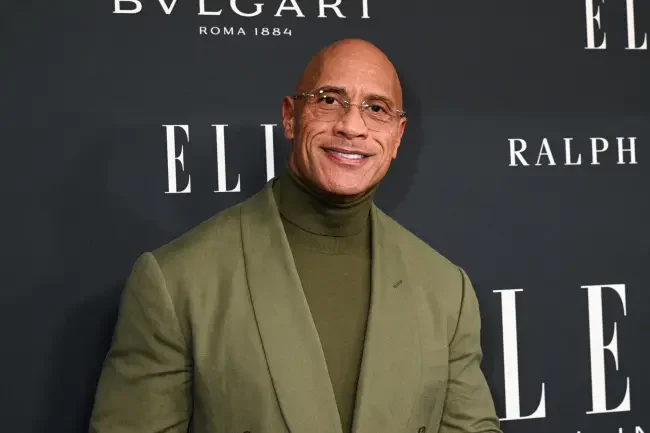
Dwayne “The Rock” Johnson’s desire to play pioneering UFC fighter Mark Kerr in “The Smashing Machine,” an adaptation of the 2002 documentary of the same name, about the athlete’s rise through the ranks of professional mixed martial arts, on the precipice of the sport becoming a worldwide sensation, predates when the WWE-superstar-turned-blockbuster-actor even started producing films through his company Seven Bucks Productions in 2012.
He simply had watched the HBO documentary in the burgeoning days of his pivot to film stardom, and thought to himself, “I would love to play Mark Kerr.” But even at that point, he told IndieWire over Zoom, doubt had already creeped in. “The realness was, ‘Are you ready to make this film? Are you ready to go there?’ Because at the end of the documentary, [Kerr] is still battling his addictions, and he’s trying, and things are hard, and he loses everything,” said Johnson. “Are you ready to go there?”
The first time he thought he’d lived enough life to revisit the role was around 2019, at a point where Johnson had become the highest paid actor of the year off a string of hits that included the “Fast and Furious” franchise, the new “Jumanji” franchise, and big budget actioners like “San Andreas,” “Rampage,” and “Skyscraper” (plus the animated phenomenon that is “Moana”). He said, “I started getting this little voice behind my rib cage that was speaking to me and saying, ‘Hey, what does the next challenge look like in this career? You’re at this point where you could continue to do the films that you’re doing and its status quo. Everybody’s happy, but there’s more.’”
After seeing “Uncut Gems,” and how the Safdie brothers directed comedian Adam Sandler toward a dark horse awards run for his lead performance in the high octane crime drama, Johnson landed on the younger sibling, actor/director Benny Safdie, helping him realize his vision of playing Kerr. The filmmaker was game, but the COVID-19 pandemic got in the way of them being able to shoot the picture.
But still, Johnson said, “When I was first thinking, ‘Hey, that’s a movie there,’ admittedly, that was my commercial instincts taking over. ‘Hey, I think there’s a great movie there that people would like, and we can make [that] movie.’” By the time he was actually back on track to make the film around 2023, a whole lot more life had happened to him, and “it was very specific and very declarative. I need to make this movie,” said Johnson. “I need this for my soul. I feel like I need to tell this story. I need to challenge myself and I need to listen to my gut and my instinct and this little voice that has now become very resounding, banging on my rib cage, ‘You must do this. A change has to happen, and it’s scary, and that’s ok. Go for it. There’s a cliff and you don’t know what’s down below, but jump.’ You don’t want to wake up 25 years from now and go, ‘I just wish I did.’”
Director Benny Safdie and producer/star Dwayne Johnson behind the scenes of their film ‘The Smashing Machine’.Eric Zachanowich
While there were the public elements, like tentpoles “Black Adam” and “Red Notice” not being received as well as his past work, there were also private moments in his personal life, like the sudden death of his father, pro wrestler Rocky Johnson, in January 2020, which brought upon a lot of introspection that would prove foundational to his portrayal of Kerr.
He cited a scene in the hospital opposite first-time actor and UFC alum Ryan Bader as Kerr’s best friend and pending opponent Mark Coleman, where his character makes a futile attempt to mask what got him admitted. “He’s trying to turn it on. ‘Could you believe it? They were asking me who the president is? That’s kind of unfair, right? Because I’m in the—’ and he’s just trying, and it’s what addicts do. And the moment they feel like, ‘Oh, this person is buying into the story, there’s my hook. Got it. Great. They’re buying into it,’” said Johnson. “I heard that story so many times from my dad. And so, there was so much in this. That was my experience with my dad, where I lived it, and their fights, and his own battles with alcoholism.”
The actor quoted author Louis L’Amour: “There will come a time when you believe everything is finished; that will be the beginning.” And, “in this case, that’s what I thought, ‘This was what “Smashing Machine” represented.’ Because in many ways, it’s wild how much goes back for me to my dad and this relationship that I had that just was complicated and fucked up and loving.” He added, “My dad’s passing, there’s not a day that goes by where I don’t think about it and I don’t try to reconcile because we fought, and we had the worst fight of our lives. We stopped talking. Two weeks later, out of the blue.” As he speaks, he trails off, gesturing a salute.
In Johnson’s first real go at playing Kerr, he had a sense of himself as an entertainer, saying he approached all his projects with an “audience first” mindset, holding “Indiana Jones” as his north star. “To the studios and to directors and my fellow actors, and I would say, ‘Hey, let’s send them home floating, and let’s work for the four quadrants, and for the largest audience possible and serve them.’ And it worked,” said Johnson. “But eventually, I got to a point where I felt like if it’s truly ‘audience first,’ then wouldn’t that mean I should give them my full self?”
Hiram Garcia, Benny Safdie, Emily Blunt, Dwayne Johnson, Mark Kerr, Andrea Romeo at the ‘The Smashing Machine’ Premiere at The 82nd Venice International Film Festival on September 01, 2025 in Venice, Italy.Earl Gibson III/Deadline
He did not have a sense of himself as the artist capable of opening up in the way he has now, promoting “The Smashing Machine” across several festival premieres, for your consideration events, and wide-ranging interviews, that have led to his first Golden Globes nomination for Best Performance by a Male Actor in a Motion Picture – Drama. “There’s just so much more I felt that I should explore, that I had been nervous about exploring. I never wanted to explore my own trauma and my own on shit on screen,” he said. “I felt like, ‘Hey, that’s stuff that I should work out on my own.’” His “Jungle Cruise” co-star Emily Blunt, who had become one of his best friends, was actually key in rekindling “The Smashing Machine,” after her fellow “Oppenheimer” actor Safdie had asked her to watch the documentary and reach back out to Johnson.
When she finally reached him, “She goes, ‘Look, you’re right there. Because the truth is, there’s a reason why you ask me about every director I work with, from Nolan to Spielberg, you’re always querying, investigating, “Tell me about this character. How did you put it together?” But it will require you to take all that trauma and shit that you’ve experienced in your life, and 1766181072 you have a place to put it,’” said Johnson of his conversation with Blunt, who would eventually sign on to play Kerr’s girlfriend Dawn Staples. “I finally realized, ‘Wow, I can do that! I could do the thing I love, which is storytelling. But now, I also have a place to put all this stuff and show the audience my full self.”
His thought process behind wanting to make “The Smashing Machine” became “Oh, wait a second, that’s a human being who I can relate to, that’s in this volcanic relationship with his ex-girlfriend and who eventually became his wife. I can relate to that relationship.” He did not have experience with addiction to the point of overdosing on pain medication, as Kerr did twice, “but I do know what it’s like to have a relationship with pain, physical pain. I know what it’s like to have a relationship to pressure, the pressure of this idea that people think, ‘Hey, you are who you are,’ and there’s an invincibility to you. And you make these films, and there’s these kinds of characters, and that’s who you are outside of Hollywood. And that kind of image, it’s hard to live up to.”
Emily Blunt and Dwayne Johnson in ‘The Smashing Machine’.
While A24, Safdie, Johnson, and those working on “The Smashing Machine” did not release the film thinking it did not have the potential to do well in theaters, it failing to catch fire at the box office in October (a month that saw historic low grosses across the board), does complement its narrative. “It’s not ‘Rocky.’ It looks like ‘Rocky.’ It has the bones of ‘Rocky.’ But in the end, he doesn’t win, and he loses everything. And what is that like? And he almost dies twice with his overdosing. And it’s OK,” said Johnson. The concluding shot of “The Smashing Machine” is the real Kerr exiting the grocery store, which cues the audience in on life going on well enough for the fighter, and what a transformation Johnson went through, with help from Oscar-winning makeup artist Kazu Hiro, to transform into Kerr.
“That’s the thing that Benny wanted to show at the end of the film. He goes, ‘If I can make a film in the sports biopic [genre] where typically you win at the end, but he doesn’t. And if I can make people walk out of the theater, hopefully, [helping] them go, ‘But you know what? It’s OK. And I feel good about my life choices.’ Then, he goes, ‘I think we might succeed at making something that’s unique and different and maybe perhaps even talked about for some years to come,” said Johnson.
He added, “Sometimes with success, you think you want it so badly, you get it, and then it’s empty. And you don’t know why it’s empty. And then, you question should I even have it? Do I deserve it? Self-sabotage begins to kick in, and before you know it you’re in this cycle, you’re spinning. And throw in an addiction to drugs, and on top of that potentially a relationship that’s codependent, that has drugs involved too as well. And it’s a hard, hard place to live, and it’s a lonely place.”
While that is all more true to the real life person he played, instead of Johnson, the actor sees his film as a win for the way that it has reconnected him to his peers in the artistic community. “My relationship with success for ‘The Smashing Machine’ is not a number. And it may sound convenient, but I mean this from the heart, it’s just peace. Being at peace with it, and being at peace with the performance. Because I’ve got to tell you, for decades, admittedly, it was always about numbers, right? And what’s the exit score? What’s the Rotten Tomatoes score?,” he said. “And all that stuff, it all works together and it’s all important.”
Chase Infiniti, Wagner Moura, Monica Padman, Eva Victor, Britt Lower, Rhea Seehorn, Tramell Tillman and Dwayne Johnson at the Golden Globes’ First Time Nominees Luncheon held at the Maybourne Beverly Hills on December 17, 2025 in Beverly Hills, California.Gilbert Flores/Penske Media
But what Johnson realized was “there is just such anchoring satisfaction in the conversation where you create something that then sparks conversations that I have never had in my life, and I have been blown away by every conversation that I have had, [from] DMs, to text messages, to fellow actors, journalists, directors, you name it.”
He actually was in the audience when Oscar-winning filmmaker Christopher Nolan told his director Safdie, “I don’t think you’ll see a better performance this year or most other years.” Johnson said, “I just wanted to watch this conversation between these two beautiful directors and was holding my wife’s hand. And he said what he said, and I must have broken three bones in her hand because I squeezed her hand so hard. It’s like, ‘Holy shit, you said what?’”
Johnson’s movie career has seen a lot of the highest highs, but “what I’m saying is I’ve never had that before,” he said. “And so, I’m not dismissing anything about our business, our process, numbers, etc., but just that to me is the biggest win of all.” There’s been no motivation to continue down the path of making films that feel like they come from his soul than the multiple times peers have told him “Hey, we’ve been waiting for this. We’ve been waiting.”
Next up: Johnson is already set to reteam with Safdie on an adaptation of the Daniel Pinkwater novel “Lizard Music,” where he will play an eccentric septuagenarian known as the Chicken Man. “Dude, there is so much of my dad’s shit that I’m putting into this [character],” he said. “The closer [Benny and I] get, it’s like, ‘Wait, your dad did that too? My dad did that. He left you like that?’”
He is also still attached to Darren Aronofsky’s “Breakthrough.” “There’s something really chemical that’s happening that, even in this very, very early process of working with Darren has been phenomenal,” said the actor, who has known the filmmaker since his uncles The Wild Samoans consulted on Aronofsky’s “The Wrestler.” Finally, he compares his still-in-development film with Martin Scorsese, about the Godfather of Hawaii, Nappy Pulawa, to his co-star Blunt getting to work with Steven Spielberg on a film about UFOs. “This is Marty’s anchor and his powerhouse. And this is what is probably the last great mob story that’s never been told,” said Johnson.