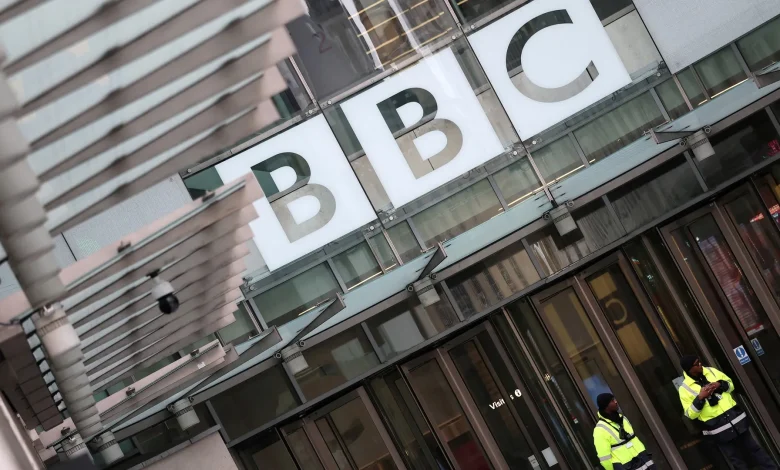
The BBC is losing more subscribers as well as struggling to get some of the ones they have to pay their bills. A recent Parliament report on the British public broadcaster said that attrition and delinquent subscribers have cost it more than 1.1 billion pounds, or $1.3 billion.
A report from Parliament’s Public Accounts Committee released on Nov. 21 outlines the network’s financial struggles.
“The BBC collected £3.8 billion from sales of over 23 million television licences in 2024–25, but 3.6 million households declared they did not need a licence,” the report read.
Download the SAN app today to stay up-to-date with Unbiased. Straight Facts™.
Point phone camera here
The BBC funding model is driven by license fees and advertising income. Reuters reports that the outlet’s budget grew 9%, to 5.9 billion pounds in its current fiscal year.
The licensing fee costs Britons 180 pounds annually. The network lost 300,000 household licenses in the 12 months leading up to March, costing them about 50 million pounds.
In addition to the loss of subscriptions, which they call “leases,” delinquent customers rose to 12.5%, meaning nearly 1 in 8 users weren’t paying for the services.
“The BBC is currently a trusted institution, but its long-term relevance will depend on how well it reflects and engages with its audiences,” the report states. “Younger people use the BBC less than older audiences and perceive it as less relevant to their interests.”
Troubling times
News of the BBC’s growing subscriber losses comes as the network is fighting accusations of bias spurred by a former adviser.
Michael Prescott, who served as an independent adviser to the BBC’s Editorial Guidelines and Standards Committee (EGSC) until June, wrote in a leaked internal document that the BBC allegedly edited President Donald Trump’s speech before the U.S. Capitol breach on Jan. 6, 2021, in a misleading way, The Telegraph originally reported.
The memo also claims that BBC Arabic, the BBC’s Arabic-language news coverage, was unfair in its reporting regarding the Israel-Hamas conflict.
Caroline Dinenage, the chairman of the Commons Culture, Media and Sport Select Committee (DCMS), wrote to BBC Chair Dr. Samir Shah, asking for explanations about the situations of bias as well as what’s being done to fix the issue.
“The BBC promotes itself as the U.K.’s most widely used and trusted source of news,” Dinenage wrote. “I am extremely worried that the coverage of Mr. Prescott’s report is suggesting the BBC is engaging in precisely the kind of presentation that is associated with less trusted news sources.”
The scrutiny led to the resignation of two top BBC officials, Director-General Tim Davie and News Chief Deborah Turness.
Turness later told reporters that mistakes were made, but insisted there was no institutional bias at the BBC.
Start your day with fact-based news.
Charter renewal
Parliament is due to begin its process of reviewing the BBC’s 10-year charter agreement with the Crown. The licensing fees are the news outlet’s main source of income and are collected via its Royal Charter. Losing that for any reason would remove a substantial revenue stream.
The 10-year deal expires in 2027, and Parliament is responsible for approving a renewal.


![2025 Merida Open Akron: Eala [51st] vs. Boulter [79th] Prediction, Odds and Match Preview](https://cdn1.emegypt.net/wp-content/uploads/2025/10/2025-Merida-Open-Akron-Eala-51st-vs-Boulter-79th-Prediction-390x220.webp)