Explaining why taxes are rising again after promising they wouldn’t was always going to be tricky.
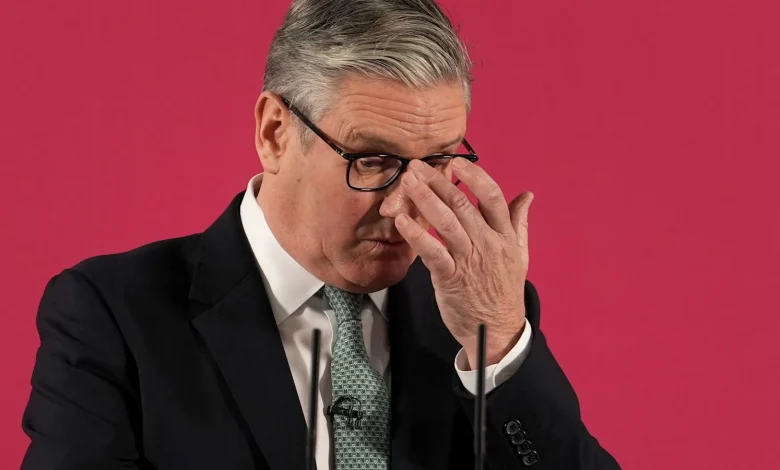
This morning, the prime minister sought to defend the narrative the government pushed in the run-up to the Budget.
“I started off £16 billion down,” Sir Keir insisted at a press conference, a reference to the worse outlook for growth handed to the government by the Office for Budget Responsibility (OBR).
He added: “There was no misleading, and I simply don’t accept… that being told that the OBR productivity review means you’ve got £16 billion less than you would otherwise have had shows that you’ve got an easy starting point.”
Unfortunately, this statement is a selective use of the OBR’s analysis. The PM isn’t inventing numbers; he’s presenting the bad news while ignoring the good news the OBR handed him in a way that feels misleading.
Here’s the full picture:
1. The PM is technically correct: the OBR said the productivity downgrade “could” cut tax revenues by £16 billion.
2. But, as the OBR said, higher inflation and wage growth “more than offset this”. By 2029/30, tax revenues were forecast to be £16 billion higher than in March.
3. Extra government spending of £22 billion on welfare and debt interest, however, brought the net impact back into the red.
The result? “Pre-measures” – that is to say, before the government had made any decisions – the PM was actually “down” £5.7bn – not £16 billion.
And the Chancellor’s buffer against her borrowing rule fell from £9.9 billion to £4.2 billion. She still met her main fiscal rule.
In the run-up to the Budget, a series of stories – fed deliberately from within government – suggested that the weaker economic outlook had blown a huge hole in the public finances. The OBR’s disclosures since the Budget show that wasn’t the case.
Rachel Reeves knew this when she delivered her extraordinary pre-Budget news conference on November 4.
The head of the OBR, Richard Hughes, was concerned enough to write to the Treasury Select Committee to “set out the facts”.
Subscribe for free to our weekly newsletter for exclusive and original coverage from ITV News. Direct to your inbox every Friday morning.
As the OBR documents show, taxes rose mainly to pay for welfare U-turns and to give the Chancellor a bigger cushion against her fiscal rules, reassuring markets.
The welfare cuts she had promised weren’t delivered, and the previous headroom she left against her fiscal rules was too small to protect against shocks.
It’s understandable that there was a political temptation to blame the productivity downgrade, which the chancellor cannot reasonably be held responsible for, but the spinning went too far.
The Budget has landed in a way that has left many people feeling misled – at a time when public trust in both the chancellor and the prime minister is extremely low.
From Westminster to Washington DC – our political experts are across all the latest key talking points. Listen to the latest episode below…