What’s going on here?
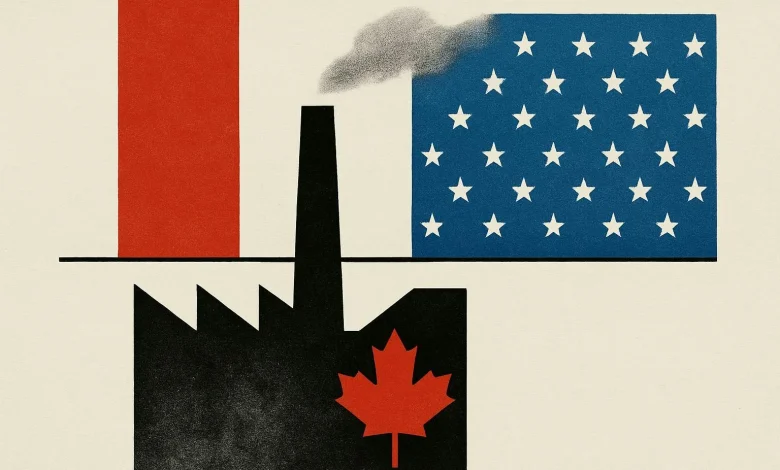
Canada’s factories spent another month stuck in reverse, with the manufacturing PMI slipping to 48.4 in November as trade tensions with the US chilled orders, hiring, and pricing power.
What does this mean?
S&P Global’s Canada Manufacturing Purchasing Managers’ Index (PMI) stayed below the 50 mark that separates expansion from contraction, edging down to 48.4 in November from 49.6 in October – but still notching its second-strongest reading in ten months. Under the hood, though, the picture is softer: the output index fell to 48.0 from 49.8, and new orders slid to 47.4 from 48.8, signaling weaker production and demand. S&P Global Market Intelligence highlighted uncertainty over tariffs and international trade as a key drag, with US–Canada talks in important sectors stalling and the USMCA trade deal – which shields most Canadian exports from US tariffs – up for review in 2026. Factory bosses are reacting by tightening their belts: the employment index dropped further into contraction at 48.5, and S&P’s Paul Smith noted firms are squeezing more out of existing capacity instead of buying inputs or replacing departing staff. The one relative bright spot is inflation, with input cost growth easing to 56.6 – the lowest since October 2024 – and selling price pressures cooling to 53.1 as competition makes it tougher to pass higher costs on.
Why should I care?
For markets: Weak factories signal steady but subdued growth.
A PMI stuck below 50 for most of the past year shows Canada’s industrial base is still a soft spot, capping expectations for strong earnings from manufacturing-heavy sectors. Softer output and hiring – with employment at 48.5 and new orders at 47.4 – point to slower revenue growth for manufacturers and their suppliers, from machinery makers to logistics firms. At the same time, easing input costs and cooler selling prices suggest goods inflation could keep drifting lower, backing the case for a less aggressive interest rate stance from the Bank of Canada. For stock and bond investors, that combination of sluggish activity and tamer price pressure supports a lower-growth, lower-inflation backdrop, rather than an economy that’s at risk of overheating.
The bigger picture: Trade friction is turning into a long-term drag.
Canada’s manufacturers are deeply wired into cross-border supply chains, so stalled talks with the US and the looming 2026 USMCA review carry outsized clout. When firms are unsure whether new tariffs or trade rules are coming, they usually delay investment, hiring, and inventory building – exactly what S&P’s survey is flagging as companies sweat existing capacity and hold back on new purchases. If that caution lingers, Canada could slowly lose ground in North American manufacturing – especially in autos, machinery, and metals – as global firms rethink where to place their next big factory bet. The data underline that predictable, stable trade rules can matter just as much as tax breaks or subsidies when it comes to keeping long-term industrial growth on track.