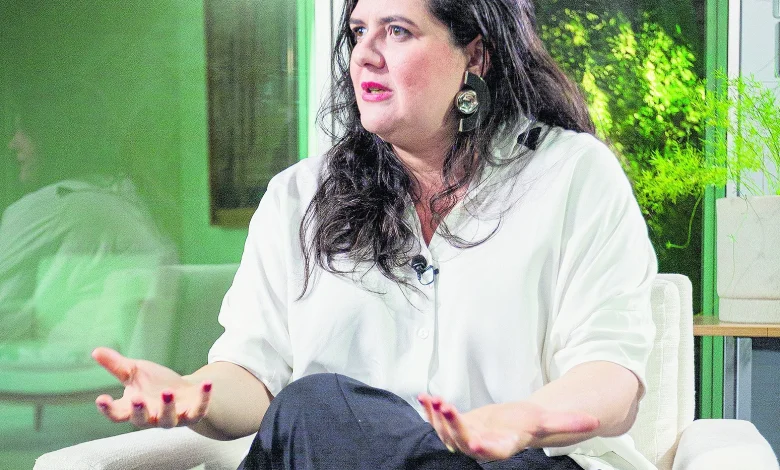
Arrested last week, former President Jair Bolsonaro (Liberal Party, PL) “is not out of the electoral game,” but he may see his political camp enter the 2026 race divided after failing to organize the right’s political succession before beginning to serve his sentence—an opening that could strengthen President Lula’s (Workers’ Party, PT) reelection bid. The assessment comes from Graziella Testa, who holds a doctorate in political science from the University of São Paulo (USP) and teaches at the Federal University of Paraná (UFPR).
Bolsonaro—convicted by the First Panel of the Supreme Federal Court (STF) to 27 years in prison for attempting a coup d’État and barred from running for office until 2060—should still act as an influential campaign surrogate next year, according to Testa. However, she says it is an exaggeration to expect his votes to transfer automatically, whether to a family member or not.
Governors seen as potential presidential contenders, such as São Paulo’s Tarcísio de Freitas (Republicans), are likely to “keep trying to balance plates,” Testa says, referring to their effort to avoid breaking with Bolsonarism while signaling to centrist voters, a segment she views as decisive.
Despite the opposition’s troubles, Lula faces a congressional landscape that “can always get worse,” she says, citing tensions with Chamber Speaker Hugo Motta (Republicans of Paraíba) and Senate President Davi Alcolumbre (Brazil Union of Amapá). The approach of the elections, along with the strengthened power of Centrão parties, helps explain the new frictions, she argues. Below are the main excerpts from her interview with Valor:
Valor: How do you interpret the events of recent days, including Bolsonaro’s arrest and the leadership vacuum on the right ahead of 2026?
Graziella Testa: What happened was an important step in a process already underway. It was less abrupt than what many expected right after the Supreme Court ruling. There was no major public outcry.
It is striking that the former president did not organize his succession. It is not succession in the formal sense, as he holds no office, but he has a highly relevant voter base for whom his endorsement matters. And he gave no electoral direction.
Even if he defines his endorsement now, more important than knowing whom someone supports in Brazilian politics is how that support plays out. Many endorsements have been meaningless because voters did not associate one figure with the other. Support, when not effective and explicit, has little impact. You need the image, the photo, the atmosphere, so voters feel it is real. That is not easy in Brazilian politics. Such endorsements rarely translate into votes. In 2018, with Lula imprisoned, Fernando Haddad struggled to capture his political capital.
I am not predicting that Bolsonaro’s endorsement will be irrelevant in 2026. I do not think Bolsonaro is out of the electoral game. What I’m saying is that a window of opportunity would have been better used had this decision come earlier.
Valor: Can the right forfeit Bolsonaro?
Testa: It cannot. Any right-wing candidate cannot signal abandonment of Bolsonaro. That would play very poorly with a voter base deeply attached to him—especially now, when he wants to project vulnerability.
The delicate balance for the right’s candidate will be to reassure voters close to Bolsonaro, who are worried about the situation, while at the same time creating some distance to attract centrist voters, who were decisive in the elections that brought Lula to office.
This dynamic already existed before Bolsonaro’s arrest. Now it becomes more complicated because his loyal voters may respond more viscerally to those seeking full separation.
I don’t think Bolsonaro is out of the game, but if he had acted earlier regarding his endorsement, he would clearly have had greater chances of reaping political dividends.
Valor: Do family tensions, such as Congressman Eduardo Bolsonaro’s resistance to supporting Tarcísio, carry weight?
Testa: It depends on perspective. For anyone who believes the right must regain power, such conflict is very negative.
If these actors could resolve internal disputes, they would have the potential to tap Brazil’s sizable right-leaning electorate, whether conservative, liberal, or aligned with the old PSDB [Brazilian Social Democracy Party]. From the left’s point of view, this conflict is excellent because it divides the voter base.
The question now is whether the right resolves its issues in the primaries or throws those conflicts into the election. If there is a split between a “pure-blood” Bolsonaro ticket and one led by major Centrão or right-wing parties, that could disperse the vote. And that would benefit the left in our two-round system.
Valor: Do you agree with the view that polarization between Lula and Bolsonaro will persist in 2026, with the decision falling to centrist voters?
Testa: We clearly have two key poles today in presidential politics: Lula and Bolsonaro. There is no doubt about that.
But we also have a party system undergoing reorganization after the 2017 electoral reform. The number of parties has fallen, concentrating resources and power in the hands of a few party leaders. The group that benefited most from this institutional change, because it was previously dispersed, is the Centrão. You cannot avoid talking about the Centrão, which can be opportunistically Bolsonarist or Lulist depending on the state.
Power is highly concentrated in the Centrão, which has electoral weight. I’m talking about the PSD [Social Democratic Party], which elected a surprising number of mayors nationwide, and the Brazil Union-Progressives federation, with Brazil Union inheriting the nationwide reach of the former Democrats. These poles also matter and shape outcomes. They want the backing of a strong presidential candidate, but they also generate votes locally. And this group is gaining strong voter loyalty through parliamentary amendments.
This segment’s influence could benefit the right, but if it ends up competing with the Bolsonaro family, that could be very damaging to the right.
Valor: Is the amnesty proposal, now losing momentum in Congress, a sort of toll governors must pay to secure Bolsonaro’s support?
Testa: They are trying to balance plates. The truth is that none of these figures ever embraced the amnesty agenda wholeheartedly, not even within the PL. It will not produce the electoral dividends they want. The dividend comes from saying they favor amnesty and that someone else is blocking it.
For governors like Romeu Zema and Ratinho Junior [Minas Gerais and Paraná, respectively], the goal will be to highlight the narrative of injustice toward Bolsonaro and toward the “poor old lady who just went for a Sunday stroll,” the usual rhetoric in Congress when discussing amnesty for participants [in the January 8 coup attempt]. At the same time, they will need to show they are focused on other relevant issues.
It is unlikely that the core campaign issue will revolve around January 8 or imprisoned individuals. Election trends and polling point toward debates about actual public policy. That debate could hurt the PT if it shifts toward public security, for example.
There is still almost a year until the elections. Much can change, themes shift frequently. Opposition candidates are seeking a segment that is no longer very enthusiastic about hardcore Bolsonarist agendas but is dissatisfied with the current government and public policy issues.
Valor: Is there a connection between this moment on the right, with its top leader at his weakest, and Congress’s retaliation against the government?
Testa: The key factor is the approaching elections. Certain coalition-building arrangements no longer make sense as elections near, forcing a breakup.
Alongside that is the legislature’s growing power, which never seems to hit a ceiling. I find Alcolumbre’s frustration about not being able to nominate a Supreme Court justice curious. Historically, that would be unheard of. His support is indeed important to Lula because the Senate is important to the president, given the situation in the lower house. It is a mutual dependence. But Alcolumbre also has nowhere else to go. It’s a troubled marriage, but no one wants a divorce.
Valor: So a rejection of Jorge Messias’s nomination for the Supreme Court is unlikely?
Testa: It would be a major surprise if they fail to reach an agreement. Lula needs Alcolumbre, and Alcolumbre needs Lula. They will eventually work things out. Neither benefits from discord.
Valor: In the lower house, do the government’s recent defeats and the risk of more setbacks create a danger zone?
Testa: The lower house has been the government’s main challenge from the start. A key difference is that it is more partisan than the Senate, which changes the analysis. Senators have stronger personal mandates. The party system is organizing itself in opposition to the president. Moreover, lawmakers have individual earmarks, making them far less dependent on the government for reelection.
Valor: How should we assess the relationship with Chamber Speaker Hugo Motta, who clashed simultaneously with PT and PL leaders?
Testa: Things can always get worse. The chamber speaker’s role is to balance demands. Acting as the government’s go-between is a recent development. Rodrigo Maia may have started it, but Arthur Lira embodied it through rapporteur earmarks, and a more politically powerful speakership. But Motta does not have rapporteur earmarks, which allowed Lira to build and manage a coalition.
We should not expect the chamber speaker [Motta] to resolve the government’s issues with Congress. Party leaders must do that. It is somewhat unfair to place the blame on Motta, as he lacks the necessary resources.
Motta’s role is closer to that of a speaker during the earlier phase of coalition presidentialism, when it functioned at cruising speed, than to that of Eduardo Cunha or Arthur Lira.
Valor: Could so-called “explosive” bills like special retirement benefits for health workers become more frequent?
Testa: “Explosive” bills are an old trick to destabilize the government. But there is a new element now: the Judiciary. The government has increasingly turned to the courts when Congress approves spending without identifying funding sources. This new actor makes threats to “break the country” less credible. And that is a good thing, this should never have been a political weapon. There are other, more legitimate and democratic ones.
Valor: How much of Congress’s pressure on the government relates to unmet demands for amendments and to Justice Flávio Dino’s criticism, seen by many lawmakers as a coordinated move by the Executive and the Supreme Court?
Testa: The appetite for earmarks never ends. And of course this plays a role. There is no doubt that a significant portion of Congress is ignoring debates about the allocation of resources for public policy. For many lawmakers, amendments are viewed through the electoral lens that their job is to bring money from Brasília. Limiting this, including the overall amount, is very difficult without judicial involvement.
Individual earmarks create a perverse incentive: they encourage local competition over who brings more funds. And with mandatory earmarks, lawmakers are not dependent on the Executive branch at all.
Valor: Is early electioneering, a claim made by the governing coalition to explain defeats in Congress, now a reality?
Testa: We are in a much more volatile electoral environment. The old predictability is gone: the PT would have the left-wing candidate, the PSDB the right-wing one, and whoever had more TV time had a better chance.
This causes discomfort among politicians. The 2017 electoral reform and mandatory budget amendments were moves by the political elite to curb volatility and high turnover. Part of today’s friction reflects how early elections are being discussed.
Add to that the fact that the right’s main figure has not made a decision. The right would likely be far less anxious if Bolsonaro had clearly indicated how he intends to act. This uncertainty brings the electoral debate forward.
The restructuring of the party system, which reduced the number of parties and concentrated power in the hands of fewer leaders, also adds uncertainty. Politicians are still adjusting slowly to the end of proportional coalition slates. It is a lot of electoral uncertainty at once. All elections are uncertain, but uncertainties differ in degree. Since 2018, volatility has been unusually high.