Open this photo in gallery:
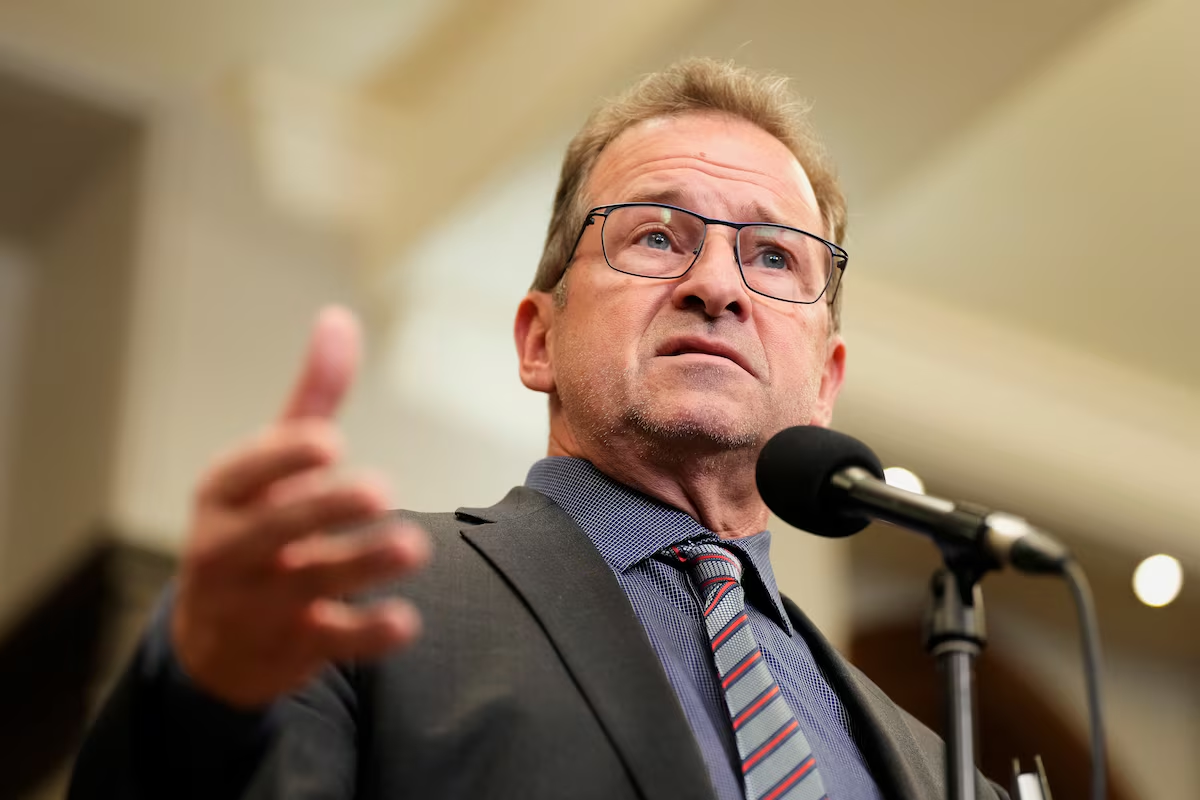
Bloc Québécois Leader Yves-François Blanchet says there is a great deal of support in his province for removing the religious exemption to Canada’s hate-speech laws.Adrian Wyld/The Canadian Press
The federal government’s flagship anti-hate bill has hit a roadblock to becoming law after a heated dispute between the three main parties broke out over a Bloc Québécois proposal to end a religious exemption to Canada’s hate-speech laws.
The exemption, which has long been part of the country’s Criminal Code, allows a person who cites religious beliefs or quotes from a religious text to escape prosecution for hate speech. The Bloc has argued for years that it can be used as cover for promoting homophobia, racial abuse and antisemitism.
Bloc justice critic Rhéal Fortin told reporters at a news conference on Thursday that he had been given a personal assurance by Justice Minister Sean Fraser that the government would support a Bloc amendment to the anti-hate bill that would remove the exemption from the Criminal Code.
In a heated debate on the floor of the House of Commons, the Conservatives, who say the bill threatens free speech, argued that removing the exemption would threaten religious freedom.
Earlier: Anti-hate bill could mean 10 years in prison for obstructing access to places of worship
At the news conference, Bloc Leader Yves-François Blanchet warned that the government will pay a political price if it fails to support his party’s amendment, as he said it had pledged to do.
“It is absolutely clear that without the removal of the religious exemption from the Criminal Code, there is no way that the Bloc Québécois will look at this bill any more,” he said.
Mr. Blanchet said there is a great deal of support in his province, including in the Quebec National Assembly, for removing the religious exemption. He said more than 50 per cent of Canadians over all support the change.
The Liberals are hoping for support from the Bloc to get the bill through the justice committee. The NDP cannot vote in committees as they have too few MPs to qualify for official party status. The Conservatives say they want to hear from more witnesses before considering amendments.
The Bloc’s amendment to remove the exemption was due on Thursday to be voted on at the committee, which is chaired by a Liberal MP. But the meeting was suddenly cancelled in what Mr. Blanchet said he believes was an attempt to delay consideration of his party’s amendment.
Bloc MP Martin Champoux argued in the Commons Thursday that religious freedom and expression would not be affected by removing the religious exemption from the Criminal Code. He said the Liberals had “flip-flopped” on whether to support his party’s amendment, having assured his party that they would.
Mr. Blanchet said he wanted the government to swiftly resume consideration of amendments to the bill before Parliament breaks for its holiday recess. Earlier this week, a meeting of the justice committee was halted before the Bloc’s amendment could be considered.
Religious groups have been contacting MPs to express apprehension about the proposed amendment to the anti-hate bill.
Marcus Gee: Ottawa’s new anti-hate bill is a mistake
“Removing the defence is a profound moral and civil-liberties mistake,” Conservative MP Larry Brock said in the Commons on Thursday.
Conservative MP Andrew Lawton, a member of the House justice committee who single-handedly held up consideration of amendments with a lengthy filibuster last week, said in the Commons that the Bloc amendment is an attempt to muzzle religious expression. He argued for Parliament to vote for a cross-country tour by the committee to hear more witnesses about the bill.
Liberal Leslie Church accused the Tories of deliberately “gumming up the work” of the justice committee. She criticized Mr. Lawton’s lengthy committee soliloquy, which included remarks about his preference for dogs over cats, to stop the bill being considered clause by clause.
Marc Miller was chair of the Commons justice committee during last week’s meeting, before the Prime Minister reinstated him to the cabinet on Monday as the new Canadian Identity Minister.
Mr. Miller on Tuesday told reporters that he doesn’t “think people should be using the Bible, the Quran or the Torah to escape from committing a hate crime or claim that … what would otherwise be a hate crime is done in the name of a religious text.”
The anti-hate bill would make it a crime, punishable by up to 10 years in prison, to obstruct someone from accessing a place of worship or other sites where Jews, Muslims and other identifiable groups gather, including by blocking doors, driveways and roads.
Bill C-9 would also criminalize the willful promotion of hatred toward religious and ethnic groups by publicly displaying terror or hate symbols, including the swastika and symbols of designated terror groups – including those of the Tamil Tigers, Islamic State, Hamas and Hezbollah.
Lola Dandybaeva, a spokesperson for the Justice Minister, said, “We remain open to constructive improvements in good faith” to the bill.