This winter appears to shape up much differently than previous years, according to a new weather forecast by NOAA. While some states are preparing to enter winter as they normally do, a collection of states has been singled out for an unusual climate. This condition has nothing to do with risk but is an insight into a broader climate pattern.
Scientists uncover pattern in weather conditions across America
When it comes to weather forecasts in the United States, we often get a highlight of varying cold and hot regions. However, these weather conditions are usually influenced by Arctic air, Pacific storms, and our river bodies. But as winter is fast approaching, meteorologists are beginning to point our directions towards something rather different.
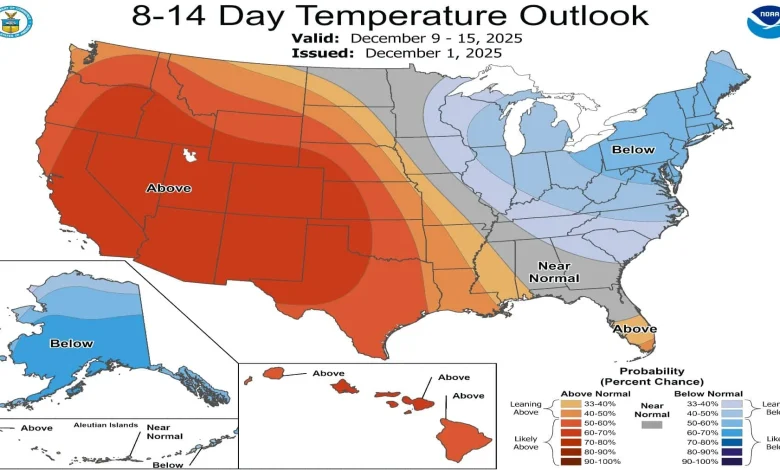
These experts analyzed various regions of the country and have come up with what they call a colder-than-normal temperature chart. These charts contain large-scale patterns that show the predictive climate of those regions during the winter season. Through their forecast, they discovered that this year’s winter to behave much differently than previous ones.
This analysis was carried out by the National Oceanic and Atmospheric Administration (NOAA). Their analysis showed that various regions across the United States experienced more colder than colder-than-usual winters. Their forecast revealed a list of states from across the Northeast and Midwest regions of the country.
Meteorologists recognize a band of 12 states to experience cold weather this winter
This weather pattern was analyzed and predicted by the NOAA Climate Prediction Centre. They were able to develop weather data that highlighted states in the United States with expected below-average temperatures. The twelve states, which we listed below, exist along the atmospheric region that receives air from Canada and the Arctic region.
These states include Minnesota, Wisconsin, Pennsylvania, New York, Massachusetts, Vermont, Maine, Rhode Island, and Connecticut, as well as north-eastern Illinois, north-eastern Ohio, and northern New Jersey, just like this extraordinary Thanksgiving cosmic event visible across many states. However, of all these states, one stands out with temperatures that exceed the boundaries of cold towards freezing. This was western Alaska.
According to experts at NOAA, these patterns would become more obvious between November 27th and December 1st. In addition, these forecasts also show a variation in the surface temperatures of oceans and their air circulation patterns. But altogether, this forecast stands as a broad insight into winter climates.
No potential hazards in NOAA’s predictions
Generally, cold periods like so are not uncommon in the United States. They have been observed and lived with through millennia. However, the weather map produced by NOAA has failed to highlight any potential risk or unusual hazards during those periods. Instead, they gave us a detailed map of how the temperature may vary in the coming weeks.
The importance of the forecast for the holidays
Provided anyone is planning to visit loved ones or family members in any of these regions, this forecast is for you. One can access the temperatures against travel and health conditions. Given the intense cold temperatures, transportation companies are also planning sustainable ways to make travel much more comfortable.
For a state like Alaska, it is important to remember that the cold temperature isn’t a warning but rather a display of varying temperatures. However, knowing the condition may be persistent can open windows for certain infrastructures in the energy sector. We are talking of home heaters, kettles, and other elements that could keep one warm through the cold.
This forecast has been able to show how winter in the United States isn’t a uniform experience. Therefore, every state would have its varying climate. Although these freezing conditions are not constant, NOAA keeps working tirelessly to provide up-to-date information and trends going forward, just like the Leonids meteor shower across North America.