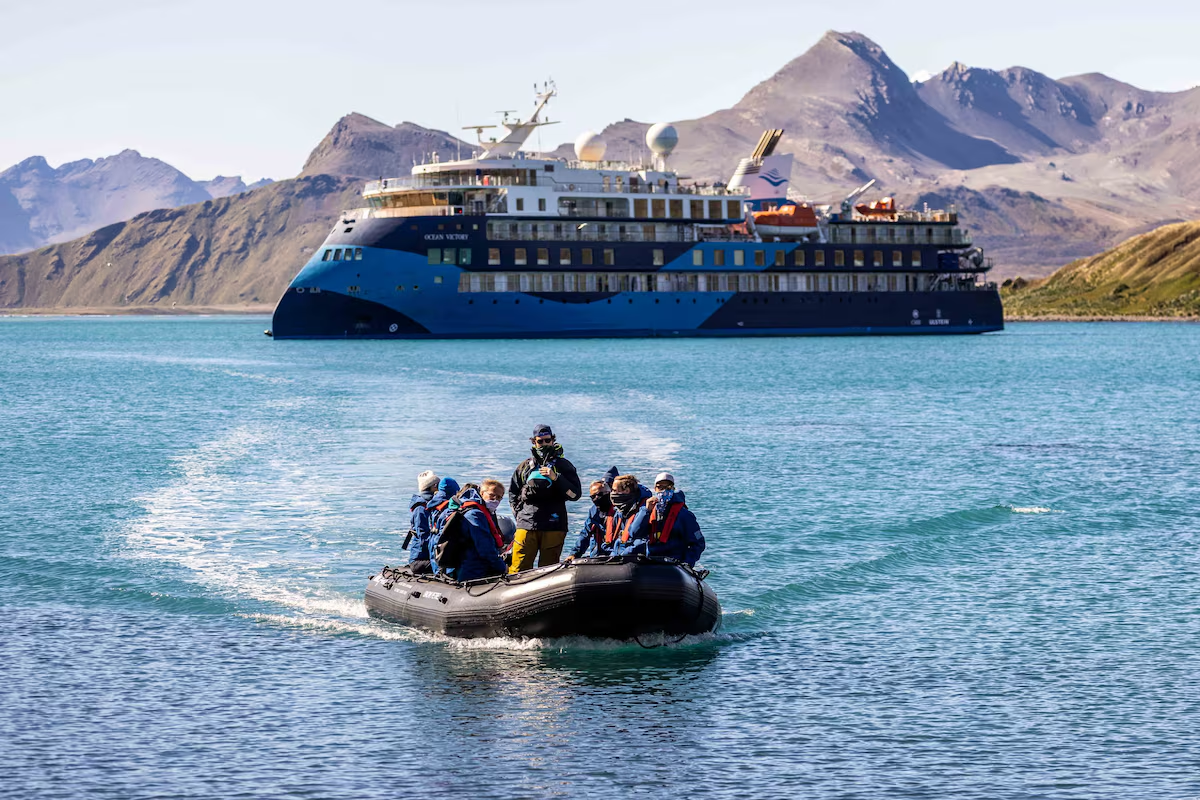
Open this photo in gallery:
For a good chunk of the voyage, tourists followed in the wake of Sir John Franklin’s doomed 19th-century expedition to find the Northwest Passage.Dennis Minty/Adventure Canada Arctic
It takes two words to clear a shipboard dining room: “Polar bear.”
The lunchtime loudspeaker announcement from Adventure Canada expedition leader Julie Bernier had us scrambling for cameras and binoculars and sprinting toward the decks.
The captain slowed the ship. The polar bear was well away from us, ambling along a rocky beach at the foot of 265-metre cliffs on Prince Leopold Island in Nunavut’s Qikiqtaaluk (Baffin) Region. We excitedly watched it toy with a sealskin. It moved along the shore with wide, deliberate strides on massive paws.
Those with long lenses on their cameras showed off striking photos. I couldn’t stop grinning. My first wild polar bear sighting, a week into the 17-day Into the Northwest Passage voyage, was among countless experiences that remain seared in my memory.
Open this photo in gallery:
Seal meat, the preferred food of the polar bear, was also on one menu travellers sampled during the trip.Andrew Stewart/Adventure Canada Arctic
The trip was a remarkable blend of learning and doing, with a 36-member expedition crew comprised of nine Inuit cultural educators and more than two dozen scientific, cultural and social sciences experts.
Like most Canadians, I’d never been north of the Arctic Circle. I discovered that especially in this time of elbows-up travel, a sea voyage to this vast region is the ultimate experiential and inspiring Canadian staycation.
Our late-August trip began with a charter flight from Toronto to Kangerlussuaq, Western Greenland, in the autonomous Kingdom of Denmark territory.
The next day, we boarded Zodiacs from the ship to visit Sisimiut, the second-largest city in Greenland. Sisimiut is home to 5,000 people and about 5,600 purebred Greenlandic sled dogs, crucial for winter hunting on the ice. The muscular canines were on summer holiday, relaxing at the noisy Dog City compound.
This ship was supposed to travel through the Northwest Passage. The Arctic had other plans
The Taseralik Culture Center hosted the first of three Taste of Place meals on the trip, a chance to try “country foods” that are cornerstones the Inuit diet. I liked the muskox meatballs and slices of ruby-coloured caribou tenderloin. Squares of purple-red raw seal meat, valued as a belly-warming source of protein and minerals, and chewy muktuk (beluga whale skin and blubber) were a challenge. I tried it all.
For a good chunk of the voyage, we followed in the wake of Sir John Franklin’s doomed 19th-century expedition to find the Northwest Passage. Franklin-based lectures covered topics including the importance of rock souvenirs gathered by his officers to the various calamities that led to the deaths of the entire crew.
I also learned cruise travellers in the Arctic should be prepared to go with the (ice) floe. We were supposed to visit Ilulissat, a coastal town in western Greenland known for iceberg-producing Ilulissat Icefjord, a UNESCO World Heritage Site.
Ironically, our captain decided the ice around the North Atlantic’s most prolific iceberg nursery was too unpredictable to allow safe exit from Ilulissat once we got there. That’s how we ended up at one of my favourite stops, the small port of Qeqertarsuaq on Disko Island.
House-sized icebergs floated past the shiny black sand beach. We hiked up a rocky ridge to a gushing waterfall, turning back to marvel at icebergs below.
Open this photo in gallery:
Both stunning attractions and dangerous obstacles, icebergs play a big role in any Arctic sea expedition.Mark Edward Harris/Adventure Canada Arctic
Water or air are the only ways to move long distances here. Itineraries changed often on the ship with mother nature calling the shots. Climate change is warming this fragile area nearly four times faster than any other place on Earth, and this creates navigational challenges with unpredictable sea ice and weather systems. At one point, wind gusts of 42 knots (77 kilometres an hour) cancelled onshore activities and kept us anchored in a sheltered bay for two days.
Even though the Inuit “have so many words to describe snow and ice, we don’t have words to describe this,” Wayne Broomfield, an Inuit adventurer and photographer from Nunatsiavut (northern Labrador), said during one of his shipboard talks.
“This” includes the devastating effect of warming temperatures on wildlife, a major draw of the cruise. Polar bears, the Arctic’s apex predators, need sea ice to hunt their favoured prey of seals.
When white dots on the land turned out to be frolicking Arctic hares rather than polar bears and a lone muskox and cresting belugas were too far for my binoculars to pick out, I had no complaints. I was in the Arctic. And I did spot some muskox poop on one hike, which felt like a win.
Any time weather changed our itinerary, expedition leader Bernier jumped in with a full slate of programming. We even watched episodes of Iqaluit-shot CBC series North of North in the ship’s lounge.
Open this photo in gallery:
The range of programming on the journey included workshop featuring Inuit throat singers and drummers.Jen Derbach/Adventure Canada Arctic
I also tried throat singing with Ottawa Inuit educator and drum dancer Lynda Brown. She explained the ancient Indigenous singing can sound like rushing wind or sled runners on snow. We each faced our partner, clasped forearms and tried to use our throat, belly and diaphragm to sing back and forth.
“Use your monster voice!” Brown said as we tried to mimic her humming growl. Eventually, one singer either ran out of air or burst out laughing. We were good at the laughing part.
Remoteness, crisp air and the silence of the North gave me the reset I was seeking, with quiet moments walking on shingle beaches in polar desert landscapes and bouncy hikes on spongy, colourful tundra.
Micro-cruises give travellers unparalleled personal access to in-demand destinations
The 174 well-travelled passengers, most of whom were Canadian, also contributed to the floating university atmosphere, such as the rockhopper penguin expert from Australia, the Canadian scientist who did his PhD in river otter research and the German wildlife photographer who shared her exquisite photos of Antarctic wildlife.
Making new friends was easy, but I also took an icebreaker with me, one that would speak to both Greenlanders and Canadians: A grey tuque with a Canadian flag and the words “Not for Sale.”
I got a grin and “I like your hat” from the first person I met in Kangerlussuaq and the welcoming residents of small Nunavut communities such as Coppermine and Pond Inlet, where we marvelled at the athleticism of Arctic Winter Games competitors.
From the Inuit we met in communities along the way to the ship’s expedition team, people encouraged us to be advocates for the North, to take what we had learned home with us along with the beaded earrings, bone carvings and sealskin mittens we bought.
“You embraced change and you trusted us,” Bernier said in her farewell message to guests. “An expedition cruise ship is probably not the holiday you were expecting.”
It was so much more.
Open this photo in gallery:
WERNER KRUSE/Adventure Canada Arctic
If you go
Adventure Canada runs all-inclusive expedition cruises to the Arctic during summer. The Into and Out of the Northwest Passage expedition cruises start at US$18,495 a person plus airfare, based on double occupancy.
Starting with the 2026 season, Adventure Canada will operate two new ships in Arctic, Greenland and North Atlantic expeditions, 144-passenger Exploris One and 78-passenger Ocean Nova. www.adventurecanada.com
I wish I’d brought a face-covering bug net. There were swarms of blackflies on the Greenland tundra. And don’t forget a good sleep mask. Summer means lots of daylight in the north.
The writer was a guest of Adventure Canada. It did not review or approve the story before publication.