Open this photo in gallery:
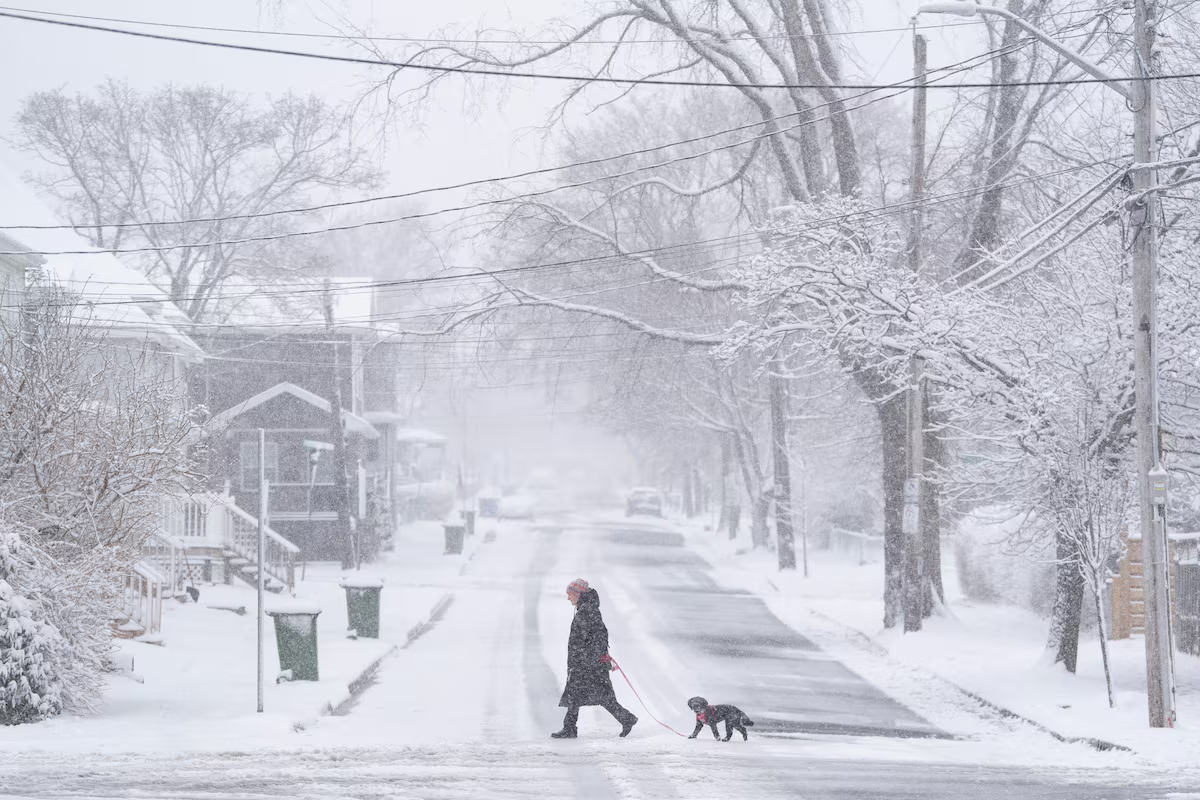
Environment Canada has issued a special weather statement for the whole of Nova Scotia, as well as the eastern part of Prince Edward Island and the eastern part of Newfoundland.Darren Calabrese/The Canadian Press
Much of the Atlantic region will see a cold and windy start to the week as an Alberta clipper system heads east.
Environment Canada has issued a special weather statement for the whole of Nova Scotia, as well as the eastern part of Prince Edward Island and the eastern part of Newfoundland.
Beginning this morning, the weather service says most of Nova Scotia will see five to 15 centimetres of snow, with more possible in Cape Breton, as well as wind gusts up to 70 kilometres per hour.
The weather service warns the morning commute is expected to be messy in central Nova Scotia and P.E.I.
Strong northwesterly winds are set to develop in the afternoon over Cape Breton and along the Northumberland Strait, bringing with them a risk of snow squalls and blowing snow.
Across much of eastern Newfoundland, 10 to 20 centimetres of snow is expected beginning Monday evening and continuing to Tuesday, with winds up to 80 kilometres an hour possible.
Meanwhile, many parts of north and southeastern Alberta are expected to get a blast of wintry weather Monday.
Environment Canada says much of the Peace Region north of Edmonton, including Grande Prairie in the west and areas near Athabasca in the east, could see between 15 and 30 centimetres of snow.
The weather office says aside from possible breaks, snow is expected to fall until later Monday.
Areas south of Edmonton, such as Red Deer and Medicine Hat, are under a winter storm watch that could bring heavy rain, strong winds and flurries before Tuesday.
Forecasters say the front will bring hazardous conditions and are encouraging people to put off any travel.
In the Rocky Mountains, the weather service is warning of strong wind gusts up to 100 kilometres per hour in areas as far north as Banff and stretching to the border with Montana.