Cowell’s new Netflix series follows his quest to create another boy band. One year on from Payne’s death, it makes for grim watching
Simon Cowell has a new TV talent show out today – though he’d rather you didn’t call it that. Simon Cowell: The Next Act on Netflix is dressed up as a documentary series, following Cowell as he embarks on a search for a new boy band. Gone are the dry ice machines and public votes of The X Factor – this is a glamour-free, warts-and-all insight into what it takes to create the next One Direction.
The six-part series arrives just a couple of months after the one-year anniversary of Liam Payne’s death. At just 31, the singer fell from the balcony of an Argentinian hotel – he had traces of alcohol, cocaine and an antidepressant in his blood. It was a tragic, shocking loss, made all the more devastating by the fact that – had Payne never been thrust into the limelight at just 16 – it might have been avoided altogether.
Simon Cowell can’t be blamed for what happened to Payne; there are countless factors that contributed to the star’s struggles, from media intrusion to grappling with a stagnant solo career. But in the shadow of his death, The Next Act feels in bad taste. How could Cowell consider putting more young people through the very process that brought Payne so much hurt?
It’s a question he is forced to ask himself when the news of Payne’s death arrives during filming of The Next Act. By that point, the process is well underway.
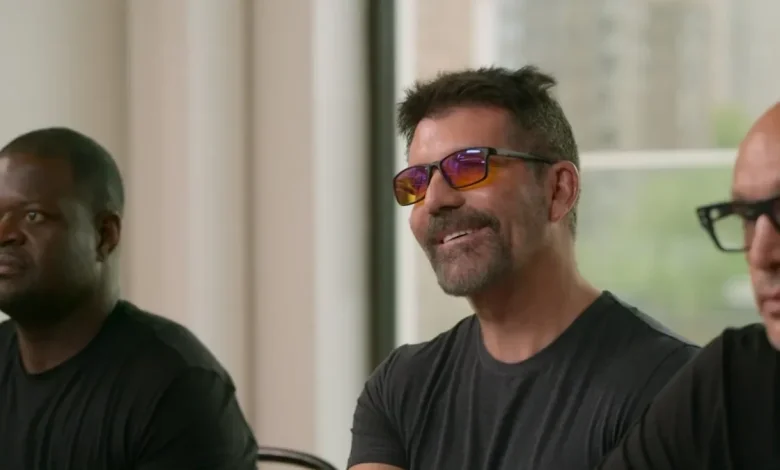
Cowell sees himself as a sort of fairy godfather character (Photo: Netflix)
Cowell and his team of music experts (including Pete Waterman, who was a judge on Pop Idol alongside Cowell) have already held auditions in Liverpool, London and Dublin, in scenes reminiscent of The X Factor, Britain’s Got Talent and all the talent shows that came before. Nervous teenagers, some brandishing a guitar and all with the same haircut, singing their hearts out before Cowell hoping to be given a shot at the big time by the music industry’s fairy godfather.
That’s how Cowell sees himself – as a man of immense power in a position to pluck a handful of these teenagers from their supposedly humdrum lives and give them the chance of a lifetime. He “gets a buzz” from it, he says, and the whole process was dreamt up simply because he “missed” developing pop bands.
When Payne dies, however, filming stops and Cowell takes himself away to process his grief. These scenes of The Next Act are heartbreaking and hard to watch, with Cowell so devastated by the death of a friend and protégé that he is rendered speechless.
All the more reason why his decision to continue searching for a new boy band feels icky. Despite acknowledging that the music industry is both “more stressful” and “difficult” than he’s ever known it, he convinces himself that he can’t put a stop to it all is because he’s made a promise to the contestants he’s invited out to Miami (The Next Step’s version of judges’ houses) and that he can’t take the opportunity away from them.
He wants to seem loyal and noble, but it is just opportunistic – let’s not forget Cowell stands to make a lot of money if his new boy band are successful, not to mention that he has a Netflix contract to fulfill.
One Direction star Liam Payne, who died aged 31. Payne was just 16 years old when he joined One Direction (Photo: Neil Hall/Reuters)
Cowell eventually passes the buck of responsibility over to the parents, inviting them for a meeting in which he explains, in plain and simple (but mostly off-camera) terms, the troubles and pressures their children will go through if they’re put into the band. Should anything go wrong, Cowell is armed with an “I told you so” defence. He’s done his bit.
The Next Act doesn’t only refer to the band itself; this is an attempt at redemption for Cowell. The series (on which Cowell is an executive producer) tries to humanise him by painting him as Simon Cowell the family man, swimming with his 11-year-old son Eric, sharing his anxieties with partner Lauren Silverman.
And it doesn’t shy away from the more difficult parts of everyday life – we see him bickering with Lauren about having to attend his stepson’s high-school reunion and she is consistently frustrated by his uptight routines and obsession with work. “A leopard doesn’t change its spots,” she jokes.
Cowell wants The Next Act to show him as a benevolent but still sharp music mogul. “I don’t feel good about it,” he says after telling some of the contestants they haven’t made it into the band. “But I don’t feel like I’ve made a bad decision.”
‘The Next Act’ is a talent show pretending to be a documentary (Photo: Netflix)
At the height of his powers, Cowell was known as TV’s “Mr Nasty”. He advised an auditionee to “get a lawyer” to sue her singing teacher. He called singers “horrendous”, “the worst singer in the world”. He suggested that a young woman needed to lose weight because she looked “like a shop girl”, and then put her through to the next round because he wanted to see “what this girl is willing to do”.
He’s smarter than that now – he knows that times have changed. But just because his language has softened doesn’t mean he’s not still a ruthless business man. Cowell wants to catapult a new boy band into the stratosphere for one reason only: to prove he still can.
It might be more personal and insulated than The X Factor, but the end result of The Next Act is the same: teenage boys shepherded into fame by a man closely associated with the dark side of the music business. I hope that is where the similarities end.
‘Simon Cowell: The Next Act’ is streaming on Netflix