Postseason preparation begins long before the final week of the regular season. The smartest teams treat December like an early playoff slate—every decision, every adjustment, every personnel call carries weight. The Pittsburgh Steelers have earned a reputation for being one of those deliberate, forward-thinking franchises.
But on Sunday afternoon at Acrisure Stadium, their choice to start Aaron Rodgers against the Buffalo Bills felt like a rare misstep—one that may have done more harm than good.
Rodgers wasn’t brought to Pittsburgh just to throw passes. He was brought to stabilize a wandering offense, to serve as a guiding light for a quarterback room full of questions and raw talent. For weeks, he did just that. His presence elevated the huddle, sharpened play-calling options, and ignited a confidence the Steelers hadn’t felt in years.
However, everything shifted in Week 11 when Rodgers fractured his left wrist against the Cincinnati Bengals. The injury was more than a physical setback—it was an emotional punch to a fanbase that finally felt the tide turning.
Yet Pittsburgh still found a way to compete the following week with Mason Rudolph under center against the top-ranked Chicago Bears defense.
Rudolph wasn’t flawless—his interception stung—but he battled. He threw for 171 yards and a touchdown and kept the Steelers in a tight 31–28 loss. More importantly, he operated the offense efficiently, distributing the ball and keeping rhythm even when the pocket tightened.
It wasn’t spectacular, but it was workable. It looked like a foundation.
Mason Rudolph could’ve led the Pittsburgh Steelers better against the Buffalo Bills
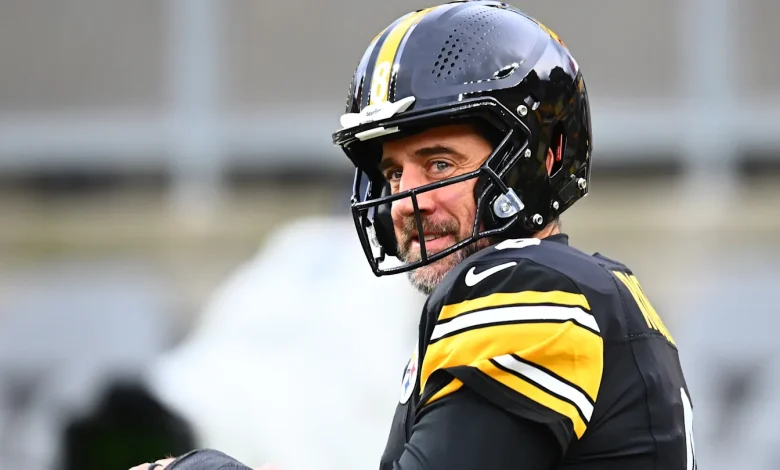
Rodgers’ return against Buffalo, however, looked nothing like that foundation. From the opening drive, the offense appeared hesitant and constrained. The veteran’s injured wrist limited not only his throws but also basic handoffs. Everything was slow, deliberate, and painfully predictable. Watching him work with one functioning hand felt like watching a master carpenter forced to build with half his tools missing.
Through nearly two quarters of football, Rodgers had only 54 passing yards and six completions. The Steelers weren’t just stagnant—they were stuck.
His limitations were obvious, and Buffalo’s defense smelled blood early. What kept Pittsburgh afloat wasn’t their offense—it was their defense. Two key takeaways bottled up Josh Allen long enough for the Steelers to steal momentum. Jaylen Warren eventually punched in a score midway through the first half, giving Pittsburgh a brief but much-needed lead.
Still, the uncomfortable truth lingered: Rodgers wasn’t himself. Not physically, not mechanically, and not in the way the Steelers needed in a game with playoff implications. The decision to push him onto the field felt more like hope than strategy.
I understand the instinct. A future Hall of Famer inspires confidence even on his worst days. On a good day, Mason Rudolph isn’t remotely comparable to Rodgers’ legacy or his football IQ. But on Sunday? I find it hard to believe Rudolph couldn’t have outperformed a visibly limited Rodgers in that crucial first half.
Good teams prepare for January by making the right decisions in December. And while the Steelers have made countless wise choices this season, their handling of Rodgers against the Bills may be one they look back on and quietly regret.