A whole new Witcher trilogy of games released within six years of each other – is that even possible?

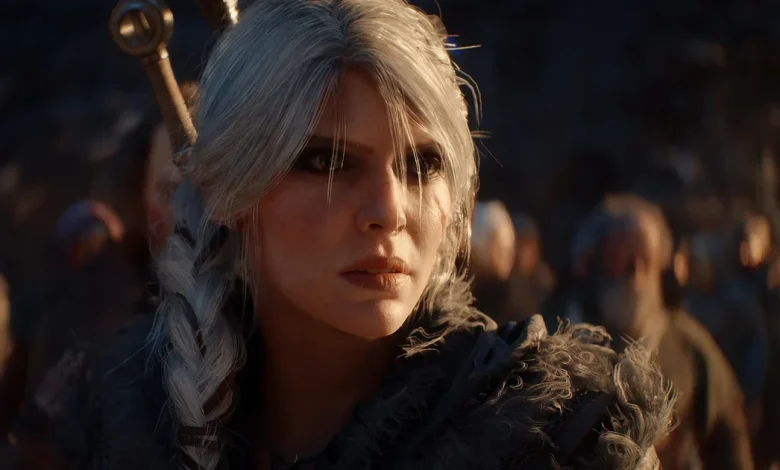
CD Projekt Red has reaffirmed plans to release an entire new trilogy of The Witcher games within six years.
Joint studio CEO Michał Nowakowski told investors as much during a recent financial call.
“In a way, yes, I do believe that further games should be delivered in a shorter period of time,” Nowakowski said. “As we had stated before, our plan still is to launch the whole trilogy within a six-year period, so yes, that would mean we would plan to have a shorter development time between [The Witcher 4] and [The Witcher 5], between TW5 and TW6 and so on.”
That means, assuming The Witcher 4 launches in 2027 (I’ll come back to this point), that this entire new trilogy of Witcher games could be released by 2033 – perhaps one in 2027, one in 2030, and one in 2033. Note, we do not know when The Witcher 4 will launch. The only concrete date-related information we have is that the game will not be released in 2026.
Manage cookie settings
Watch on YouTube
As Nowakoswki said during the investor call: “As we have already stated, The Witcher 4 is in the full-scale production phase. We’re not disclosing any details regarding the target release date, so there’s not a point in time I could refer to when answering such a question. The only thing we’re commenting is that we’re not launching in 2026…”
The Witcher 4 could launch in 2027, then – that’s the earliest it could appear. But it could be released in 2028 as well, or later. Perhaps CD Projekt Red will take longer to release the first game of the trilogy to ensure the foundations are laid for smoother and speedier development of games two and three.
Remember, one of the biggest challenges with this new trilogy is transitioning the studio to Unreal Engine 5. The Witcher 4 is the first game in decades that CD Projekt Red has used an engine other than its own to make; the last time was using BioWare’s Neverwinter Nights Aurora engine to make The Witcher 1. Since then, the studio has used iterations of its own internally made Red engine.
“We’ve been using UE5 for The Witcher 4 for almost four years now and we’re very happy with what we’ve achieved,” Nowakowski said during the investor call. “I think you could have seen some of that with your own eyes with our tech demo reveal at Unreal Fest a couple of months ago, and we’re very happy with the results of that as well – we’ve already said that, but I’m always happy to say it again – and we’re happy with how the engine is evolving through the Epic team’s efforts, and how we are learning how to make it work within a huge open-world game, as TW4 is meant to be.”
Watch on YouTube
CD Projekt Red is also using Unreal Engine 5 to remake its first Witcher game – a project inextricably linked to The Witcher 4, given the shared engine, and the up-front work that needs to be done tailoring it for the studio’s needs. Because of that, most of the Fool’s Theory team – the studio handling The Witcher 1 remake; a studio made up of former CDPR developers (which made The Thaumaturge, a pretty decent original RPG) – has been shuffled to help with The Witcher 4, which presumably takes precedent over The Witcher 1 remake.
“I think we stated in the past that the majority of the team is currently involved in the other project, and also support for The Witcher 4,” Nowakowski said, “so there is some limited team working on TW1, but since it’s very much tied with TW4 development, this is also why we made this move, and we have explained that in the past. So, for TW1 per se, it’s a smaller group of people.”
Manage cookie settings
I’m not entirely sure which other project he’s referring to, by the way. It’s an unannounced project, but whether it has anything to do with Hadar, the codenamed new IP that a small team is working on, I don’t know.
To return to the question in the headline: can CD Projekt Red release three Witcher games in six years? We haven’t seen another RPG studio do a similar thing since BioWare released the Mass Effect trilogy in five years. Typically, most projects of this size these days suffer delays. The Witcher 3 was delayed three times until it eventually came out in May 2015, and Cyberpunk 2077 was delayed four times until it arrived in December 2020. Even assuming CD Projekt Red doesn’t delay The Witcher 4, 5, or 6, those previous games highlight lengthening development times – five years between Witcher 3 and Cyberpunk 2077, and seven years between Cyberpunk and The Witcher 4, assuming it releases in 2027. To believe CD Projekt Red can suddenly narrow that gap to three years between games is a leap of faith to make.