The future of Warner Bros. Discovery is hanging in the balance, with the entertainment company’s board of directors now weighing second round bids for the company from Comcast, Paramount and Netflix.
The offers were due Monday, and all three companies submitted their revised plans.
While the specific cash amounts were not immediately clear (also complicated by the fact that only Paramount is pursuing the whole company), the second round bids included some notable tweaks. Netflix, for example, is now a mostly cash bid, after initially leaning on its stock as a key part of the deal.
And Paramount is offering all-cash, having secured debt financing from the private equity giant Apollo, as well as unknown Middle East sovereign wealth funds. The nature of the debt financing means that Ellison and Redbird will retain total control of Paramount if they are successful in their bid.
Comcast, meanwhile, is said to have proposed a deal that would see it spin out NBCUniversal into WBD in what would likely be a stock-heavy transaction.
Barring any surprise late bidders or a call by the WBD board to continue with their split, one of the three media giants is likely to emerge as the buyer of assets that include the venerable Warner Bros. film and TV studios, HBO and HBO Max, and IP that includes DC Comics, Friends, and Harry Potter.
So what happens next? WBD’s board will need to weigh the new offers, and either request a third round of bids if they feel they can extract more compelling offers, or pick a winner and start working on a binding agreement.
To split or not to split: This is in many ways the fundamental question about the future of WBD. The company was planning to split itself in two: A streaming and studio business, and a linear TV business. Paramount wants the whole thing, while Comcast and Netflix want to stay away from linear. Does the company sell itself whole (likely to Paramount) or split itself, either in a sale or a continuation of its previous process?
Regulatory hell: The Trump administration has made it clear that David Ellison and his father Larry Ellison would have an easier regulatory path, fresh off their deal for Paramount. At the same time, anonymous administration sources have made it clear to friendly voices like Fox Business Network and the New York Post’s Charlie Gasparino that Netflix and Comcast would face scrutiny. How tough will the government be? And will it dissuade the WBD board from cutting a deal with anyone that doesn’t have the last name Ellison?
Film’s future: Netflix is not in the theatrical film business, really. NBCUniversal and Paramount are. But if the WBD studios are sold, what happens to its film studio, which has had a breakout year under the leadership of Michael De Luca and Pamela Abdy? Netflix has reportedly promised continues theatrical releases, but does that mean the same sort of wide release WB has done? Or a Netflix-ified version? Would NBCU or Paramount really just double their film output? Or is the future of WB more like 20th Century Fox, as a niche with a few releases under the larger umbrella?
Sports superpower: WBD may have lost its NBA rights, but its portfolio still includes prime MLB and NHL deals, one half of the March Madness college basketball tourney (Paramount has the rest) and other rights that include the French Open and college football. When added to the portfolios of Paramount or NBCU, it could make for a compelling sports proposition, a sports media giant that would rival only ESPN in scale. But with those rights set to travel with the linear TV business, their future remains uncertain.
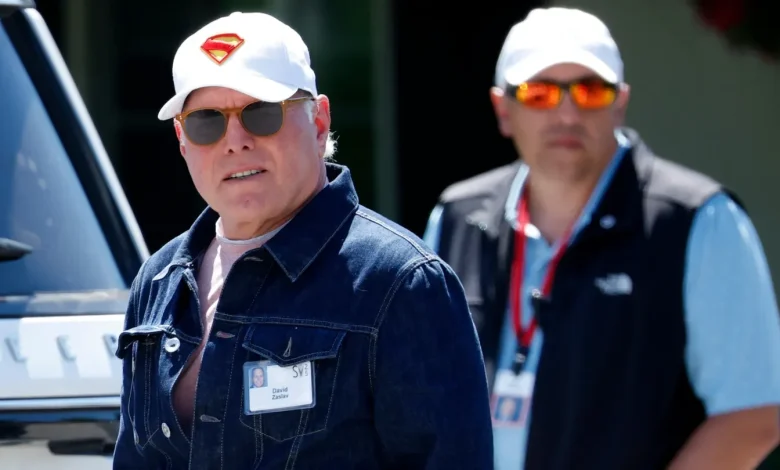
What about Zas? WBD CEO David Zaslav has made no secret of his love of the game. He hosts star-studded dinners at his Beverly Hills mansion (once known as Woodland, the estate of mogul Robert Evans), he has sought out meetings and held court at his U.S. Open suite with A-listers and tycoons. Would he really hang up his power suit (or power vest?) that easily? Paramount has reportedly offered him a major role, so it stands to reason that others may make similar offers as further enticement for a deal.
Mystery bidder: We know that Paramount, Comcast and Netflix have submitted bids, but that doesn’t preclude a surprise bidder entering the fray. Perhaps, say, a private equity firm backed by Middle Eastern money? Or a Japanese entertainment conglomerate with an American partner? Don’t count out any surprises.
Updated 11:45 AM With details of Comcast bid.