Three-time Grand Slam champion to lead U.S. team through 2027 season
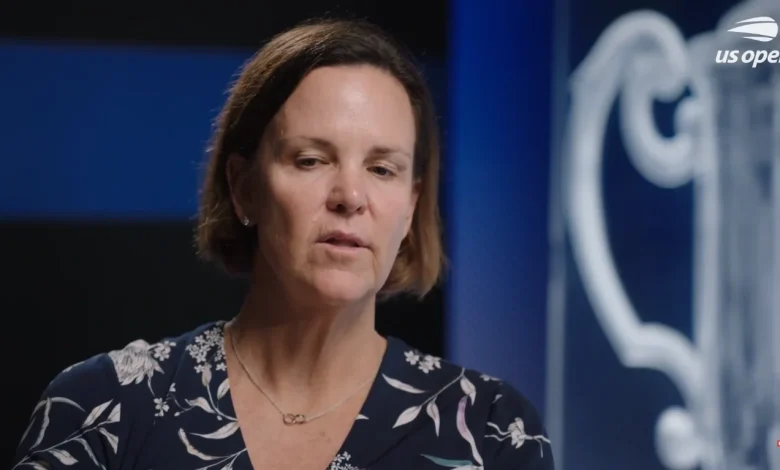
Lindsay Davenport signed a two-year contract renewal to remain the Billie Jean King Cup captain for the United States, the U.S. Tennis Association announced Tuesday.
Davenport led the Americans to the team competition’s final this year, their first appearance in that round since 2018. The U.S. lost to Italy in the championship match.
Davenport became captain in 2024. As a player, she helped the U.S. win the event three times, in 1996, 1999, and 2000, demonstrating her understanding of what it takes to succeed at this level of international team competition.
She won three Grand Slam singles titles, reached number one in the WTA rankings, and was elected to the International Tennis Hall of Fame in 2014, establishing her credentials as one of American tennis’s greatest champions.
Historic depth in American women’s tennis
Davenport expressed that it’s an incredible honor to serve as U.S. Billie Jean King Cup Captain. She’s thrilled and humbled to continue in the role, especially during such an amazing time for women’s tennis in America.
With Coco Gauff at number 3, Amanda Anisimova at number 4, Jessica Pegula at number 6, and Madison Keys at number 7, this season was the first since 2004 with four American women in the year-end top 10 rankings.
Back then, Davenport finished at number 1 and was joined by Serena Williams, Venus Williams, and Jennifer Capriati an era remembered as the golden age of American women’s tennis.
The United States will play Billie Jean King Cup qualifying matches in April, beginning their campaign under Davenport’s continued leadership.
Return to finals demonstrates progress
Davenport’s first full year as captain produced immediate results, leading the Americans back to the final for the first time since 2018. Though the U.S. fell short against Italy, reaching the championship match represents significant progress for the program.
The six-year gap between finals appearances highlighted the transitional period American women’s tennis experienced as the Williams sisters’ dominance waned and a new generation developed. Davenport’s leadership helped bridge that gap, creating a competitive team culture that maximized the talent of younger players.
The loss to Italy stings, but establishing the U.S. as a regular finals contender again sets the foundation for future success. With four top-10 players available and several other promising talents emerging, the Americans should compete for championships throughout Davenport’s renewed tenure.
Player credentials inform coaching approach
Davenport’s Hall of Fame playing career provides credibility that resonates with current players. Her three Grand Slam titles winning the 1998 U.S. Open, 1999 Wimbledon, and 2000 Australian Open demonstrate she understands championship-level pressure and performance.
Reaching number one in the world rankings gives her insight into what it takes to reach and maintain elite status. Her experience winning three Billie Jean King Cup titles as a player provides firsthand knowledge of the unique dynamics of international team competition.
That combination of individual excellence and team success makes Davenport uniquely qualified to lead. Players respect captains who’ve achieved at the highest levels, and Davenport’s resume speaks for itself.
Capitalizing on generational talent
The current depth of American women’s tennis creates unprecedented opportunities for team success. Having four players in the year-end top 10 for the first time in 20 years reflects a generational wave of talent that Davenport can harness.
Gauff at number 3 represents the face of American tennis moving forward. At just 20 years old, she’s already a Grand Slam champion with the potential to dominate for the next decade. Her leadership and competitive fire make her an ideal centerpiece for Billie Jean King Cup teams.
Anisimova’s return to form at number 4 after taking time away from tennis shows remarkable resilience. Her powerful baseline game provides a different style that complements Gauff’s athleticism and court coverage.
Pegula’s consistency at number 6 makes her a reliable option in both singles and doubles. Her experience and mental toughness in pressure situations add veteran stability to the team dynamic.
Keys at number 7 brings big-match experience and the ability to dominate opponents when her aggressive game is clicking. Her power from the baseline can overwhelm anyone on a given day.
2004 parallels and differences
The comparison to 2004’s top-10 quartet is both encouraging and instructive. That era featured Davenport, Serena Williams, Venus Williams, and Jennifer Capriati four Hall of Fame-level players at or near their peaks.
The current group hasn’t yet reached that collective legendary status, but they have time. Gauff seems destined for greatness if she stays healthy. Anisimova, Pegula, and Keys are established stars with the potential for breakthrough major titles.
The key difference is depth beyond the top four. In 2004, American women dominated the rankings with multiple players in the top 20. Today’s landscape is more competitive globally, with strong players from numerous countries challenging American depth.
Davenport’s challenge is maximizing the talent of her top players while developing the next wave to maintain this depth. The qualifying matches in April will provide opportunities to integrate younger players and build team chemistry.
Building toward championship
The two-year contract extension through 2027 gives Davenport runway to develop a championship-winning team. Immediate success reaching the finals in her first full year creates momentum, but sustaining that level requires consistent work.
Italy’s victory in this year’s final demonstrates that other countries have closed the gap with American women’s tennis. Italy, Poland, the Czech Republic, and other nations field competitive teams capable of winning on any given day.
Davenport must create a culture where America’s individual stars embrace team competition and play with the collective intensity required to win multiple matches over a short period. Managing egos, rotating players appropriately, and maximizing doubles combinations all fall under her purview.
April qualifying begins new cycle
The Billie Jean King Cup qualifying matches in April will test how Davenport’s team responds to the finals loss and begins building toward future championships. These matches provide opportunities to experiment with lineups, give younger players experience, and develop team chemistry.
With her contract secured through 2027, Davenport can take a longer view of team development rather than feeling pressure for immediate results. That stability benefits both captain and players, allowing them to build sustainable success rather than chasing short-term wins.
American women’s tennis is experiencing a renaissance with four top-10 players for the first time in 20 years. Lindsay Davenport’s Hall of Fame credentials and immediate success as captain make her the ideal leader to transform that talent into Billie Jean King Cup championships.
The renewal through 2027 signals the USTA’s confidence in Davenport’s vision and approach. Now comes the hard part converting finals appearances into championship trophies.