READ MORE
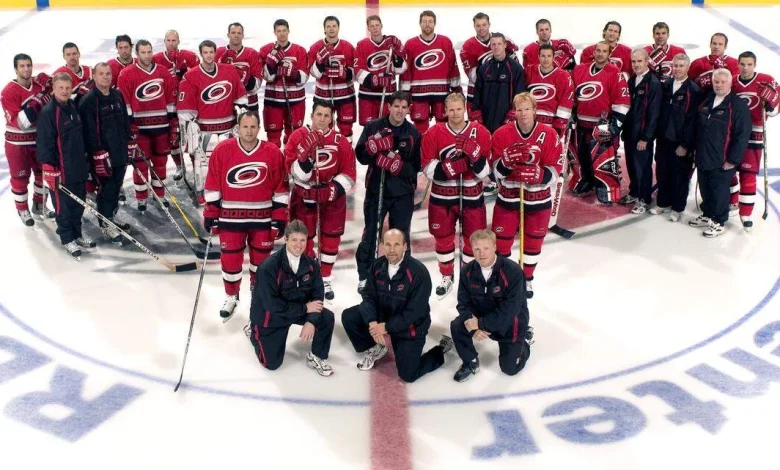
Carolina Hurricanes 2006 Stanley Cup Champions
Twenty years ago, the Carolina Hurricanes galvanized hockey in the Triangle by winning the Stanley Cup. Here’s a look back at that pivotal season, and where the players and coaches are now.
Expand All
Twenty years after the defining moment in North Carolina professional sports, members of the 2006 Stanley Cup champion Carolina Hurricanes team have scattered across the globe.
Most of the players and coaches remain involved in hockey. Many are coaching. Some remain in Raleigh. One, sadly, has died.
Here is a look at what the principal members of the 2005-06 Hurricanes contributed to the championship team, what they did in hockey afterward, and what they’re up to now.
Carolina Hurricanes defenseman Glen Wesley skates up the ice during the third period of play in the Stanley Cup finals on June 5, 2006. Robert Willett rwillett@newsobserver.com
No. 2 — Glen Wesley, Defense
Team impact in 2005-06: The veteran defender who moved from Hartford with the team was, as always, the stable anchor of the blue line.
What he did in hockey after 2006: Wesley retired in 2008 after 20 seasons, 10 with the Hurricanes. He later worked as director of defenseman development for the Canes and had his number retired in February 2009.
What is he doing now?: Wesley serves as a development coach for the St. Louis Blues.
Liam Ward, left, spends time with his father Aaron Ward after a Hurricanes’ team practice Saturday, May 27, 2006, in the RBC Center locker room. Travis Long tlong@newsobserver.com
No. 4 — Aaron Ward, Defense
Team impact in 2005-06: Playing primarily alongside Bret Hedican, Ward was a defensive-minded defender who wasn’t afraid to throw his body around.
What he did in hockey after 2006: Ward played for the Rangers and Bruins before returning to the Canes for the 2009-10 season and later was traded to Anaheim.
What is he doing now?: Ward is retired and living in the Triangle. He is active with the NHL and Canes alumni groups.
Cory Stillman, Frantisek Kaberle (center) and Justin Williams celebrate Kaberle’s second period against the Edmonton Oilers on June 19, 2006 during game 7 of the Stanley Cup Final. Kevin Seifert File photo
No. 5 — Frantisek Kaberle, Defense
Team impact in 2005-06: Kaberle quickly emerged as the quarterback on the Carolina power play with his quick thinking and slick passing.
What he did in hockey after 2006: Kabele played three more seasons with the Canes before returning to Czechia to play in the Czech Extraliga.
What is he doing now?: Kaberle is active with Hockey Camp Kaberle in Marianske Lazne with his brother, former NHL defenseman Tomas Kaberle.
Eric Staal (12) and Bret Hedican (6) jump on Justin Williams (11) after he scored an empty netter late in the third period to seal the win, and the Stanley Cup, for the Canes. The Carolina Hurricanes beat the Edmonton Oilers 3-1 in Game 7 of the Stanley Cup finals in 2006. Chris Seward File photo
No. 6 — Bret Hedican, Defense
Team impact in 2005-06: One of the game’s smoothest skaters, he would have thrived in the modern game with his ability to transition the puck.
What he did in hockey after 2006: Hedican played two more seasons with the Canes and one final NHL season with Anaheim in 2008-09 before retiring.
What is he doing now?: Married to figure skater Kristi Yamaguchi, Hedican worked for NBC Sports California as a hockey analyst, and as a player development coach for the San Diego Gulls, Anaheim’s AHL affiliate.
No. 7 — Niclas Wallin, Defense
Team impact in 2005-06: A beloved teammate, the big Swede was an immovable object in the crease — with a secret flair for overtime goals (but not so much in regulation).
What he did in hockey after 2006: Wallin played four more seasons with Carolina and parts of two with San Jose before a final pro season in Sweden in 2011-12.
What is he doing now?: Wallin lives in Sweden and is a youth hockey coach.
Carolina Hurricanes’ Matt Cullen, left, and Eric Staal celebrate Cullen’s goal during the first period of Game 5 of an NHL playoff game between the Carolina Hurricanes and the New Jersey Devils at the RBC Center in Raleigh May 14, 2006. The Canes beat the Devils to win the series 4-1 and advanced to the Eastern Conference finals to face the Buffalo Sabres. Chris Seward File Photo
No. 8 — Matt Cullen, Forward
Team impact in 2005-06: Not only the quick-footed anchor of a dangerous third line but a dangerous weapon in the newfangled shootout.
What he did in hockey after 2006: Cullen played for the Rangers in 2006-07 before returning to the Canes for three seasons. He later played for four NHL teams, winning Stanley Cups with the Penguins in 2016 and 2017.
What is he doing now?: A member of the US Hockey Hall of Fame, Cullen lives in his native state of Minnesota. He helped coach his old high school, Moorhead High, to the state AA title in 2025 and owns the Cullen Force Hockey Academy in Fargo, North Dakota.
No. 11 — Justin Williams, Forward
Team impact in 2005-06: He was then what he was when he returned many years later: A versatile two-way winger with a knack for clutch goals.
What he did in hockey after 2006: Williams was traded by the Canes to the LA Kings in 2009 and won Stanley Cups in 2012 and 2014. After two seasons with the Caps, he returned to the Canes in 2017 to play parts of three more seasons and served as team captain.
What is he doing now?: Williams has served as “special advisor” to the Canes general manager and has been a studio analyst for Sportsnet. His bio on X (Twitter) says “still a little kid at heart.”
From left, Carolina Hurricanes Cory Stillman, Rod Brind’Amour and Eric Staal celebrate after Brind’Amour’s game-winning goal in the third period in the Hurricanes 4-2 win over the Buffalo Sabres in game 7 of the Eastern Conference Finals June 1, 2006 at the RBC Center. Walt Unks File photo
No. 12 — Eric Staal, Forward
Team impact in 2005-06: A high-scoring revelation in his second full season in the NHL, Staal’s speed and wingspan helped him thrive in the new, wide-open game.
What he did in hockey after 2006: Traded to the Rangers in 2016, he also played with the Wild, Sabres, Canadiens and Panthers, reaching the Cup final with Montreal (2021) and Florida (2023). Staal retired in August 2024 after 18 NHL seasons.
What is he doing now?: When not coaching his kids’ youth games, Staal was hired as a special assistant to Buffalo general manager Kevyn Adams, a teammate on the 2006 champs.
Carolina Hurricanes teammate Eric Staal drinks from the Stanley Cup being tipped by Rod Brind’Amour in the locker room after beating the Edmonton Oilers 3-1 on June 19, 2006 during game 7 of the Stanley Cup Final. Kevin Seifert File photo
No. 13 — Ray Whitney, Forward
Team impact in 2005-06: Never the biggest player on the ice, his quick hands made him a force multiplier on the power play and a threat to score at any time.
What he did in hockey after 2006: “The Wizard” played three seasons with the Canes after 2006, then with the Coyotes and Stars before retiring in January 2015.
What is he doing now?: Whitney scouted for the Canes, then was an assistant GM for Team Canada in 2022-23, and was hired by the NHL Department of Player Safety. He also has co-hosted Barstool Sports podcasts.
Ray Whitney signs an autograph for a happy fan as he walks in to a red carpet reception held before an NHL game played between the Carolina Hurricanes and the Pittsburgh Penguins at the PNC Arena in Raleigh, N.C. on 2016 when the Canes celebrated the 10th anniversary of their Stanley Cup championship. Chris Seward File photo
No. 14 — Kevyn Adams, Forward
Team impact in 2005-06: The ultimate role player — a leader and faceoff specialist who also chipped in with some offense on the fourth line.
What he did in hockey after 2006: Adams played one more season with the Canes, then with the then-Coyotes and Blackhawks before retiring after the 2007-08 season.
Kevyn Adams controls the puck as he skates past New Jersey Devils Brian Rafalski (28) at mid-ice during the third period of play on May 14, 2006 at the RBC Center. Robert Willett rwillett@newsobserver.com
What is he doing now?: Adams has been general manager of the Sabres since June 2020 after first serving as the team’s senior VP of business administration.
Carolina Hurricanes Kevyn Adams (left) drinks from the Stanley Cup in the locker room after beating the Edmonton Oilers 3-1 on June 19, 2006 during game 7 of the Stanley Cup Final. Kevin Seifert File photo
No. 16 — Andrew Ladd, Forward
Team impact in 2005-06: The rookie started the season in the AHL but contributed in spurts and was a regular in the lineup in the playoffs.
What he did in hockey after 2006: Ladd played two more seasons with the Canes, then won the Cup in 2010 with the Blackhawks. He later played for the Thrashers, Jets, Islanders and Coyotes before retiring in September 2023.
What is he doing now?: Ladd began the Ladd Foundation in 2020, which created a “1616” initiative to support the mental well-being of youth hockey players.
Rod Brind’Amour, right, then-captain of the Carolina Hurricanes, takes the team on a sprint during practice at the RecZone in Raleigh in 2006. Chris Seward File photo
No. 17 — Rod Brind’Amour, Forward
Team impact in 2005-06: Excelled as a two-way center and captain during the best season of a distinguished career, dragging his team through the postseason at times.
What he did in hockey after 2006: Brind’Amour played four more seasons with the Canes before retiring in June 2010, becoming as assistant coach for Carolina before being promoted to head coach in 2018.
What is he doing now?: Head coach of the Carolina Hurricanes.
Carolina Hurricanes’ Mark Recchi, left, congratulates Ray Whitney on his first of two goals during Game 2 of the Eastern Conference playoff series between the Carolina Hurricanes and the Buffalo Sabres played at the RBC Center May 22, 2006. The Canes won 4-3 to tie the best of seven series 1-1. Chris Seward File Photo
No. 18 — Mark Recchi, Forward
Team impact in 2005-06: The future Hall of Famer’s arrival at the trade deadline put the Hurricanes over the top, adding a gritty goal-scoring pinball like an old Seth Jarvis.
What he did in hockey after 2006: A member of the Hockey Hall of Fame, Recchi played for the Penguins, Thrashers, Lightning and Bruins after 2006 before retiring. He won Cups with the Canes, Penguins (1991) and Bruins (2011), and later served as director of player development and assistant coach for the Pens.
What is he doing now?: Recchi is a co-owner of the Kamloops Blazers of the Western Hockey League.
Mike Commodore (22) lays a check on Montreal’s Mike Ribeiro (71) during Game 4 of an NHL playoff game between the Carolina Hurricanes and the Montreal Canadiens. Chris Seward File photo
No. 22 — Mike Commodore, Defense
Team impact in 2005-06: A Staal teammate in the AHL during the lockout, Commodore was known for his hair and bathrobe, but he was big, tough and reliable on defense.
What he did in hockey after 2006: Commodore played parts of two more seasons with the Canes before being traded to Ottawa. He later played with the Blue Jackets, Red Wings and Lightning before retiring.
What are they doing now?: Commodore has enjoyed retirement and embraced social media, with more than 150,000 followers on X (Twitter). He is a consultant for Axon Canada.
Ray Whitney (center) and teammates celebrate their victory over Edmonton on Monday June 19, 2006 in game seven of the Stanley Cup finals at the RBC Center. Robert Willett rwillett@newsobserver.com
No. 24 — Andrew Hutchinson, Defense
Team impact in 2005-06: Hutchinson was signed to boost the power play but ended up being a useful depth contributor who filled in as needed.
What he did in hockey after 2006: Hutchinson played one more season with Carolina, then later with the Stars in addition to cameos with the Lightning and Penguins. He then went to Russia’s KHL and also played in the Swiss league.
What is he doing now?: Hutchinson has been involved in youth hockey, serving as coach of the Biggby Coffee 15U AAA team in Ann Arbor, Michigan.
No. 26 — Erik Cole, Forward
Team impact in 2005-06: One of the most fearsome scorers in the league, tearing down the right wing and turnstiling defensemen, until Brooks Orpik broke his neck in March. Cole returned to play in the playoffs.
What he did in hockey after 2006: Cole played two more seasons with Carolina before a trade to Edmonton, but returned to the Canes and played parts of three more seasons. He later played for the Canadiens, Stars and a final season with the Red Wings in 2014-15. He signed a one-day contract, retired with the Canes in 2017, and was named a team ambassador.
What is he doing now?: Cole has worked as a special advisor for the Pennsylvania Huntsmen of the EHL and is involved in the youth team’s hockey operations.
Craig Adams (27) tangles with Montreal’s Mike Ribeiro (71) April 22, 2006 during the first round of the Stanley Cup playoffs. Robert Willett rwillett@newsobserver.com
No. 27 — Craig Adams, Forward
Team impact in 2005-06: Fourth-line right wing brought grit and hustle to a productive partnership with Kevyn Adams and Chad LaRose.
What he did in hockey after 2006: Adams played parts of two more seasons with the Canes, then with the Blackhawks and Penguins, winning a second Cup with Pittsburgh in 2009 and ending his career with the Pens in 2014-15.
What is he doing now?: Adams has worked as a financial adviser for Merrill Lynch in Boston, advising hockey players, and also in wealth management for the firm.
No. 29 — Martin Gerber, Goalie
Team impact in 2005-06: A rock in net during the regular season before giving way to Cam Ward in the playoffs — and he stepped back in to get the Canes past the Sabres.
What he did in hockey after 2006: Gerber left in free agency after the 2006 season and signed with Ottawa, playing parts of three seasons with the Sens. He left the NHL for Europe in 2011 and played in Sweden and his native Switzerland.
What is he doing now?: Gerber has coached the SCL Young Tigers U16 team in Switzerland.
Carolina Hurricanes’ goalie Cam Ward (30), center, blocks a shot by Edmonton Oilers’ Fernando Pisani (34), right, in the third period during game 7 of the Stanley Cup Finals at the RBC Center, June 19, 2006, in Raleigh. File photo
No. 30 — Cam Ward, Goalie
Team impact in 2005-06: The rookie surprise of the postseason, Ward took over in Game 3 of the first round and backstopped the Hurricanes to the Stanley Cup.
What he did in hockey after 2006: Ward played with the Canes until 2017-18, then played one final NHL season with the Blackhawks. He finished as Carolina’s franchise leader in wins (318) and shutouts (27).
What is he doing now?: Ward has remained active in raising funds for Special Olympics Alberta and in North Carolina through his Cam’s Champs program. Ward and Canes assistant coach Tim Gleason also established a winery in Napa, California.
Carolina Hurricanes goalie Cam Ward shows off his Conn Smythe trophy as MVP June 20, 2006, during a parade and celebration in honor of the 2006 Stanley Cup Champions at the RBC Center parking lot. File photo
No. 37 — Keith Aucoin, Forward
Team impact in 2005-06: One-time rookie camp tryout player from tiny Norwich University made his NHL debut in January and went on to play 145 NHL games. He was a member of the “Black Aces,” a group of players kept on the roster as healthy scratches for the Hurricanes’ playoff run.
What he did in hockey after 2006: Aucoin remained in the Carolina organization until after the 2007-08 season, after which he signed with Washington. He played his most games in a season in the NHL in 2012-13 with the Islanders.
What is he doing now?: Aucoin returned to his native Massachusetts after his playing days, spending four seasons within the coaching ranks of the EHL with the Boston Jr. Rangers and Worcester Jr. Railers. Prior to the 2022-23 season, Aucoin accepted a scouting position with the Colorado Avalanche of the NHL.
Carolina Hurricanes’ Doug Weight (39) celebrates with teammate Matt Cullen (8) as time expires, giving the Hurricanes a 4-2 victory and the Eastern Conference Championship on June 1, 2006, at the RBC Center. Robert Willett rwillett@newsobserver.com
No. 39 — Doug Weight, Forward
Team impact in 2005-06: The December blockbuster that brought Weight — a veteran center of undeniable quality — established the Hurricanes as a legit contender.
What he did in hockey after 2006: Weight returned to the Blues after the 2006 season and later played for the Ducks and Islanders before ending his 19-year career. He was the head coach and also an assistant GM for the Islanders.
What is he doing now?: Weight is a hockey operations advisor to San Jose Sharks general manager Mike Grier.
No. 48 — Anton Babchuk, Defense
Team impact in 2005-06: A key fill-in down the stretch of the regular season for the Canes on defense, his solid play helped the team’s defensive depth after his acquisition from Chicago.
What he did in hockey after 2006: Babchuk remained with Carolina for two more full seasons before being traded to Calgary after 17 games in 2010-11, where he played through 2013. Following the 2012 NHL lockout, he signed in his native Ukraine with HC Donbass.
What is he doing now?: Whereabouts unknown.
Canes 2006 team members, bottom, from left, Glen Wesley, Ray Whitney and Chad LaRose, sign autographs for fans before a 2016 game with the New York Islanders at the PNC Arena in Raleigh. Chris Seward cseward@newsobserver.com
No. 59 — Chad LaRose, Forward
Team impact in 2005-06: LaRose didn’t start the season with the Hurricanes but his energy and infectious attitude made him an indispensable part of the fourth line.
What he did in hockey after 2006: LaRose played seven more seasons for the Canes and played the 2014-15 season with the Charlotte Checkers, then the Canes’ AHL affiliate.
What is he doing now?: LaRose coaches the varsity hockey team at De La Salle Collegiate High in Warren, Michigan. At 43, he also signed to play with the Michigan Shadow pro team of the Michigan Independence Hockey League.
Cory Stillman, left, celebrates his goal with Aaron Ward, right, after he scored during the Carolina Hurricanes Alumni Game at PNC Area on April 14, 2013. cseward@newsobserver.com
No. 61 — Cory Stillman, Forward
Team impact in 2005-06: The consummate set-up man, not the fastest player but always in the right place and making the right pass, especially alongside Staal.
What he did in hockey after 2006: Stillman played two seasons with the Canes before being traded to Ottawa in the 2007-08 season. He later spent three seasons with the Panthers, then finished his playing career with the Canes after a trade in the 2010-11 season. He later was a development coach for Panthers and Canes.
What is he doing now?: Stillman coaches the Guelph Storm major junior team in the OHL after previously coaching the Sudbury Wolves of the OHL.
No. 63 — Josef Vasicek, Forward
Team impact in 2005-06: “The Czech Condor,” a lanky, smiling center, missed most of the season with a knee injury but made it back for the postseason.
What he did in hockey after 2006: Vasicek was traded to the Predators during the 2006-07 season and later played a season with New York Islanders before leaving in 2008 for Russia’s KHL.
What is he doing now?: Vasicek died in the Lokomotiv Yaroslavl plane crash in Russia in 2011.
No. 70 — Oleg Tverdovsky, Defense
Team impact in 2005-06: Tverdovsky had been signed to run the power play, a job Kaberle claimed for himself, but still played frequently until the playoffs.
What he did in hockey after 2006: Tverdovsky played 26 games for the LA Kings in 2006-07, then returned to Russia to play in the KHL through the 2012-13 season.
What is he doing now?: Tverdovsky joined former NHL player Alexander Frolov in founding a hockey development program in Los Angeles. He also has served as an assistant coach for the California Golden Bears 14U AAA team.
A 2006 photo shows Canes captain Rod Brind’Amour, right, looking on as head coach Peter Laviolette diagrams a play during practice. Chris Seward File photo
Head coach: Peter Laviolette
Team impact in 2005-06: Laviolette anticipated the changes to the game and saw the strengths of his roster, and instituted a high-pressure style that saw the Canes excel.
What he did in hockey after 2006: Laviolette remained the Canes head coach until he was fired in early December 2008. He was head coach for the Flyers, Predators, Caps and Rangers, leading the Flyers to the 2010 Cup final and the Predators to the 2017 final. He spent two years with the Rangers before being fired after the 2024-25 season.
What is he doing now?: Laviolette, 60, is not coaching this season but has expressed interest in a coaching return.
Assistant coach: Kevin McCarthy
Team impact in 2005-06: A holdover from the Paul Maurice regime, McCarthy ran the defense and would become Laviolette’s most trusted assistant for many years.
What he did in hockey after 2006: McCarthy was an assistant coach on Laviolette’s staffs with the Flyers, Predators and Caps.
What is he doing now?: McCarthy is in his third season as a player development coach with the Hurricanes.
Assistant coach Jeff Daniels, left, talks with head coach Rod Brind’Amour during the first period of the Carolina Hurricanes game against the Columbus Blue Jackets at PNC Arena in Raleigh, N.C., Oct. 12, 2022. Ethan Hyman ehyman@newsobserver.com
Assistant coach: Jeff Daniels
Team impact in 2005-06: Not far removed from his playing days — he was on the 2002 Eastern Conference champions — Daniels was a steadying hand with the forwards.
What he did in hockey after 2006: Daniel remained an assistant coach for Laviolette until 2008, when he was named head coach and general manager of the Albany River Rats and then the Charlotte Checkers, both Hurricanes’ AHL affiliates.
What is he doing now?: Daniels is an assistant coach on Rod Brind’Amour’s staff.
Related Stories from Raleigh News & Observer
Chip Alexander
The News & Observer
In more than 40 years at The N&O, Chip Alexander has covered the N.C. State, UNC, Duke and East Carolina beats, and now is in his 15th season on the Carolina Hurricanes beat. Alexander, who has won numerous writing awards at the state and national level, covered the Hurricanes’ move to North Carolina in 1997 and was a part of The N&O’s coverage of the Canes’ 2006 Stanley Cup run.