Three dead and several injured after being swept away in Tenerife near famous Brit holiday hotspot

THREE people have died in a tragic swimming accident at a Brit holiday hotspot.
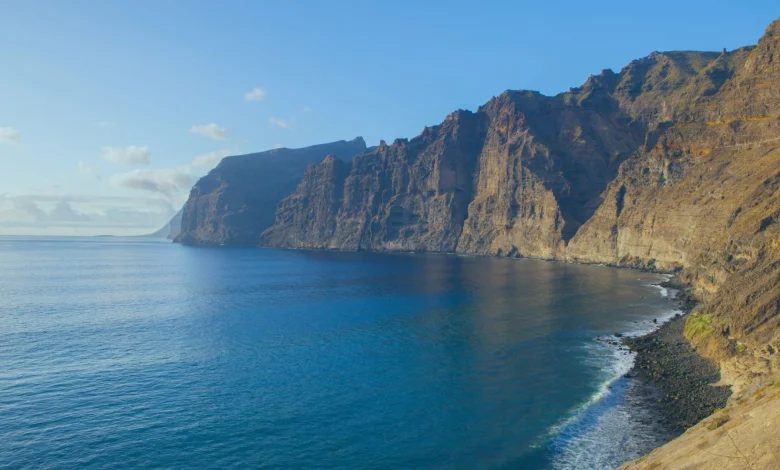
Two men, one aged 35, and a woman, 55, were killed in the natural pools on the Los Gigantes cliffs in Tenerife on Sunday.
Sign up for newsletter
Thank you!
The trio were swept out to sea at the Los Gigantes cliffs on TenerifeCredit: Getty
Three other swimmers survived the huge swellCredit: Alamy
The trio became the latest victims of the unforgiving elements when they were swept out to sea off the north-west of the island alongside three other people.
Another female swimmer went into cardiac arrest at the scene, before she was resuscitated and flown to hospital at Nuestra Senora de Candelaria Hospital in Santa Cruz.
A third woman, aged 39, was also taken to the Hospital Sur University Hospital with “moderate” injuries.
Emergency services attended the scene after the alarm was sounded at 4pm.
‘MY BABY IS AN ANGEL’
Mum of girl, 14, ‘raped and murdered by step uncle’ speaks out
‘HE’S UNPREDICTABLE’
Trump’s son claims US leader could walk away from Ukraine peace deal
First responders said the distressed swimmers had been taken by surprise by a wave that knocked them into the water.
Two other people were also overwhelmed by the wave; however, they managed to reach safety without assistance.
The nationalities of the three victims have not yet been officially confirmed.
An investigation has been launched into the tragedy.
Coastguards, five ambulance crews including an air ambulance, a Canary Island government rescue helicopter, firefighters and the Civil Guard attended the scene.
Officials had warned the public about the dangers of the ocean earlier in the day.
A pre-alert was put in place because of the high sea swell, with the warning specifically outlining the area where the tourists were drawn into the water.
In a statement published online, officials said: “Don’t take photos or videos where the waves break as you could be dragged into the sea.”
“Be especially careful because of the bad state of the sea on the open coasts in the north and west of Tenerife,” it added.
Witnesses to the incident said the tragedy escalated in just seconds.
One woman spoke to local news, saying: “We began to see bigger and bigger waves and didn’t have time to see more because we realised we had to get out of there very quickly to survive.
“We lost our rucksack with our mobiles and wallets and purses inside.”
The tragedy comes after a British pensioner plunged into the ocean from a TUI-operated cruise ship north of the Canary Islands on November 27.
18 million tourists visit the islands every yearCredit: Getty
A search was immediately launched for the 76-year-old, who fell overboard from the adults-only Marella Explorer 2, just before 10am, north-west of Punta de Teno.
The sea and air operation to find him was wound down after two days of intensive searching.
In another horrifying day, three people died and 15 were injured on November 8 on the island, after being swept out to sea by high waves.
The tragic ordeal was the worst incident in the northern port city of Puerto de la Cruz, resulting in the death of a 79-year-old Dutch woman alongside nine others who needed hospital treatment after they were knocked off a seawall.
On the same day, six French tourists were also drawn out to sea after being swept off their feet while wave watching at Roque de las Bodegas, on the island’s northeast tip.
Luckily, all six people survived.
After the string of tragic deaths in Tenerife, a Canary Islands safety organisation said hotels should do more to warn holidaymakers about the dangers of the ocean.
Sebastian Quintana, president of Canarias 1500km de costa, previously linked the earlier Tenerife incidents to a lack of understanding of the Atlantic Ocean’s power among tourists who were unfamiliar with local sea conditions.
He called for better signage and temporary barriers, as eyewitnesses claimed no barrier was in place at the dock in Puerto de la Cruz, despite a wave warning, where waves were reaching up to 15ft high.
Quintana’s organisation said seven out of every ten people who drown in the Canary Islands are tourists.
He said last month hotels could help save lives with their own warnings.
He spoke to local outlet Diario de Avisos, saying it was “as simple as putting a sign up in reception in several languages every time an alert or a pre-alert is activated”.
He said the region welcomed 18 million tourists a year, despite the small population of just over two million people.
“The following message: ‘Don’t go to the beach today, the Canary Islands coastline is on alert for high waves and heavy swell’”, he suggested.
“Our studies indicate that as the number of visitors to the archipelago grows, so does the number of accidents involving tourists.
“The safest and most effective flotation device is information,” he added.
Quintana called on visitors to the islands to exercise “responsibility and common sense”.
“Human beings are the danger, not the coastline per se, because of recklessness which is the common denominator in these types of accidents,” he said.