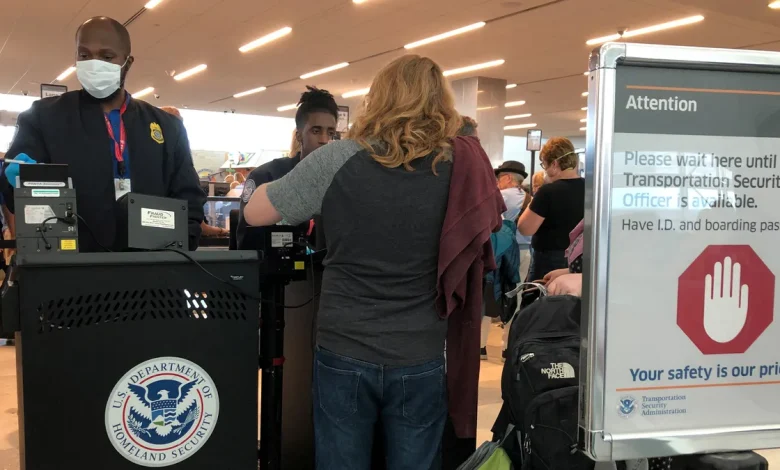
Travelers entering the U.S. could soon face expanded biometric screening and new digital reporting requirements as U.S. Customs and Border Protection (CBP) seeks to overhaul how it verifies the identities and movements of millions of visitors.
In a new proposal published in the Federal Register, the Department of Homeland Security is asking the public to weigh in on a series of major changes to the Arrival/Departure Record (Form I-94) process and the Electronic System for Travel Authorization (ESTA), the program used by citizens of Visa Waiver Program countries to enter the U.S.
The proposal affects nearly every foreign traveler entering the country — and comes as border searches of personal devices have drawn increasing attention and concern from travelers.
U.S. Customs and Border Protection did not immediately respond to USA TODAY’s request for comment.
What CBP wants to change
CBP is proposing several updates, including new biometric requirements, increased data collection, and the elimination of the ESTA website in favor of a mobile-only system.
Among the changes:
- A new voluntary “self-reported exit” feature allowing foreign nationals to confirm their departure from the U.S. by submitting passport data, a live selfie and geolocation through CBP’s mobile app.
- Mandatory selfie uploads for all ESTA applicants, including those applying through third parties such as travel agents.
- A mobile-only ESTA application, eliminating the web-based option after CBP documented widespread abuse linked to poor-quality image uploads and fraudulent third-party websites charging travelers unnecessary fees.
- Expanded “high-value data fields,“ including applicants’ social media accounts from the past five years, phone numbers and email addresses going back a decade, IP addresses, and even biometrics such as fingerprints, face, DNA and iris scans when feasible. These additions stem from a January 2025 executive order targeting foreign terrorist threats.
- Updates to the Visa Waiver Program, including the recent removal of Romania, and the expectation that additional countries may be added in the coming years.
CBP says these changes are designed to reduce fraud, improve identity verification and close long-standing gaps in the tracking of foreign visitors who enter and exit the U.S.
What this means for travelers
The proposal underscores what many immigration attorneys and border experts have already warned: entering the U.S. increasingly involves close scrutiny of your identity, your digital presence and your travel history.
Earlier this year, USA TODAY reported a series of incidents in which U.S. residents and visa holders were detained or deported after CBP officers reviewed the contents of their phones under heightened security measures. Those searches — which can include photos, videos, deleted files and public social media posts — are legal at the border without a warrant.
“Any traveler entering the U.S. is subject to CBP inspection,” CBP Assistant Commissioner Hilton Beckham said in May. While searches are “rare” and “highly regulated,” he said they have been used to identify “terrorism, smuggling, human trafficking and visa fraud.”
Immigration attorney Susanne Heubel previously told USA TODAY that most travelers still enter the U.S. without issue — but that device searches and digital screening increasingly play a role when officers suspect someone’s activities don’t match their visa.
“If you are a common sense sort of careful traveler, you should not have any issues,” she said. But she also warned that for visa holders, public online activity, including political posts, can now come under scrutiny.
USA TODAY reached out to the Department of Homeland Security for comment.
Social media under new scrutiny
One of the most notable new requirements: ESTA applicants must now disclose all social media accounts used in the past five years.
This follows the 2025 executive order mandating broader screening for potential national security threats.
“They’re checking whether the story you’re telling — who you are and why you’re traveling — aligns with your digital footprint, Heubel previously said.
In March, Lebanese physician and Brown University faculty member Rasha Alawieh was detained at Boston Logan International Airport and deported after CBP found photos and videos on her phone related to Hezbollah.
Will the changes affect US citizens?
No. The new proposal applies primarily to foreign nationals subject to I-94 documentation, visitors from Visa Waiver Program countries applying through ESTA, and travelers using CBP’s mobile app to self-report their departure.
U.S. citizens are not required to provide biometrics beyond standard passport requirements.
How travelers can prepare
Immigration attorneys advise the following:
- Before you travel, review what is on your phone — including deleted files, which may still be accessible.
- Limit the number of devices you bring. Your phone is unavoidable, but laptops and external drives may trigger additional review.
- If you hold a visa or green card, know exactly what activities your status allows.
- If an officer searches your device, Heubel advises stating clearly: “I do not consent, but I understand you have the right to search.”
How to comment on CBP’s proposal
The public has until Feb. 9, 2026, to submit comments on the proposed changes.
Comments must reference OMB Control Number 1651-0111 and be sent to: CBP_PRA@cbp.dhs.gov
CBP says all comments will be recorded publicly as part of the rulemaking process.