Justice Department fails in its 3rd attempt to indict New York Attorney General Letitia James

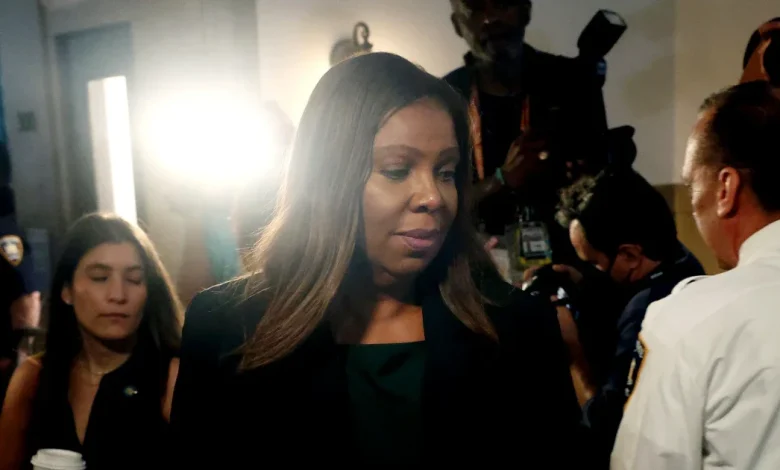
ALEXANDRIA, Va. — A federal grand jury here refused to indict New York Attorney General Letitia James on Thursday, one federal law enforcement source and another person familiar with the matter told NBC News.
This was the Justice Department’s third attempt to prosecute James following a monthslong pressure campaign from President Donald Trump.
A federal judge last month dismissed mortgage-related charges the Justice Department had brought against James, as well as separate, unrelated charges against former FBI Director James Comey, after ruling that the prosecutor in both cases was unlawfully appointed. The president named that prosecutor, Lindsey Halligan, as interim U.S. attorney for the District of Virginia.
The DOJ also tried and failed last week to secure a new indictment against James in Norfolk, Virginia.
The Justice Department did not immediately respond to a request for comment.
James’ lawyer, Abbe Lowell, said in a statement that, “For the second time in seven days, the Department of Justice has failed in its clear attempt to fulfill President Trump’s political vendetta against Attorney General James. This unprecedented rejection makes even clearer that this case should never have seen the light of day.”
He added, “This case already has been a stain on this Department’s reputation and raises troubling questions about its integrity. Any further attempt to revive these discredited charges would be a mockery of our system of justice.”
Before the first case against her was dismissed, James pleaded not guilty to charges related to a mortgage on a Norfolk home. By declaring the home her second residence, the Trump administration alleged, she saved roughly $50 a month on her mortgage payment.
James has been a political target for Trump since she investigated the Trump Organization for fraud, saying he and other leaders of the company “reaped hundreds of millions of dollars in ill-gotten gains,” by routinely overvaluing properties and obtaining bank loans and insurance policies at lower rates. Trump was found liable for fraud in the civil suit. A divided state appeals court upheld the fraud filing, but found the $464 million judgment was “excessive.”
It’s rare for a federal grand jury to reject charges because the process is stacked in the government’s favor. At the grand jury stage, prosecutors need only to convince 12 of at least 16 grand jurors that they met the probable cause threshold, a much lower standard than the unanimous “beyond a reasonable doubt” requirement for securing a conviction before a jury during a trial.
Under longstanding Justice Department practices, federal prosecutors are supposed to move forward with a case only if its seen as likely to secure a conviction at trial.
The Justice Department brought in out-of-state federal prosecutors to try to bring a case against James. Career prosecutors in the Eastern District of Virginia had concluded that the case against James was too weak to move forward, and Trump’s own nominee to lead the office, Erik Siebert, resigned amid pressure from the president to bring a case against James.
Chloe Atkins contributed.