Geminid Meteor Shower 2025: Best Viewing Tips Revealed
Discover the ultimate viewing tips for the spectacular Geminid Meteor Shower 2025, with up to 120 meteors per hour.
The Geminids, one of the last meteor showers of the year, is also considered one of the best to view. And it’s about to hit its peak activity.
The Geminid Meteor Shower, which has been active since last week, is saving its most spectacular celestial activity for this weekend.
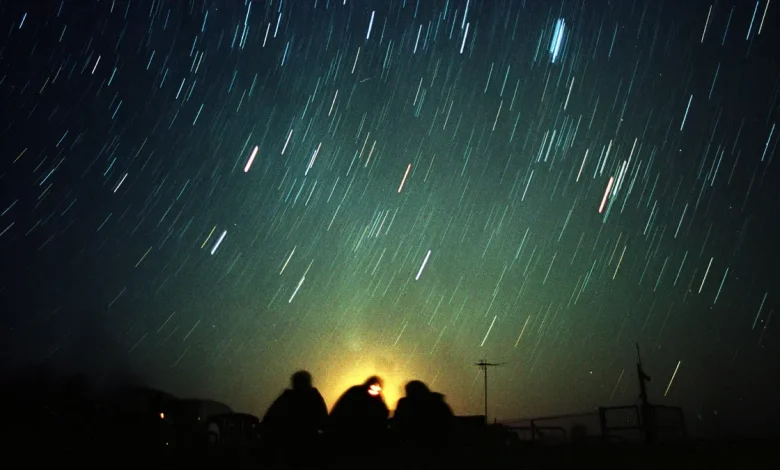
The Geminid meteor shower 2025 will reach its peak Saturday into Sunday, Dec. 13-14 with a brilliant display of shooting stars and bright multi-colored fireballs expected to light up the cold December sky. Here’s when, where and what to watch for.
The nearly 200-year old Geminid meteor shower is considered one of the “best meteor showers every year because the individual meteors are bright, and they come fast and furious,” according to Space, with this year’s display expected to be “one of the most spectacular shooting star displays of 2025.”
The Geminids are active for nearly two weeks and peaking on the night of Dec. 13-14. When the Geminids end on Dec. 17, the Ursids meteor shower will start up.
Here’s everything to know about tonight’s Geminid meteor shower 2025 peak.
When will the Geminid meteor shower 2025 start?
The popular Geminid meteor shower display of shooting stars started on the night of the December full moon, Dec. 4, and continues through Dec. 17 and peaks on the night of Dec 13-14. They are named Geminids because meteors appear to radiate from near the bright star Castor in the constellation Gemini the Twins, in the east on December evenings.
The Geminids are usually the strongest meteor shower of the year and popularly known for producing bright and intensely colored meteors, shooting at medium-slow speeds from the constellation of Gemini.
What is a meteor shower?
A meteor shower is celestial event that happens when Earth passes through the path of a comet or the trail of debris left by a comet or asteroid during its orbit around the sun. The debris is called meteoroids.
Meteoroids enter the Earth’s atmosphere at high speeds and burn up, streaking the sky with bright moving lights, like a “shooting star” from what appears to be a single point in the sky, called the radiant. They range in size from dust-like particles to boulder size.
These meteor showers are named for the constellation where the meteors appear to be coming from.
The best time of day to see a meteor shower is around midnight according to Space.com, and it’s best to go to the “darkest possible location, and wait about 30 minutes for your eyes to adjust to the dark.”
Where to see the Geminids meteor shower peak?
At its peak, under ideal dark skies, it is possible to see up to 120 bold, white Geminid meteors, or more per hour from any angle in the Northern Hemisphere, even on the night before and after it’s peak on Saturday night.
What is best time to watch the Geminid meteor shower tonight?
The “most active meteor shower of the year” starts as early as 9 p.m., peaking around 2 a.m., lasting into the morning hours of the next day, according to the Almanac, streaking through the sky “every minute or two all night.”
The Geminids are the result of an asteroid known as 3200 Phaethon, different from others that usually originate from comets. When it gets very close to the sun, half of the distance of the innermost planet, Mercury, then it ventures out past the orbit of Mars, according to EarthSky, and its meteor material intersects Earth’s orbit every mid-December as the — Geminid meteor shower.
When is winter solstice 2025?
The winter solstice will bring us the shortest day of the year on Sunday, Dec. 21, 2025, with approximately 9 hours, 17 minutes of daylight.
To check how many hours of sunlight you’ll get and the sunrise/sunset times in your area, click here.
When is the January full moon 2026?
The first full moon of 2026 will be the January wolf supermoon, set to rise on Saturday, Jan. 3, 2026.
Maria Francis is a Pennsylvania-based journalist who covers trending topics across the Mid-Atlantic region.