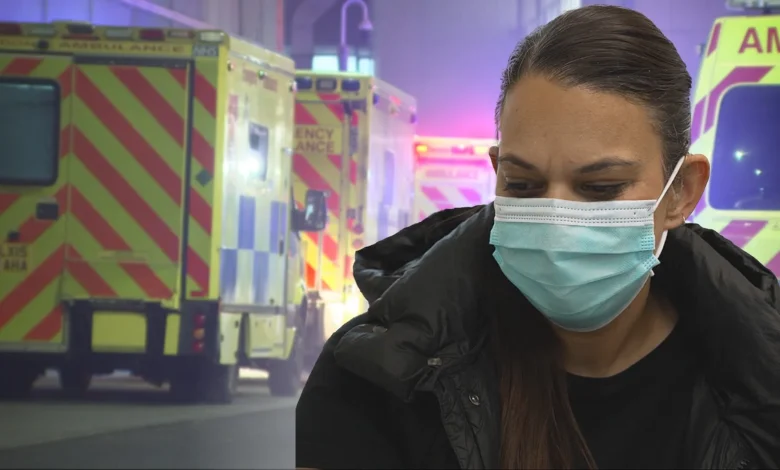
Six hospitals have declared critical incidents after a sharp rise in flu cases, piling pressure on NHS bosses to resolve planned strike action in a matter of days.
NHS England is calling it a ‘super flu’, which is in fact its own phrase rather than anything scientific.
It is severe, there is no doubt about that, and it has mutated.
Not least because the NHS’ own figures show an average of 2,600 patients a day were in a hospital bed last week – up 55 per cent on the week before.
That is enough, it said, to fill three NHS trust hospitals.
The problem is the flu has come early this season and it has mutated, although the UK Health Security Agency insists the current vaccine is still effective.
Nevertheless, it takes little to tip the NHS over these days and yet more figures from NHS England reveal that A&E attendances last month were a record 2.35 million. And there were more than 800,000 ambulance calls – nearly 49,000 more than November 2024.
What is not in the figures is the number of patients being cared for in the corridor, despite an NHS England promise to publish them.
The flu has come early this season and it has mutated, although the
UK Health Security Agency insists the current vaccine is still effective.
But research yesterday claimed one fifth of patients in emergency departments were routinely treated in hallways, waiting rooms and converted offices, according to a study by the Royal College of Emergency Medicine.
In response, the Department of Health and Social Care said it would take time “to turn around the shocking situation we inherited”, while NHS England said its teams had been “working hard to limit this unacceptable way of caring for patients, while doing more to prepare for winter earlier than ever before”.
At Monkspath GP Surgery in Solihull, they told us that the flu cases had not yet peaked. They estimated it would be mid-January. Already they are asking staff and patients with respiratory complaints to wear masks.
And in the West Midlands, two trusts covering six hospitals have declared critical incidents this week, forced to turn patients away from their A&Es.
By this afternoon, University Hospitals Birmingham was standing down its critical incident but said it was retaining the internal critical incident which is defined as ‘severe disruption, losing the ability to deliver key services’.
The hospital said it had 240 flu patients – one-fifth or 20 per cent of all its beds.
And that doesn’t even take into account staff sickness.
Hospital admissions for flu in Scotland were up by 15% last week – from 860 to 986 – and data shows that more than 250 patients in Wales were in hospital with flu in the week up to December 7.
Meanwhile, new figures published today show there were 1,184 new cases of flu in Northern Ireland in the first week of December – a 24% rise compared to the previous week.
What NHS England and the government are now fearing is the flu and other respiratory viruses which are also circulating and the resident doctors’ strike due to start next Wednesday.
Last night, an offer was put on the table to increase training places and even bring in emergency legislation to deal with what they describe as the ‘choked’ recruitment system.
This is currently being put to members of the British Medical Association’s resident doctors committee in the form of a survey which will close Monday night.
If it is agreed, the strikes will be called off but it is probably fair to say that there will be a lot of anxious NHS bosses – including the Secretary of State for Health – waiting for those results.