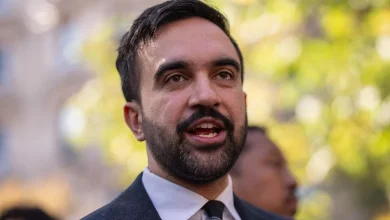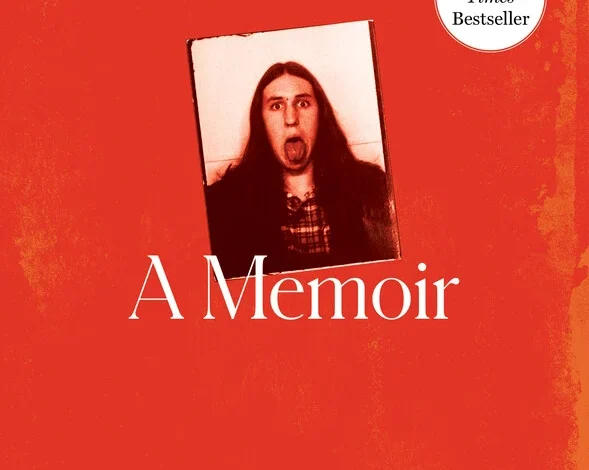
In his new memoir ‘The Uncool’ the filmmaker blends family grief, rock-journalism, and a lifelong faith in music.
Would that we all had a parent like Cameron Crowe’s mother Alice. The kind of mom who tapes a note to your door when you’re writing your first novel, assuring you “The book will be great.” The kind of personal cheerleader who has an aphorism for every occasion, designed to lift your spirits: “Opportunity favors the prepared mind”; “Doubt is the devil”; “Out of the depths of despair now came the invincible summer.” The kind of rock solid support you appreciate, especially as you’re pursuing your dream career. And yet a mother who’s grounded enough to say to her son on the night he won the Oscar for Best Original Screenplay (for the semi-autobiographical film Almost Famous), “It’s not too late to go to law school.”
The Uncool: A Memoir
By Cameron Crowe
Avid Reader Press; 322 pages
The Uncool is ostensibly about Crowe’s years in the trenches of rock ‘n’ roll in the 1970s, the era that inspired Almost Famous (one of best films about the music industry). And certainly you’ll find plenty of stories about his escapades during that heady time. But his own family story is just as key to the narrative. Crowe’s memoir is bookended with chapters about his preparing for the world premiere of Almost Famous: The Musical in San Diego (Alice Crowe: “It’s going to be great”). He also delves into a family history that has its share of dysfunction, which stands in stark contrast to Crowe’s generally sunny, optimistic outlook, as seen in films he directed, like Jerry Maguire and Singles.
It’s the first time he’s written so extensively about his eldest sister Cathy, who had an ill-diagnosed mental condition; Crowe’s parents simply told him she was “emotionally disturbed.” As Crowe puts it, she lived in a “world of happy/sad” as epitomized by two of her favorite songs, “Silence is Golden” by the Tremeloes, and the Beach Boys’ “Surfer Girl,” the latter of which “gave her two and a half minutes of a blissful life she could only visit.” She took her own life at age 19, the summer Crowe turned 10. He captures the devastation of the event in one telling detail. Cathy’s chair at the kitchen table was left there, empty, because taking it away “felt like injustice,” Crowe writes. “Nobody wanted to be the one to remove it.”
Cameron Crowe
Crowe didn’t share his sister’s psychological struggles. But his memoir reveals a connection that they did have: they both regarded themselves as outsiders. In Crowe’s case, during his school years he skipped enough grades that he was able to graduate at 15. The age difference between him and his classmates became more of an issue once puberty arrived, with Crowe lagging behind everyone else (there’s a hilarious anecdote about Crowe being teased in the locker room for having no “pubes”; he flusters his taunters by stating he did have them, he just shaved them off).
But his youthfulness proved a plus as he moved into rock journalism, despite the occasional speed bump (he was forced to interview Kris Kristofferson in a restaurant lobby because he was too young to get into the bar). Musicians, even rock stars, can be outsiders too. Is that what David Bowie recognized in a 17-year-old Crowe, when the famously interview-averse legend took Crowe under his wing in late 1974?
Crowe spent the next year and a half hanging out with Bowie in LA, during the period when the one-time Ziggy Stardust was transforming himself into the Thin White Duke. “You can ask me whatever you want,” Bowie tells him. “Hold up a mirror and show me what you see.” As Crowe notes with some understatement, “It was a journalist’s dream.” Quite.
Cameron Crowe
The Uncool is loaded with such stories, the kind that make a rock journo’s eyes glitter with envy. Crowe had an uncanny ability to crack the hardest nuts. He gets Led Zeppelin to open up for a Rolling Stone story, despite their long-standing policy of not talking to anyone from the magazine. Later, a paranoid Gregg Allman confiscates all of Crowe’s interview tapes, before relenting and returning them, thus saving Crowe’s scoop.
But this memoir isn’t just about Crowe’s ups and downs on the rock ‘n’ roll carousel. He skillfully weaves together stories of his family, his rock ‘n’ roll exploits, and his deep connection to music and creativity, and what emerges is a story about the importance of connection: How an incident from one area of your life can have a surprising impact on another. Crowe’s father, who ran a telephone answering service, once explained to his son that “Nothing beats the sound of the human voice.” So is it any surprise that Crowe grew up to be a person obsessed with songs, and driven to share that obsession with others?
It’s Crowe’s genuine love of music, especially rock music, that really stands out here. He’s not just a fan; he writes about music with a spiritual resonance:
Music was already more than music. It was a door that opened for three minutes. Sometimes way longer. In the forbidden world there was no judgment. Only your own thoughts and secret desires, slashing through the atmosphere. And when the song was over, the door clanged shut again. There was no choice but to scramble back to the beginning.
He writes about songs the way people write about finding their true love: “I always felt that a favorite song has a mind of its own. It arrives just when you need it, and that arrival memory remains for the rest of time.”
The Uncool is about finding your place in the world, and the people and events that help you get there. Though described as a music memoir, that’s only part of the story. Though many of the events he recounts are half a century ago, Crowe still has a sense of wide-eyed wonder as he revisits his past, as if even he can’t believe incredible experiences he’s had. But ultimately, it’s not the famous names that are important. It’s how the power of human connection and interaction steers your journey. Life is an adventure; don’t be afraid to see where it takes you. And always, always, accentuate the positive. As Alice Crowe might put it, “Put some goodness into the world before it blows up.”