The Athletic has live coverage of Arsenal vs. Wolves from Premier League Matchweek 16.
At the start of December, Mikel Arteta said injuries had been “a theme of this season” for his Arsenal side.
After 15 league games, Arsenal have suffered that very same number of injuries, but as they are currently top of both the Premier League and Champions League tables, their lengthy list of absentees has largely been a subplot to the campaign so far.
November was a particularly bleak one in injury terms with up to seven players out at one point, and six of those being midfielders and attackers: Viktor Gyokeres, Kai Havertz, Gabriel Jesus, Gabriel Martinelli, Noni Madueke and Martin Odegaard. In recent weeks, all bar Havertz have returned, with each comeback being managed differently.
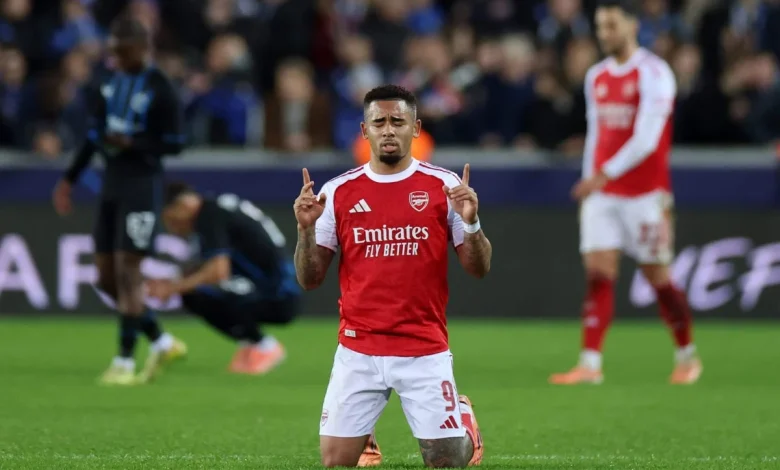
It might seem players hit the ground running after a period out of action, like Jesus seemingly did in a 30-minute appearance off the bench in the 3-0 Champions League win away to Club Brugge of Belgium on Wednesday, but his return from an anterior cruciate ligament (ACL) knee injury is more nuanced than the Brazilian instantly finding form after an 11-month absence.
Players need time. These are human beings, not plug-in-and-play robots. Which is why Arteta has reintegrated his returning casualties differently over the course of the season.
For Jesus, there were seven months between the match in which he was injured and when he began doing on-pitch work again in August. At that point, some may have assumed his comeback was imminent, but another three months would pass before he played competitively again. He needed weeks of full training with the first team and two appearances in internal friendlies before Arteta deemed him ready, the manager pulling him back like a slingshot before finally flinging him onto the pitch in Bruges.
Asked if he could be as good post-ACL as he was before, or even better, Jesus’ answer after that midweek victory was unequivocal: “One hundred per cent.”
“It doesn’t matter about the chances I had (on the night),” he told reporters. “I got in good positions, I could finish the actions and hit the target. The three chances I had, I hit the target. Obviously, I had to score, but just to come back after 11 months and move the way I moved, I’m so pleased.”
After suffering a hamstring injury in the second game of the season, Bukayo Saka was out for almost a month before coming off the substitutes’ bench in the draw against Manchester City on September 21. Three days later, to the surprise of many, he was in the starting line-up for a Carabao Cup tie away to Port Vale of League One, English football’s third tier.
“He (Saka) needs minutes, and he’s demanding that as well,” said Arteta before that match, with the England international going on to play for an hour in a 2-0 Arsenal win. “Obviously, when he’s been out for a while, you just need to get in the rhythm. You need to get that confidence on the pitch and repeat actions and exposure.”
Noni Madueke celebrates after scoring Arsenal’s second goal on Wednesday (Nicolas Tucat/AFP via Getty Images)
The need to find rhythm by repeating actions in-game would have been why Madueke, Martinelli and Gyokeres all started against Club Brugge, with their returns having varied levels of success.
Madueke’s direct running was what excited people early on in his Arsenal career following a summer move from Chelsea. Before starting on Wednesday, and scoring two of the goals, the England international winger had played 169 minutes from a possible 450 in the previous five games to build momentum and confidence. Similarly, Martinelli had featured in 144 of a possible 360 (four matches) before the trip to Belgium, but only looked comfortable taking on his man after the break.
Unsurprisingly, both finished the Club Brugge game having attempted and completed more dribbles than any other player. Martinelli completed three of his six attempted dribbles, Madueke two of his four.
The return of multiple players in the same position has allowed Arteta to patiently reintroduce Martinelli and Madueke. This could also help on Havertz too, with Arteta recently saying the German forward is now only weeks away from a comeback having been out since August with a knee injury, though he didn’t confirm whether that would happen before the end of the calendar year.
However, the manager hasn’t had the same luxury in other positions, something which has been particularly noticeable at right-back for several seasons.
“We don’t have time to train (because Arsenal play so many matches),” Arteta explained. “So training is not there. But obviously the fact that you are missing players, (means) you are loading other players more (as) a consequence. It’s a really dangerous circle.”
In Ben White’s first two seasons as a right-back for the club (2022-23 and 2023-24), serious calf and knee injuries to Takehiro Tomiyasu and Jurrien Timber respectively meant he started 71 of the 75 league games he was available for, sometimes playing through pain to do so. Come 2024-25, White required knee surgery in November. With Tomiyasu again unavailable, Timber was Arsenal’s fifth most-used outfield player last season. As the season was reaching its conclusion in May, he had an ankle operation.
Kai Havertz has only played once for Arsenal this season because of a knee injury (Paul Ellis/AFP via Getty Images)
If Arsenal beat Crystal Palace in a Carabao Cup quarter-final on December 23, they face the prospect of having a midweek game every week until February across the various competitions.
Before the 2-0 league win against Brentford last Wednesday, Arteta said the inability to train properly meant the focus between matches was “much more on principles and what we have to do, and then tweaking that in relation to the opponent’s strengths and weaknesses”.
Arsenal are about to have the rare luxury of a full week’s training, with seven days between the league fixtures at home to Wolves on Saturday and away to Everton on December 20 because of the postponement of that Palace tie due to the south Londoners’ ongoing UEFA Conference League commitments.
Once Christmas is out of the way, however, Arteta will need to ensure those who are returning from injuries are getting the right exposure to match action at the right time.