“It only takes a small amount of fentanyl, as much as can fit on the tip of a pencil, to cause a fatal overdose,” according to the Rhode Island Department of Health
On the frontlines of the fentanyl crisis, is Naloxone the answer?
Deaths from synthetic opioids are falling. What’s behind the promising trend?
- Seven Providence College students survived an overdose after ingesting cocaine believed to be laced with fentanyl.
- Police arrested three individuals and seized fentanyl, cash, and multiple firearms from a nearby apartment.
- The suspects face numerous charges, including possession with intent to deliver fentanyl and illegal firearm possession.
- Rhode Island has seen a recent decline in fatal overdoses, partly due to increased naloxone availability and education.
When the Providence Fire Department arrived at a multifamily house at 44 Liege St. late on Dec. 5 to save two people who were reportedly overdosing, it quickly became apparent they had a big problem on their hands.
Eight minutes after getting the call at 11:08 p.m., the Fire Department arrived to find not two but four victims out on the lawn. Three more would soon be brought out of the house.
The first responders called for more help.
Firefighters declare mass casualty incident over Providence College overdoses
“An MCI [mass casualty incident] was declared after we had reached five patients, and it appeared we would be overwhelming our resources,” says a Fire Department incident report.
The victims were students from nearby Providence College who had apparently ingested cocaine laced with fentanyl, a powerful synthetic opioid that was present in 57% of Rhode Island’s 329 fatal overdoses in 2024.
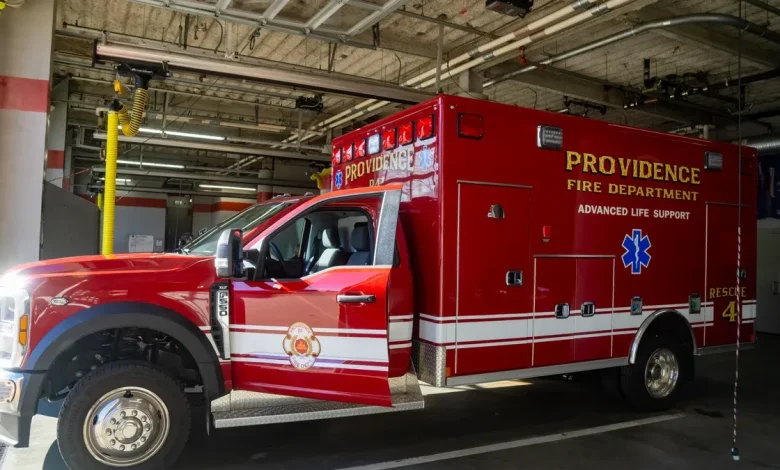
Fire Department paramedics, emergency medical technicians and PC public safety staff treated the students with advanced life support, including naloxone, a life-saving drug that blocks the effects of opioids such as fentanyl, heroin and oxycodone.
All seven victims were taken to area hospitals and survived.
Also responding to the incident, the Providence Police Department launched an investigation and on Sunday, Dec. 7, announced that the department had arrested two men and a woman after detectives identified a suspect believed to have supplied drugs to one of the students who overdosed.
How did the Providence police find their suspect?
In working the case, the police quickly zeroed in on an occupant of a Hawkins Street apartment named Angel F. Williams, 33, who is alleged to have supplied the drugs that caused the overdoses, according to a police report.
“Detectives received information from multiple confidential sources that Angel F. Williams was distributing cocaine and fentanyl in the Providence area and believed to be storing and distributing illegal narcotics from 26 Hawkins St., apartment 2,” Detective Kalvin Rosado wrote in the report.
They also got a description of Williams’ car, a Buick.
By 3 p.m. Dec. 6, the police had a search warrant for the second floor of 26 Hawkins St., about a half mile from the Liege Street residence, according to the report. When nobody answered their knocks, the police forced their way inside, detaining the three occupants and seizing about 20 grams of fentanyl, $1,700 in U.S. currency, two handguns and two assault-style rifles, according to the report.
Taken back to the department’s central station, all three of those arrested appear to have been cooperative with the police. Interviewed after his arrest, Williams told police he sold cocaine for extra income and that he sold what he believed to be cocaine to a college student on Liege Street on the night of Dec. 5, according to the report.
Another of those arrested, Patrick L. Patterson, 34, told police he had sold fentanyl to Williams, according to the report.
The police also seized digital scales, which field-tested positive for the presence of cocaine, according to the report. They also field-tested a small portion of suspected fentanyl and blue round pills, which came back positive for fentanyl. The suspected fentanyl, the pills and scales were sent to the state toxicology laboratory for further testing and analysis, the report says.
What happened in court?
All three of those arrested were arraigned Monday, Dec. 8, in District Court, Providence.
Williams was arraigned on 27 charges. He did not enter a plea, which is customary for felonies at the District Court level. He was ordered held without bail.
Charges against Williams include unlawful delivery of cocaine, possession with intent to deliver cocaine, possession with intent to deliver fentanyl and possession of multiple firearms after previously being convicted of crimes of violence.
Patterson was arraigned on 21 charges. He also did not enter a plea and was ordered held without bail.
Charges against Patterson include possession with intent to deliver cocaine, possession with intent to deliver fentanyl and multiple counts of committing a crime of violence while armed, related to his alleged possession with intent to deliver cocaine and fentanyl.
The third suspect, Kimsheree Simoneau, 33, was arraigned on one charge – possessing a ghost gun. She didn’t enter a plea and was released on bond.
What has Rhode Island done to prevent overdoses?
In recent years, Rhode Island has made progress in reducing overdose deaths, thanks in large part to educational efforts and the availability of naloxone.
Fatal accidental overdoses increased annually from 2019 until 2022, when the state had 436 fatal drug overdoses, according to the Rhode Island Department of Health. That number fell to 404 in 2023 and 329 in 2024.
Through the first half of 2025, fentanyl was still playing a big role in overdose deaths, with 61% of fatal overdoses involving fentanyl, according to the health department. So far this year, the health department has confirmed 184 accidental fatal overdoses in Rhode Island, but the reporting of those numbers typically lags pending final determination of cause and manner of death, according to the health department.
The Governor’s Overdose Task Force, a statewide coalition of professionals and community members, has made a concerted effort to prevent overdoses through education, prevention, treatment, rescue and recovery.
In June, when he announced that fatal overdoses had fallen for the second year in a row, Gov. Dan McKee called it “a sign of hope.”
“We know there is still much work ahead, but the steps we are taking are saving lives. We must keep engaging, listening and providing support to individuals, families and communities,” McKee said. “We will stay vigilant to prevent further loss of lives.”
Mixing fentanyl with cocaine
Drug dealers will typically mix fentanyl with cocaine because it’s cheaper and increases potency, driving up their profits.
“It only takes a small amount of fentanyl, as much as can fit on the tip of a pencil, to cause a fatal overdose,” said Joseph Wendelken, a spokesman for the Rhode Island Department of Health. “Fentanyl is especially dangerous for people who are not expecting to use it or have no tolerance to opioids. If you are getting drugs illegally, you do not know what is in them.”
Wendelken added, “If you have friends or family who use drugs, it’s important that you have naloxone on hand and know what an overdose looks like. Once you recognize that someone is overdosing, you can take action by calling 911 and giving naloxone.”
In the wake of the incident, the health department is “coordinating with the City of Providence and stakeholders throughout the state on additional tools and resources that can be made available,” Wendelken said.
Dorms and resident assistants are required to have access to naloxone
Earlier this year, state lawmakers passed legislation requiring all colleges and universities in the state to train all resident assistants in administering opioid antagonists, such as naloxone, and to keep a supply available at all times.
In accordance with the law, Providence College this summer trained all of the resident assistants in its on-campus residence halls on how and when to administer naloxone, according to Carolyn E. Cronin, associate director of media relations for Providence College.
“Most students who live off-campus do so in private housing that is not owned or managed by the college,” Cronin said. “It would be up to the individual landlords to ascertain whether or not any Narcan [the brand name for naloxone] training or supply in their houses is necessary or desirable.”
Over the weekend, Steve Maurano, associate vice president of public affairs, community, and government relations at Providence College, issued a statement confirming that the students were OK and thanking “City of Providence first responders on scene, as well as college public safety officials, who administered lifesaving care to our students.”
Maurano said, “We are gathering information at this time and will be conducting a thorough investigation in the days ahead.”
Tragedy was averted
If not for the quick actions of the Fire Department and their use of naloxone, the incident could have turned tragic. Providence Fire Department Assistant Chief Joseph Molis said Battalion Chief Christopher Gastall and others did a remarkable job recognizing the severity of the situation and ensuring they had enough resources.
“It was a very chaotic scene,” Molis said. “There were a lot of kids around. The street was very active.”
Thirty-one firefighters responded to the call along with eight ambulances, including ambulances from Pawtucket, North Providence and East Providence.
“It was a labor-intensive incident, which required a lot of people,” Molis said. “They were able to get there quickly, treat them and get them to the hospital.”
The Fire Department got to the scene at 11:16 p.m. and the last unit cleared by 12:40 a.m.
Molis said, “Everybody there did a great job.”