By Wednesday morning, when the social media ban for under 16s officially began, our household had already reached the penultimate stage of grief. As I caught the bus to work, my phone pinged: “I’ll go a week without social media if you don’t ban me,” the text read. Aha. Bargaining. The last step before acceptance.
Only, it wasn’t because of the ban. After flashing up a notice that it would use account age information to confirm if the user was old enough, TikTok continued to work as ever. Turns out every child in Australia who wasn’t dropped on its head at birth has already changed its birth year to indicate it’s at least 25.
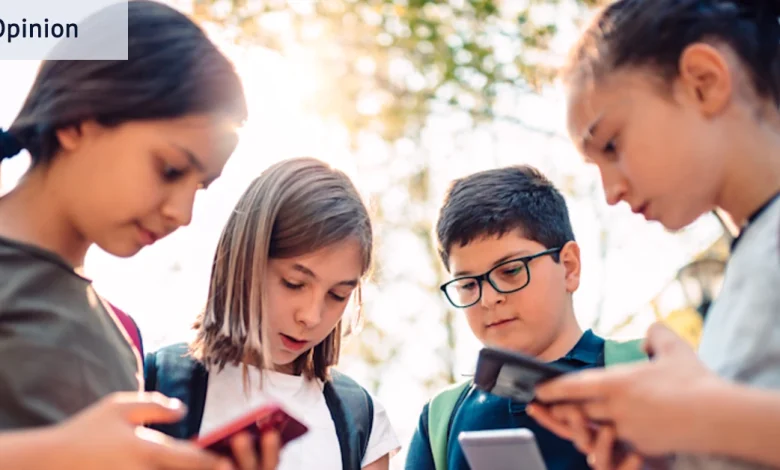
Screen time or scream time?Credit: iStock/Getty Images
Apparently the sophisticated algorithm famous for profiling users so accurately it can predict your emotional state is completely nonchalant to the twenty-somethings inhaling “junior high” meme videos and Clash Royale cheat codes. So far, the ban has left these infantile adult accounts unscathed.
We were bargaining because I foreshadowed that if the ban didn’t work, we’d enforce it manually. Which exposes the fundamental truth of the much-feted first-of-its-kind, internationally announced social media ban experiment that the government has spent untold monies showing off about. (The $100,000 in flights for Communications Minister Anika Wells to deliver a six-minute brag at the UN in New York is nothing compared with the unlisted millions we can assume spent on the Office of the eSafety Commissioner.) Simply, the so-called social media ban depends on parents parenting. Just as restricting social media use did before the ban came in.
The prime minister acknowledged as much when he defined success as “making it easier for you to have a conversation with your child about the risks and harms of engaging online”. Parents don’t have to worry that “by stopping your child using social media, you’re somehow making them to odd one out”. Best of all, parents can appeal to a higher authority. “Instead of trying to set a ‘family rule’, you can point to a national ban,” the prime minister said.
OK, Albo. Many parents will appreciate that the prime minister has set himself up as an uber-pater familias, the Supreme Court of parenting to whom they can outsource the role. But that very fact does raise the question of why the actual parents – pater and mater – feel so disempowered.
Loading
Don’t get me wrong – parenting can be hard. I did not sanction the creation of a TikTok account; nonetheless, one appeared. I don’t like the stupid game fads, with their in-game chats, overpriced bolt-ons and pokie-machine noises. I loathe the mindless scrolling. But our family tolerates some of it with negotiated parameters. TikTok, but no posting anything identifiable, including face, place or name. Snapchat is a hard no, despite protestations that it was the only possible way some friends could be contacted (turns out regular text messages work just fine, after all). And all the devices get locked away in a charger box an hour before bedtime.
These decisions remain about as popular as a tummy bug in a jacuzzi. But that’s the job of a parent – to do hard things, consistently. To have discussions about what is acceptable and what is not. To project certainty despite doubting yourself. To hold the line through a storm of tears. To see the future on behalf of an immature brain. To remember that love is not giving children what they want right now, but the foundations to thrive in future.