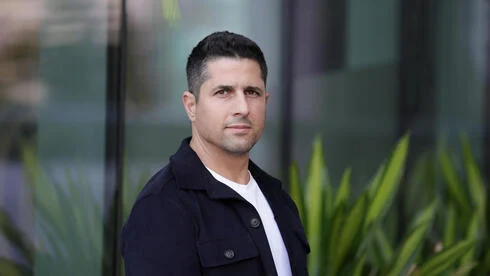
“The acquisition of Armis marks a clear entry by ServiceNow into cybersecurity as an integral part of corporate asset and information management,” says Shay Michel, managing partner at Merlin Ventures. The enterprise software giant, which is in advanced talks to acquire Israeli cybersecurity company Armis in a deal that could reach $7 billion, is one of Merlin’s clients.
“After acquiring Veza, an identity-based security platform, this is a consistent strategic move rather than a one-off,” Michel says. “The choice of Armis stems from its ability to provide full visibility into assets that are not managed by traditional IT systems, critical infrastructure, operational systems, industrial equipment, and IoT sensors. Integrating these capabilities into the ServiceNow platform allows that data to flow directly into the configuration management database (CMDB) and trigger response processes as part of the organization’s operational routine.”
Michel notes that ServiceNow is one of Merlin’s largest clients, and that both companies are significant players in the private and federal markets. “This connection is expected to enable meaningful expansion in the federal market. Even if Armis already generates hundreds of millions of dollars in revenue, this is not merely a financial acquisition. It reflects a strategic decision to concentrate security, asset management, and risk management within a single, integrated platform, without gaps between IT and cybersecurity.”
Michel began his investment career as a pre-Seed investor with the toDay fund and has recorded several early-stage successes. “We worked with entrepreneurs during the peak of the industry’s growth and learned how to help them precisely at the stage when they were laying the foundations,” he says. “In 2021, our relationship with the U.S.-based Merlin strengthened, and I began managing their operations in Israel. Eight months ago, we raised a new $85 million fund dedicated exclusively to cybersecurity investments.”
Israel is known for the presence of large global funds such as Andreessen Horowitz and Lightspeed. Where does Merlin fit into that landscape?
“This isn’t just another fund,” Michel says. “Merlin started 25 years ago as an organization focused on helping companies sell into the U.S. federal market. Today, it operates as a major distributor, generating hundreds of millions of dollars in revenue for companies like Palo Alto Networks and CyberArk. In 2019, the firm’s founder, David Phelps, recognized that much of the world’s cybersecurity innovation was coming out of Israel and decided to establish a presence here through us. We typically lead Seed rounds, often in co-investments with firms like Andreessen, Greylock, Lightspeed, and Norwest.”
Michel emphasizes the importance of the U.S. federal market for young Israeli startups. “That’s where the real money is. The federal market alone is worth about $300 billion. Until recently, many Israeli entrepreneurs ignored it because it’s difficult to access. Selling to the government requires certifications such as FedRAMP, a process that can take years and cost millions of dollars. Merlin built a platform called CGC that compresses that timeline from years to months. Over the past year, we’ve helped Israeli companies generate more than $100 million in revenue through this channel alone.”
Asked about the surge in large Seed rounds at lofty valuations, Michel is cautious. “A ‘mega-round’ model is emerging. Experienced entrepreneurs who have already had exits want to build massive companies from day one, and they are pricing future value into Seed rounds. The problem is that some companies are raising capital at multiples of 100 or even 200 times revenue. In some cases, early-stage startups are valued higher than public cybersecurity companies generating hundreds of millions of dollars in annual revenue. That’s a dangerous dynamic.”
Is the market heading for a correction?
“I’m optimistic about seasoned founders who know how to manage large amounts of capital,” Michel says. “But many companies will not become the next Wiz. When startups begin shutting down or selling for less than their last valuation, and this is already happening, though it’s rarely discussed, the market will be forced to reset. I expect that recalibration to occur within two or three years. The funds that invest simply to ‘have a seat at the table’ are likely to be the most exposed.”
On whether the sector is experiencing a cyber-AI bubble, Michel draws a historical parallel. “Every major technological shift creates fear. During the cloud transition between 2012 and 2017, many organizations hesitated because of security concerns. Cyber companies enabled that transition. We’re seeing the same pattern with AI today. Many large enterprises are still afraid to deploy AI at scale. Cybersecurity companies that make AI safe for organizational use will be the ones that unlock widespread adoption.”
AI, he adds, is becoming central to the U.S. federal agenda. “Artificial intelligence represents the biggest opportunity in the federal market right now. The U.S. government is deeply concerned about AI-driven attacks and future quantum threats, and it is prepared to invest heavily in defense. An Israeli company that can offer credible cybersecurity solutions for AI environments will have a fast track to the largest contracts in Washington.”
His advice to Israeli founders just starting out is direct: “Don’t just build technology, build go-to-market capabilities. Companies that aren’t in the market don’t learn how to improve. Today, you can’t wait until a later stage to think about sales. You need to be aiming for tens of millions of dollars in revenue from the very beginning.”